Weeknight
Pan-Seared Salmon: Skin Crisp, Centre Just Set
Cook salmon skin-side down for about 70% of the total time — roughly 4–5 minutes of a 6-minute cook for a 1-inch fillet — then flip for the last 1–2 minutes. Press the fillet flat with a spatula for the first 20 seconds so the skin stays in full contact with the pan instead of curling away from it. Pull at 125°F (52°C) internal for a just-set centre; it carries over to about 130°F while it rests.
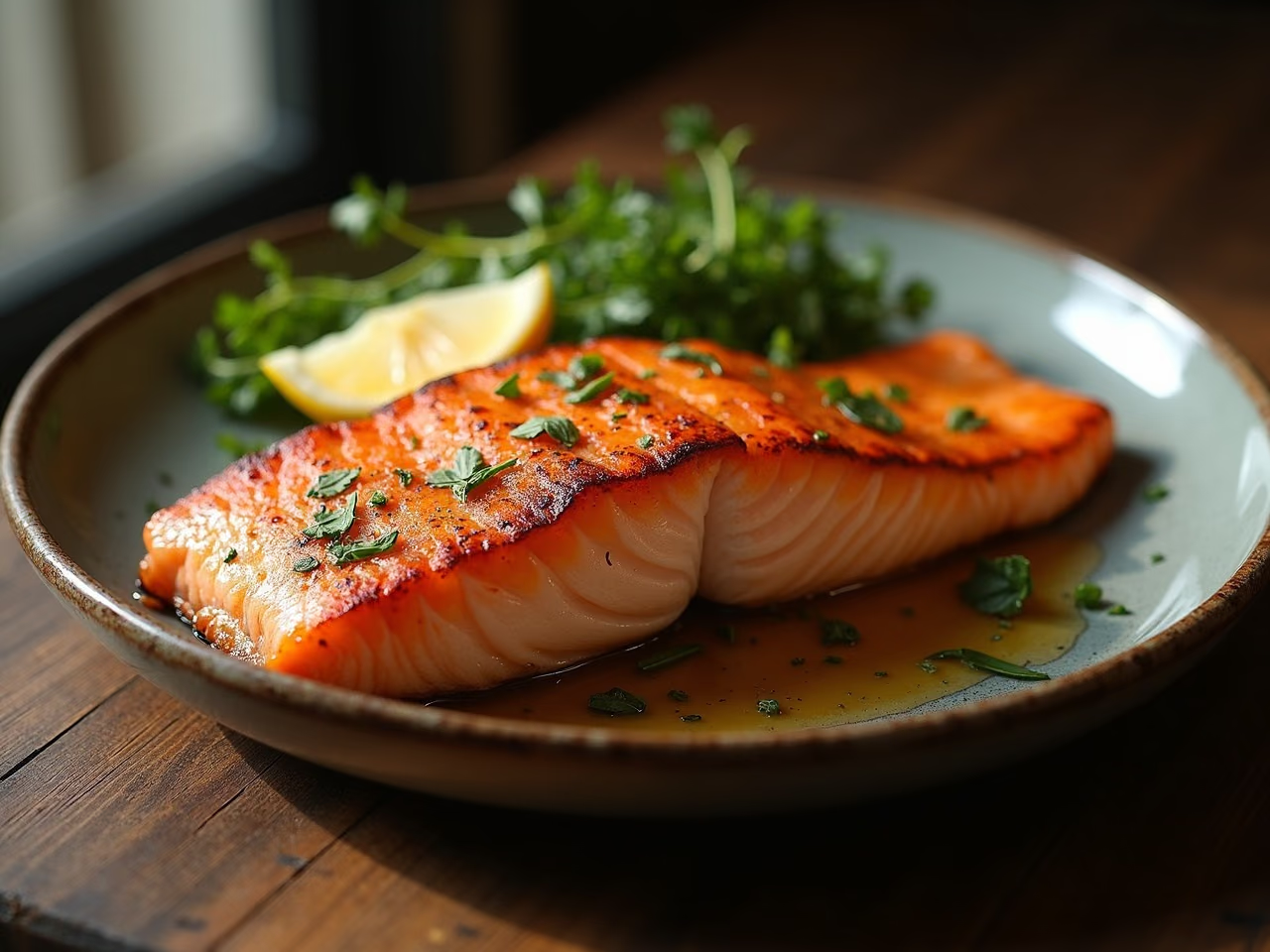
Pan-searing salmon is two jobs that pull in opposite directions: crisping the skin wants sustained hard heat, and keeping the flesh moist wants as little heat as possible. The method below resolves that by doing almost all the cooking on the skin side, where the skin itself acts as a heat shield.
The 70/30 split
For a 1-inch fillet on medium-high heat, total cooking time is about 6–7 minutes. It divides roughly like this:
| Stage | Time | What is happening |
|---|---|---|
| Skin-side down | 4–5 min | skin renders and crisps; flesh cooks gently from below |
| Flesh-side down | 1–2 min | finishes the top, adds a little colour |
| Rest, skin up | 3 min | centre climbs ~5°F, juices settle |
The reason to weight it this way is that the skin is a poor conductor and a layer of fat sits directly beneath it. That combination insulates the flesh from the pan, so the fillet cooks slowly and evenly even though the pan is hot. Flip it early and you lose that protection — the flesh hits bare metal and the bottom quarter overcooks.
Read the side of the fillet
You do not need to guess when to flip. Look at the cut edge of the fillet from the side and you will see a clear line where the flesh has turned from translucent to opaque, creeping upward as it cooks.
Flip when that line is about three-quarters of the way up. The last quarter finishes during the brief flesh-side sear and the rest. If you wait until the opacity reaches the very top, the fillet is already past where you want it.
The 20-second press
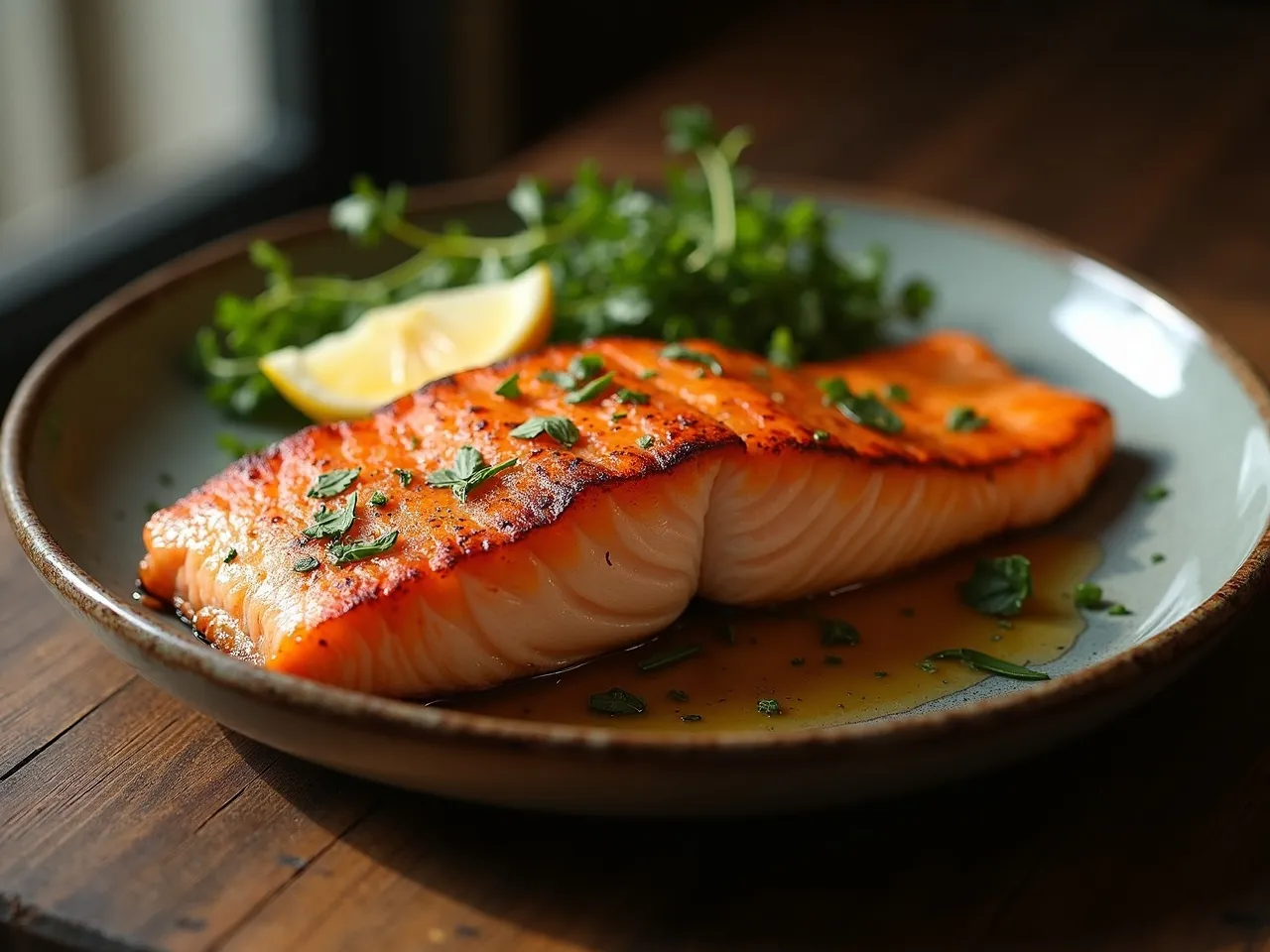
Salmon skin shrinks faster than salmon flesh. The moment a fillet hits a hot pan, the skin tightens and pulls the edges down, doming the middle upward so only a ring around the outside is actually touching the metal. You end up with a crisp border and a pale, soft centre.
Pressing the fillet flat with a spatula for the first 20 seconds holds the whole surface against the pan until the skin has set. It does not need force — steady, even pressure is enough — and once the skin has set flat it stays flat.
This one habit is the difference between skin that is crisp in patches and skin that is crisp all the way across.
Pan choice and heat
Medium-high, and give the pan a full three to four minutes to come up. The oil should shimmer and move like water when you tilt the pan; if it smokes, it is too hot and the outside will scorch before the inside is warm.
Cast iron and carbon steel hold their temperature best when cold fish lands on them, which matters more than the non-stick coating. Stainless works well. Non-stick works but browns less, because the coating conducts heat less efficiently into the skin.
Pan-Seared Salmon: Skin Crisp, Centre Just Set
- Prep
- 5 min
- Cook
- 7 min
- Total
- 12 min
- Serves
- 2 fillets
Ingredients
- 2 skin-on salmon fillets, about 6 oz (170 g) each and 1 inch (2.5 cm) thick
- 1 tablespoon neutral oil with a high smoke point, such as grapeseed or avocado
- 1/2 teaspoon fine sea salt
- Freshly ground black pepper
- 1 tablespoon unsalted butter
- 1/2 lemon, for serving
Method
- Take the salmon out of the fridge 15 minutes ahead. Pat the skin bone dry with paper towel and press hard — any water left on the skin has to boil off before the skin can crisp, and that time is time the fillet spends overcooking. (15 min)
- Season the flesh side with salt and pepper. Salt the skin side only right before it goes in the pan; salted early, it draws moisture back to the surface.
- Heat a heavy skillet over medium-high with the oil until it shimmers and slides freely. Cast iron, carbon steel or a good stainless pan; non-stick works but browns less. (4 min)
- Lay the fillets in skin-side down, away from you. Immediately press each one flat with a fish spatula for about 20 seconds. Salmon skin contracts faster than the flesh when it hits heat, and without the press the fillet domes upward and only the edges of the skin ever touch the pan.
- Cook skin-side down for 4–5 minutes without moving them. Watch the side of the fillet: the flesh turns from translucent to opaque from the bottom up, and you want that colour change about three-quarters of the way to the top before you flip. (5 min)
- Flip and add the butter. Cook flesh-side down for 1–2 minutes, spooning the foaming butter over the fillets. (2 min)
- Check the temperature at the thickest point — 125°F (52°C) for a just-set centre. Transfer skin-side up to a warm plate so the crisp skin does not sit in steam. Rest 3 minutes and serve with lemon. (3 min)
Notes
- A cold pan is the most common cause of skin sticking. Salmon releases itself when the skin is properly browned; if it grips, it is not ready, and forcing it tears the skin off.
- The 70/30 split is the whole method. Nearly all the cooking happens skin-side down, so the flesh cooks gently from below while the skin crisps, and the flip is really just a finishing touch.
- Rest it skin-side up, never skin-side down on the plate. Steam collects under the fillet, and two minutes on a plate will soften skin you just spent five minutes crisping.
- Skinless fillets work with the same timing but give you no crisp element and stick more readily — use non-stick, and drop the total time by about a minute.
- Fillets vary in thickness along their length. If the tail end is much thinner, fold it under to even out the depth before it goes in the pan.
Per serving (estimated by calculation from ingredient quantities, not laboratory tested): 385 kcal · 34 g protein · 0 g carbohydrate · 27 g fat.
Common questions
Why does salmon skin stick to the pan?
Nearly always because the pan was not hot enough when the fish went in, or because the fillet was moved too early. Proteins bond to metal on contact and release again once browning is complete — a properly seared fillet lifts freely. If it resists, give it another 30–60 seconds rather than pulling. Wet skin makes it worse, because the surface steams instead of searing.
Do you cook salmon skin-side up or down first?
Skin-side down, and for most of the cook. The skin protects the flesh from the direct heat of the pan, so the fillet cooks gently and evenly from below while the skin dries and crisps. Roughly 70% of the total time goes skin-side down and 30% flesh-side down at the end.
How do I stop salmon curling up in the pan?
Press it flat with a spatula for the first 20 seconds. Skin contracts faster than flesh when heated, which lifts the middle of the fillet away from the pan so only the edges make contact. Twenty seconds of gentle pressure holds it down until the skin has set flat, and it stays flat for the rest of the cook.
What temperature is pan-seared salmon done at?
Pull at 125°F (52°C) for a moist, just-set centre; it rises to about 130°F while resting. For firmer salmon pull at 130°F, and for the FDA-recommended fully cooked 145°F (63°C), pull at 138°F. Anyone pregnant, immunocompromised, very young or elderly should use the full 145°F.
Can I pan-sear frozen salmon?
Thaw it in the fridge overnight first. Searing from frozen gives you a wide band of overcooked flesh under the surface while the centre catches up, and the skin will not crisp because the fillet releases water as it thaws in the pan. If you are short of time, thaw the sealed fillet in cold water for 30 minutes and dry it thoroughly.