Weeknight
Lemon Garlic Chicken Pasta in One Pan
The sauce works because of an emulsion, not cream: reserve 1 cup of starchy pasta water and add it to the pan in two stages with cold butter, off the heat, stirring constantly. Use about 1/2 cup of pasta water per 8 oz of dry pasta as a starting point. Add the lemon juice at the very end with the heat off — boiling lemon juice turns the sauce dull and slightly bitter.
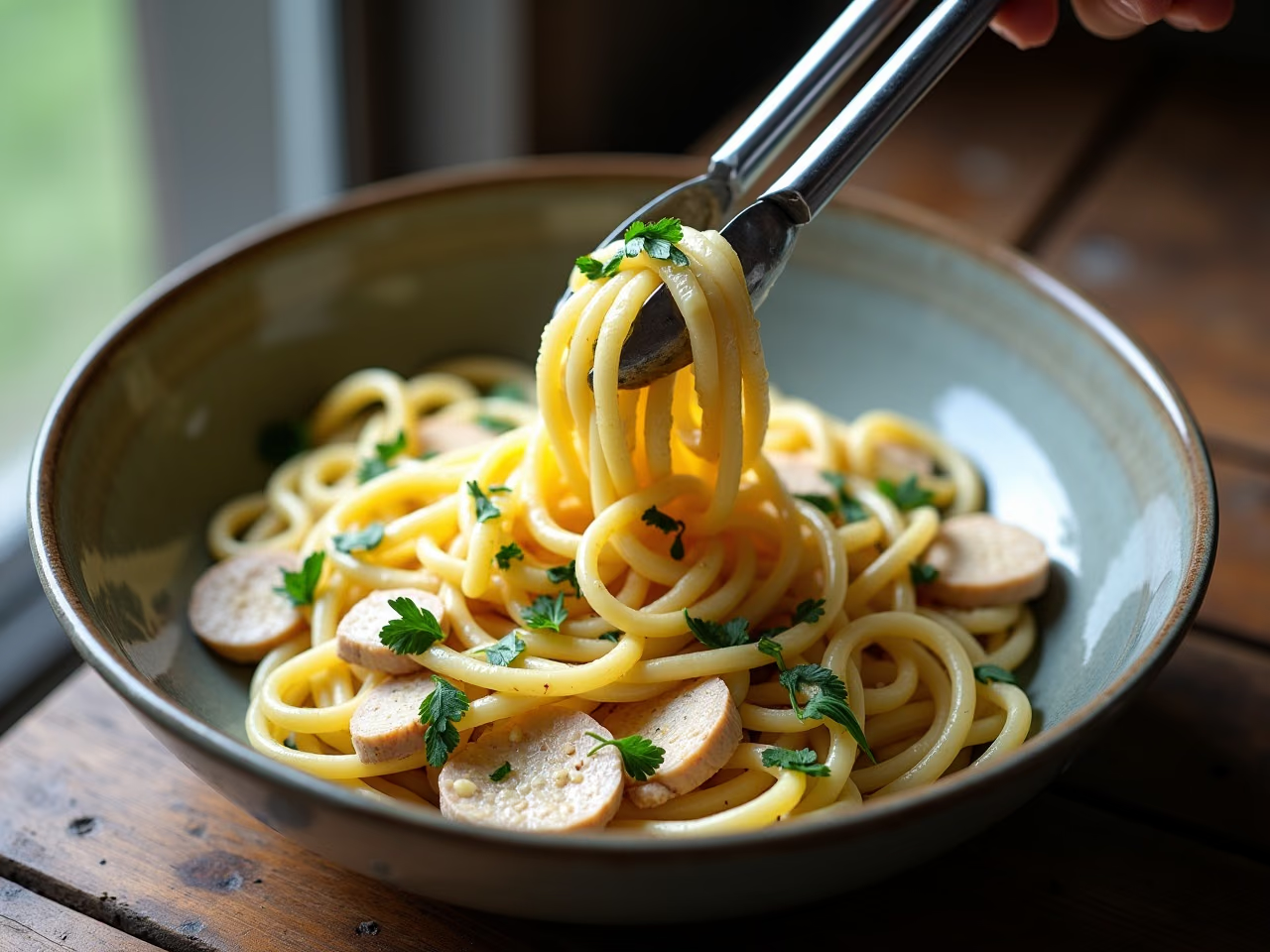
This is the version of lemon garlic chicken pasta that does not use cream. The sauce is an emulsion — butter and starchy pasta water beaten into a suspension — and once you know the ratio it takes about ninety seconds to make.
The whole dish is 25 minutes, most of which is the pasta boiling.
The ratio
The working numbers, for 12 oz of dry pasta serving four:
- 1 cup pasta water reserved (you will use about ¾ of it)
- 4 tablespoons cold butter, cubed
- 1½ oz finely grated Parmesan
- 3 tablespoons lemon juice + 2 teaspoons zest
The pasta water goes in in two stages: half a cup first with half the butter, off the heat, to build the base; then more a splash at a time while tossing the pasta, until it looks right. “Right” is glossy and clinging to the strands, thick enough to coat the back of a spoon, with nothing pooling in the bottom of the pan.
Why it emulsifies
Pasta water is not just hot water. Starch granules leach out of the pasta as it cooks and suspend in the liquid, and those starch molecules act as an emulsifier — they let fat and water hold together as a stable, creamy mixture rather than separating into oil floating on water.
That is why three details matter more than they look:
Cold butter, added gradually. Cold fat disperses into small droplets that the starch can stabilise. Melted butter poured in arrives as one large mass of liquid fat and slides straight out of suspension.
Off the heat. Emulsions break when overheated. The residual heat in the pan is plenty.
Enough starch. If you cook pasta in a vast pot of water, the starch is too dilute to do its job. Use enough water for the pasta to move, no more.
Timing the two pans
The only real coordination is finishing the pasta and the sauce together. The sequence:
- Water on to boil (8 min)
- Chicken sears in the skillet while the water heats (6 min)
- Pasta goes in — cook 2 minutes short of the package time
- Garlic goes into the chicken pan (2 min)
- Reserve water, drain, build the sauce, add pasta (2 min)
Pulling the pasta two minutes early matters. It finishes in the pan, absorbing sauce as it goes, which is what makes the sauce taste like it belongs to the pasta rather than sitting on top of it.
Lemon last
Lemon juice goes in with the heat off, after everything else. Heating it drives off the volatile aromatics that make it smell like lemon and flattens the acidity into something duller. Zest can go in slightly earlier — the oils in the peel hold up better — and it carries most of the fragrance, so use both rather than doubling the juice.
Lemon Garlic Chicken Pasta in One Pan
- Prep
- 10 min
- Cook
- 15 min
- Total
- 25 min
- Serves
- 4
Ingredients
- 12 oz (340 g) linguine or spaghetti
- 1 lb (450 g) boneless skinless chicken breasts or thighs, sliced 1/2 inch thick
- 1 1/4 teaspoons fine sea salt, plus more for the pasta water
- 2 tablespoons olive oil
- 6 cloves garlic, thinly sliced (not crushed)
- 1/4 teaspoon red pepper flakes, optional
- 4 tablespoons cold unsalted butter, cut into cubes
- 1 lemon: 2 teaspoons zest and 3 tablespoons juice, kept separate
- 1 1/2 oz (40 g) Parmesan, finely grated, plus more to serve
- 1/3 cup flat-leaf parsley, roughly chopped
- Freshly ground black pepper
Method
- Bring a large pot of water to the boil and salt it until it tastes properly seasoned — about 1 tablespoon per 4 litres. This water becomes the sauce, so under-salting here cannot be fixed later. (8 min)
- Pat the chicken dry and season with 1 teaspoon of the salt. Heat the olive oil in a large skillet over medium-high and cook the chicken in a single layer, undisturbed, for 3 minutes. Flip and cook 2–3 minutes more, until 165°F (74°C) internal. Transfer to a board. (6 min)
- Start the pasta now, so it finishes at the same time as the sauce. Cook it 2 minutes short of the package time — it finishes in the pan. (8 min)
- Lower the heat under the skillet to medium-low. Add the sliced garlic and the pepper flakes to the same pan and cook 60–90 seconds, stirring, until the garlic is pale gold and fragrant. Sliced garlic is used here rather than crushed because it browns evenly instead of scorching in specks. (2 min)
- Reserve 1 cup of pasta water, then drain the pasta. Take the skillet off the heat. Add 1/2 cup of the pasta water and half the butter, and stir hard until the butter melts into a cloudy, slightly thickened liquid rather than a pool of fat.
- Add the pasta, the rest of the butter and the Parmesan. Toss continuously for about a minute, adding more pasta water a splash at a time, until the sauce clings to the strands and looks glossy. It should coat a spoon, not sit in the bottom of the pan. (2 min)
- Slice the chicken and return it with any resting juices. Add the lemon zest, then the lemon juice, off the heat, and toss once more. Adding juice off the heat keeps the flavour bright; boiled, it goes flat and slightly bitter.
- Season with the remaining salt and plenty of black pepper, fold through the parsley and serve immediately with more Parmesan.
Notes
- Cold butter is not fussiness. Adding cold cubes gradually lets the fat disperse into droplets suspended in the starchy water rather than melting straight into a greasy layer. Melted butter poured in will split.
- If the sauce breaks and looks oily, take the pan off the heat, add a splash of pasta water and stir vigorously. It will usually come back together.
- If it is too thin, keep tossing over low heat for another 30 seconds — the starch thickens as water evaporates. Adding cheese to thicken it only makes it stringy.
- Chicken thighs are more forgiving than breasts here and stay juicy if the pan runs a minute long.
- The zest carries most of the lemon aroma and the juice carries the acidity. Using only juice gives you sourness without perfume; using only zest gives you perfume without lift.
Per serving (estimated by calculation from ingredient quantities, not laboratory tested): 648 kcal · 42 g protein · 67 g carbohydrate · 24 g fat.
Common questions
How much pasta water do I need for the sauce?
Start with about 1/2 cup per 8 oz of dry pasta and add more a splash at a time. Reserve a full cup so you have margin — you can always leave it, but you cannot get it back once the pot is drained. The water needs to be properly starchy, which means cooking the pasta in enough water to move freely but not drowning it.
Why did my lemon garlic sauce split?
Either the butter went in over direct heat and melted rather than emulsifying, or the pan was too hot when the pasta water was added. Both break the suspension of fat droplets. Pull the pan off the heat, add a splash of pasta water, and stir hard — a split sauce usually comes back. Cold butter added gradually is the reliable prevention.
Can I use cream instead?
You can, and it is more forgiving, but it is a different dish — heavier, and the lemon reads as muted rather than bright. The emulsion version tastes cleaner and lets the garlic and lemon come through. If you want insurance, 2 tablespoons of cream added with the pasta water stabilises the sauce without dominating it.
When should I add the lemon juice?
At the very end, off the heat. The aromatic compounds in lemon are volatile and boil away quickly, and heating the juice also flattens its acidity and can leave a faint bitterness. Zest goes in slightly earlier because the oils in the peel are more heat-stable.
Why sliced garlic rather than minced?
Minced garlic has far more cut surface for its volume, so it goes from raw to burnt in seconds in a hot pan, and burnt garlic is bitter throughout the dish. Slices brown evenly and predictably over a minute or so, and they are easier to see, which makes the timing obvious.