Weeknight
Chicken in Tomato Sauce with Pasta, Fast
A 15-minute tomato sauce tastes long-simmered when it borrows depth from three places: the browned fond left by searing the chicken, a full 2 tablespoons of tomato paste cooked dark before the canned tomatoes go in, and a Parmesan rind (or a spoon of butter) simmered along. Sear chicken cutlets 3 minutes a side, build the sauce in the same pan while the pasta cooks, then slice the chicken back in — 30 minutes total, and the sauce carries the dish.
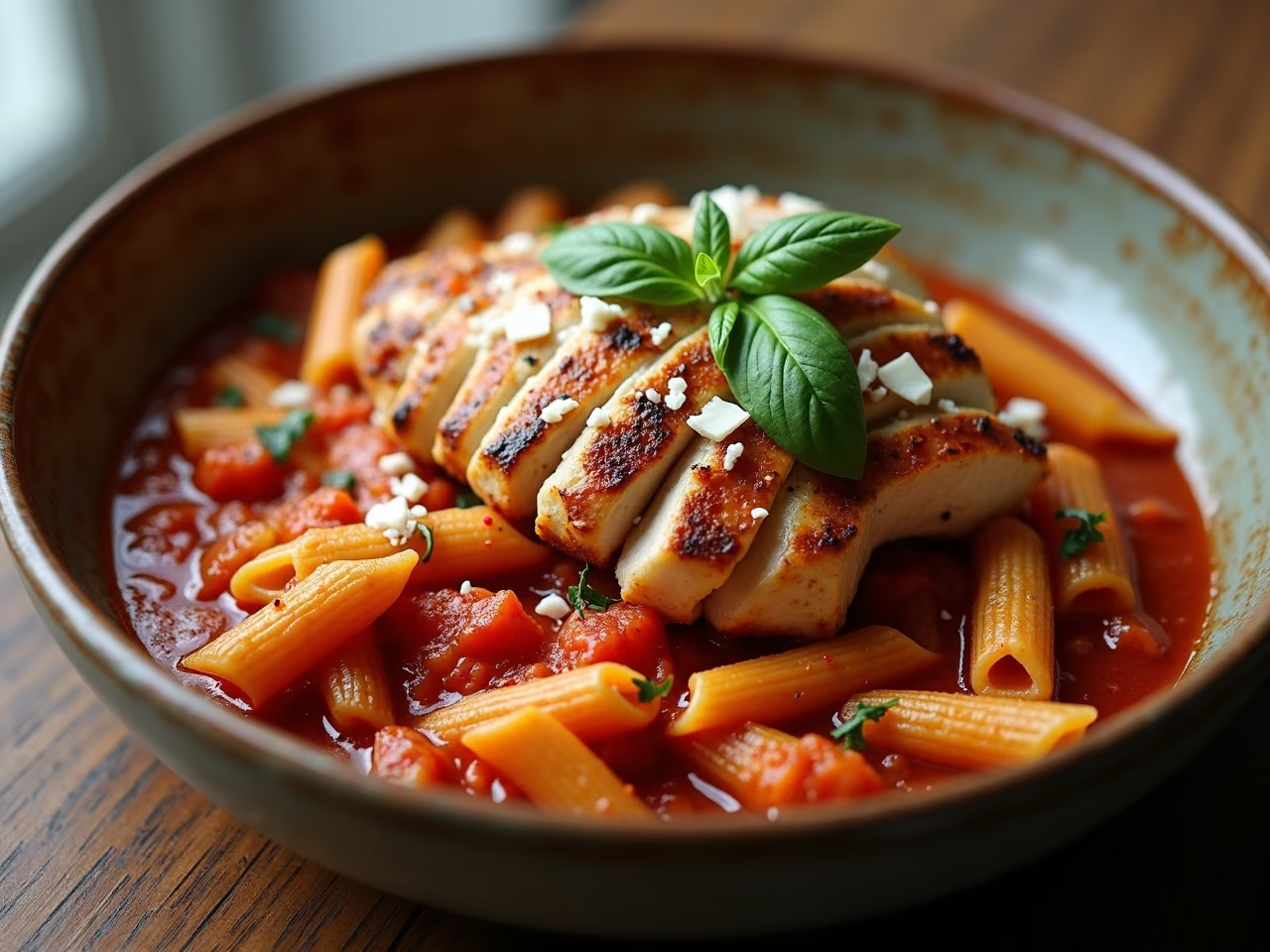
Chicken, tomato sauce, pasta: the least surprising dinner in the repertoire, which is exactly why the sauce deserves engineering. A tomato sauce gets its “Sunday” quality from concentration and mellowness, and both can be manufactured in fifteen minutes if you know where they come from.
Three deposits into a fast sauce
The fond. Searing the cutlets leaves a browned film on the pan. The onions, sweating in the chicken fat, dissolve it — that is slow-roasted flavour, acquired in six minutes, and it is why the chicken cooks first and the sauce second in the same pan.
The paste, cooked dark. Two tablespoons of tomato paste fried until brick-coloured is the fast sauce’s keystone. Paste is tomato already reduced 5:1; ninety seconds of frying caramelises it and burns off the tinny top note. The difference between sauce with raw paste and cooked paste is the difference people usually attribute to hours.
The rind. A Parmesan rind simmered in the sauce softens and releases savour continuously — parmesan is dense with glutamates, and the rind is a free, slow-release packet of them. Fish it out at the end (cook’s treat). No rind: finish with a tablespoon of butter instead, which mellows the same acidity by a different route.
The chicken stays chicken
The failure mode of this dish is chicken cooked in the sauce until both are tired. Here the cutlets are seared to 160°F, rested while the sauce builds, sliced across the grain, and laid over at the end — juicy, browned, and texturally distinct from what they sit on. The sauce got everything it needed from them at the start.
Chicken in Tomato Sauce with Pasta, Fast
- Prep
- 8 min
- Cook
- 22 min
- Total
- 30 min
- Serves
- 4
Ingredients
- 12 oz (340 g) penne or rigatoni
- 1.25 lb (570 g) boneless skinless chicken breasts, halved into cutlets
- 1 teaspoon fine sea salt, divided, plus more for the pasta water
- 1/2 teaspoon black pepper
- 2 tablespoons olive oil
- 1 small yellow onion, finely diced
- 3 cloves garlic, minced
- 2 tablespoons tomato paste
- 1/4 teaspoon red pepper flakes
- 1 can (28 oz / 800 g) crushed tomatoes, or whole peeled crushed by hand
- 1 Parmesan rind (or 1 tablespoon butter)
- 1 oz (30 g) Parmesan, grated, plus more to serve
- A handful of basil leaves, torn
Method
- Season the cutlets with 3/4 teaspoon of the salt and the pepper. Heat the oil in a 12-inch skillet over medium-high and sear 3 minutes a side to 160°F (71°C). Set aside — the browned pan floor is the sauce's foundation. (9 min)
- Start the pasta in well-salted water; cook 2 minutes short of package time and reserve 1 cup of water before draining. (10 min)
- Meanwhile, drop the skillet to medium, add the onion and cook 3 minutes in the chicken fat, scraping at the fond as it softens. (3 min)
- Add the garlic, tomato paste and pepper flakes. Cook, stirring, 90 seconds until the paste turns brick-dark and coats the onions — this step is half the sauce's depth. Do not shortcut it. (2 min)
- Add the tomatoes, the Parmesan rind and the remaining salt. Simmer briskly, uncovered, 8–10 minutes until thickened and the oil beads orange at the edges. (10 min)
- Slice the rested chicken across the grain. Fish out the rind, add the drained pasta to the sauce with a splash of pasta water, and toss 1 minute. Fold in the grated Parmesan, lay the chicken over, and finish with basil and more cheese. (3 min)
Notes
- The three depth-builders replace hours: fond (browned chicken residue dissolved into the onions), paste cooked dark (caramelised concentrate, 90 seconds past where it smells raw), and the rind (slow-release savour as it softens). Together they read as "simmered all afternoon" in 15 minutes.
- No rind? A tablespoon of butter stirred in at the end does different but comparable work, rounding the acidity. Save every Parmesan rind in a freezer bag from now on — they keep for a year and cost nothing.
- Slicing the chicken rather than cubing it before cooking is deliberate: cutlets sear better than cubes (more flat contact, less surface-to-volume steaming), stay juicier, and slice into better bites after resting. Cube-first is faster to eat and worse to cook.
- The sauce alone (steps 3–5, made with olive oil instead of chicken fat) is this site's default fast tomato sauce — freeze it flat in bags for 3 months and you have a better-than-jar sauce that thaws in a pan in 5 minutes.
- Heat control on the simmer: brisk and uncovered, so it reduces. A covered tomato sauce just gets hotter and stays thin; the thickening is evaporation.
Per serving (estimated by calculation from ingredient quantities, not laboratory tested): 596 kcal · 45 g protein · 71 g carbohydrate · 15 g fat.
Common questions
How do you make quick tomato sauce taste like it simmered for hours?
Borrow concentrated flavour instead of building it slowly: sear meat first and dissolve the fond into the base; cook tomato paste until it darkens (raw paste is sharp, cooked paste is sweet and deep); and simmer a Parmesan rind in the sauce. Long simmering mostly concentrates and mellows — those three shortcuts deliver concentration and mellowness from minute one.
Should I cook the chicken in the sauce or separately?
Sear it separately, finish it barely, and reunite at the end. Chicken breast poached in tomato sauce goes stringy by the time the sauce is good, and it never browns — which costs the dish its fond. Cutlets seared to 160°F, rested, sliced across the grain and laid over the tossed pasta stay juicy and keep their seared flavour distinct from the sauce.
What does cooking tomato paste actually do?
Tomato paste is already-concentrated tomato; frying it in fat for 60–90 seconds caramelises its sugars and drives off the raw, tinny top notes, converting it from "tinned" to "roasted". Visually it darkens from bright red to brick and starts sticking. Skipping this step is the single most common reason a fast tomato sauce tastes thin and sharp.
Crushed tomatoes or whole peeled for this sauce?
Whole peeled crushed by hand is the ceiling; a good brand of crushed is the honest 30-minute floor and what the ingredient list names. Avoid diced (firming agents stop them melting) and avoid anything pre-seasoned. If your sauce tastes sharp after 10 minutes, correct with a pinch of sugar — a correction, not a habit, exactly as in the pantry spinach-tomato sauce.
Can I make this dish ahead?
The parts hold better than the whole: sauce keeps 4 days refrigerated or 3 months frozen, and seared chicken keeps 3 days sliced. Reheat the sauce, cook fresh pasta, warm the chicken in the sauce for the last minute. Fully assembled leftovers reheat acceptably with a splash of water, but the pasta softens and the chicken tightens — this dish is best built from staged parts.