Weeknight
Creamy Mushroom Pasta, No Cream Needed
Mushrooms brown rather than steam when they have space and high heat: use a 12-inch pan for 1 lb of mushrooms, spread them in a single layer, and leave them undisturbed for 4 minutes before stirring. The sauce gets its body from starchy pasta water emulsified with cold butter and Parmesan, not cream — about 3/4 cup of pasta water per 12 oz of dry pasta. Salt the mushrooms only after they have browned; salting early draws out water and they stew.
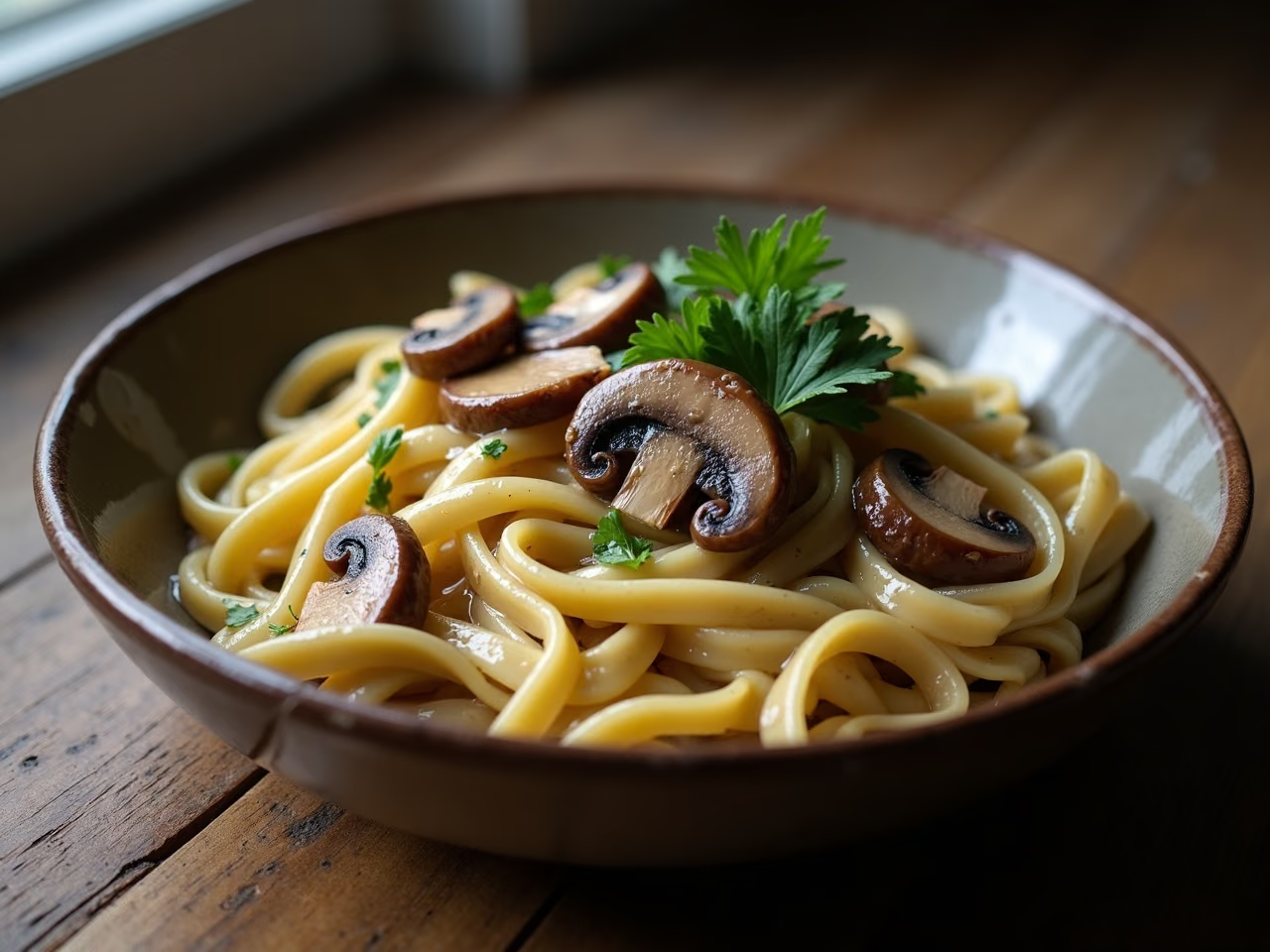
Most “creamy mushroom pasta” recipes reach for double cream, which does produce a creamy sauce and also flattens the mushrooms into a background note. This version gets its body from the pasta water and its flavour from mushrooms that have actually been browned.
Two techniques carry the whole dish, and both are about heat and space.
Mushrooms need room, not stirring
Mushrooms are roughly 90% water. Put them in a pan and the first thing that happens is that water comes out. Until it has evaporated, the pan sits at boiling point — and browning does not begin until well above that.
So the first four minutes look like nothing is happening. That is the water leaving. The instinct to stir during this phase is exactly wrong: every stir drops the pan temperature and slows the evaporation you are waiting for.
| Pan size | Mushrooms that fit in one layer |
|---|---|
| 10 inch / 25 cm | about 10 oz / 280 g |
| 12 inch / 30 cm | about 1 lb / 450 g |
| 14 inch / 35 cm | about 1 1/2 lb / 680 g |
If they do not fit in one layer, cook in two batches. A crowded pan holds steam against the mushrooms, and nothing browns in steam regardless of how high the hob goes.
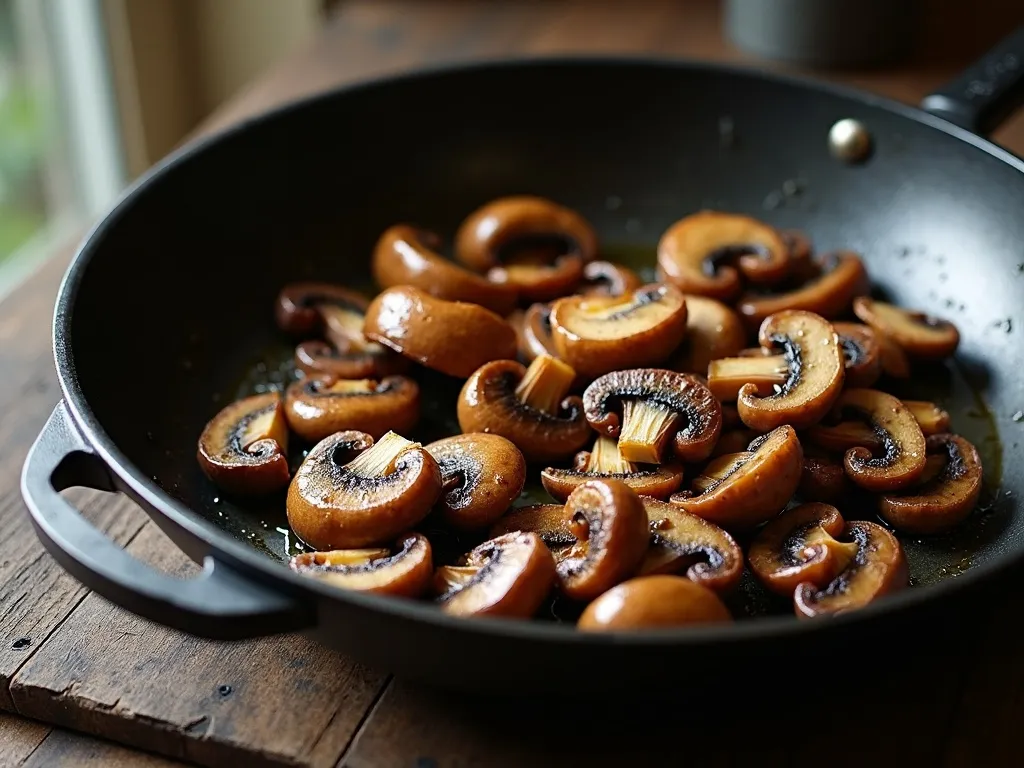
Salt at the end, not the start
Salt draws water out of mushrooms through osmosis. Added at the beginning, it accelerates exactly the thing you are trying to get past, and the mushrooms sit in liquid for considerably longer.
Add the salt once they are golden at the edges. At that point the water is gone, the salt seasons rather than extracts, and it will not undo the browning.
The emulsion
Starch leaches out of pasta as it cooks and suspends in the water. Those starch molecules are an emulsifier — they let fat and water hold together as a creamy sauce instead of separating.
Three rules make it work:
- Cold butter, added in stages. Cold fat disperses into fine droplets the starch can stabilise. Melted butter poured in arrives as a single mass and slides out of suspension.
- Off the heat. Emulsions break when overheated. The residual heat in the pan is enough.
- Properly starchy water. Cook the pasta in enough water to move freely, no more. A vast pot dilutes the starch to uselessness.
Reserve more water than you think you need — a cup and a half — because you can pour it away but you cannot get it back once the pot is drained.
Deglazing is not optional
After the mushrooms brown, the base of the pan carries a layer of stuck browned residue. That is concentrated flavour, and half a cup of lemony stock plus a wooden spoon lifts all of it into the sauce.
Reduce until the pan is nearly dry before the pasta water goes in. Skipping the reduction leaves the sauce thin and sharp; taking it too far is nearly impossible at this quantity.
Creamy Mushroom Pasta, No Cream Needed
- Prep
- 10 min
- Cook
- 18 min
- Total
- 28 min
- Serves
- 4
Ingredients
- 12 oz (340 g) tagliatelle, pappardelle or fettuccine
- 1 lb (450 g) mixed mushrooms — chestnut, portobello, shiitake — sliced 1/4 inch thick
- 3 tablespoons olive oil, divided
- 4 tablespoons cold unsalted butter, cubed
- 4 cloves garlic, thinly sliced
- 2 sprigs thyme, leaves picked
- 1/2 cup (120 ml) low-sodium stock, chicken or vegetable, mixed with 2 teaspoons lemon juice
- 2 oz (55 g) Parmesan, finely grated, plus more to serve
- 1 1/4 teaspoons fine sea salt, plus more for the pasta water
- Freshly ground black pepper
- 1/3 cup flat-leaf parsley, chopped
Method
- Bring a large pot of water to the boil and salt it well — about 1 tablespoon per 4 litres. This water becomes the sauce, so it has to taste seasoned. (8 min)
- Slice the mushrooms about 1/4 inch thick. Thinner and they collapse; thicker and they never brown through. Do not wash them under the tap — wipe them with a damp cloth, because soaked mushrooms release that water into the pan. (6 min)
- Heat 2 tablespoons of oil in a 12-inch skillet over medium-high until it shimmers. Add the mushrooms in a single layer. If they will not fit in one layer, cook them in two batches — this is the step that decides whether the dish tastes browned or boiled.
- Leave the mushrooms completely undisturbed for 4 minutes. They will release water, and that water has to evaporate before browning can start. Stirring during this phase keeps the pan cool and they stew instead. (4 min)
- Stir, then cook another 4–5 minutes until deep golden at the edges. Only now add 1 teaspoon of the salt. Salting earlier pulls water out and prevents browning entirely. (5 min)
- Start the pasta now, cooking it 2 minutes short of the package time. Add the remaining oil, the garlic and the thyme to the mushrooms and cook 60 seconds until fragrant. (8 min)
- Pour in the stock-and-lemon mixture and scrape the browned bits off the base of the pan. Simmer until the liquid has reduced by about three-quarters and the pan is nearly dry, 2–3 minutes. (3 min)
- Reserve 1 1/2 cups of pasta water and drain. Take the pan off the heat, add 3/4 cup of pasta water and half the butter, and stir hard until it turns cloudy and slightly thick rather than oily.
- Add the pasta, the remaining butter and the Parmesan. Toss constantly for about a minute, loosening with more pasta water a splash at a time, until the sauce coats the strands and looks glossy. (2 min)
- Season with the remaining salt and plenty of pepper, fold through the parsley and serve at once with more Parmesan.
Notes
- A 12-inch pan holds 1 lb of sliced mushrooms in one layer. A 10-inch pan does not — use two batches rather than crowding, because a crowded pan traps steam and mushrooms will not brown in steam at any temperature.
- Mushrooms are roughly 90% water. The first four minutes in the pan are spent boiling that water off, which is why nothing appears to happen and why stirring makes it worse.
- Mixed varieties give more depth than one kind. Chestnut for body, shiitake for savouriness, portobello for meatiness. All chestnut is perfectly good if that is what is available.
- The lemon juice in the deglaze is doing real work, not just riding along: the acidity cuts the butter and Parmesan so the finished sauce tastes of mushrooms rather than fat. Vegetable stock keeps the dish meat-free; chicken stock trades that for a little more body.
- To make it genuinely vegan, drop the Parmesan and butter, use 3 tablespoons of good olive oil in the emulsion instead, and add 2 teaspoons of white miso with the garlic for savouriness.
Per serving (estimated by calculation from ingredient quantities, not laboratory tested): 604 kcal · 21 g protein · 74 g carbohydrate · 24 g fat.
Common questions
Why are my mushrooms rubbery instead of browned?
Almost always crowding, stirring too early, or salting too early — often all three. Mushrooms are about 90% water and that water has to evaporate before the surface can brown. A crowded pan traps the steam, frequent stirring keeps the pan below browning temperature, and salt added at the start draws even more water out. Give them one layer, four undisturbed minutes, and salt only once they are golden.
Can you make creamy pasta without cream?
Yes, and this is the standard Italian approach. Starch that leaches out of the pasta into the cooking water acts as an emulsifier, letting butter and cheese suspend in the water as a stable, creamy sauce. It tastes lighter and cleaner than a cream sauce, and it lets the mushroom flavour come forward rather than sitting under dairy.
Should you wash mushrooms before cooking?
Wipe them with a damp cloth rather than washing them under the tap. Mushrooms are porous and absorb water readily, and any water they take on has to be driven off in the pan before they can brown. A quick rinse of very dirty ones is fine if you dry them thoroughly straight afterwards.
What is the best pasta shape for mushroom sauce?
Wide flat ribbons — tagliatelle, pappardelle, fettuccine. They have a large surface area for a sauce this light to cling to, and their width is proportionate to sliced mushrooms. Short shapes with ridges such as rigatoni also work. Thin strands like spaghetti are the weakest match: the sauce slides off and the mushrooms separate from the pasta in the bowl.
How do I fix a sauce that has gone oily or split?
Take the pan off the heat, add a splash of pasta water, and stir hard. Emulsions break when they get too hot or when fat is added too fast, and both are usually recoverable. If it is too thin instead, keep tossing over low heat for another 30 seconds — the starch thickens as water evaporates. Do not add cheese to thicken it, which makes it stringy.