Weeknight
Creamy Chicken Pesto Pasta, Unsplit
Pesto splits and turns dark because basil and olive oil break above roughly 180°F (82°C) — so in a creamy chicken pesto pasta, the pesto never touches direct heat. Cook the chicken, take the pan off the burner, stir the cream in first to cool things, then the pesto with a half cup of starchy pasta water to bind it. Half a cup of pesto plus a third of a cup of cream sauces 12 oz of pasta and two cutlets' worth of chicken in about 25 minutes.
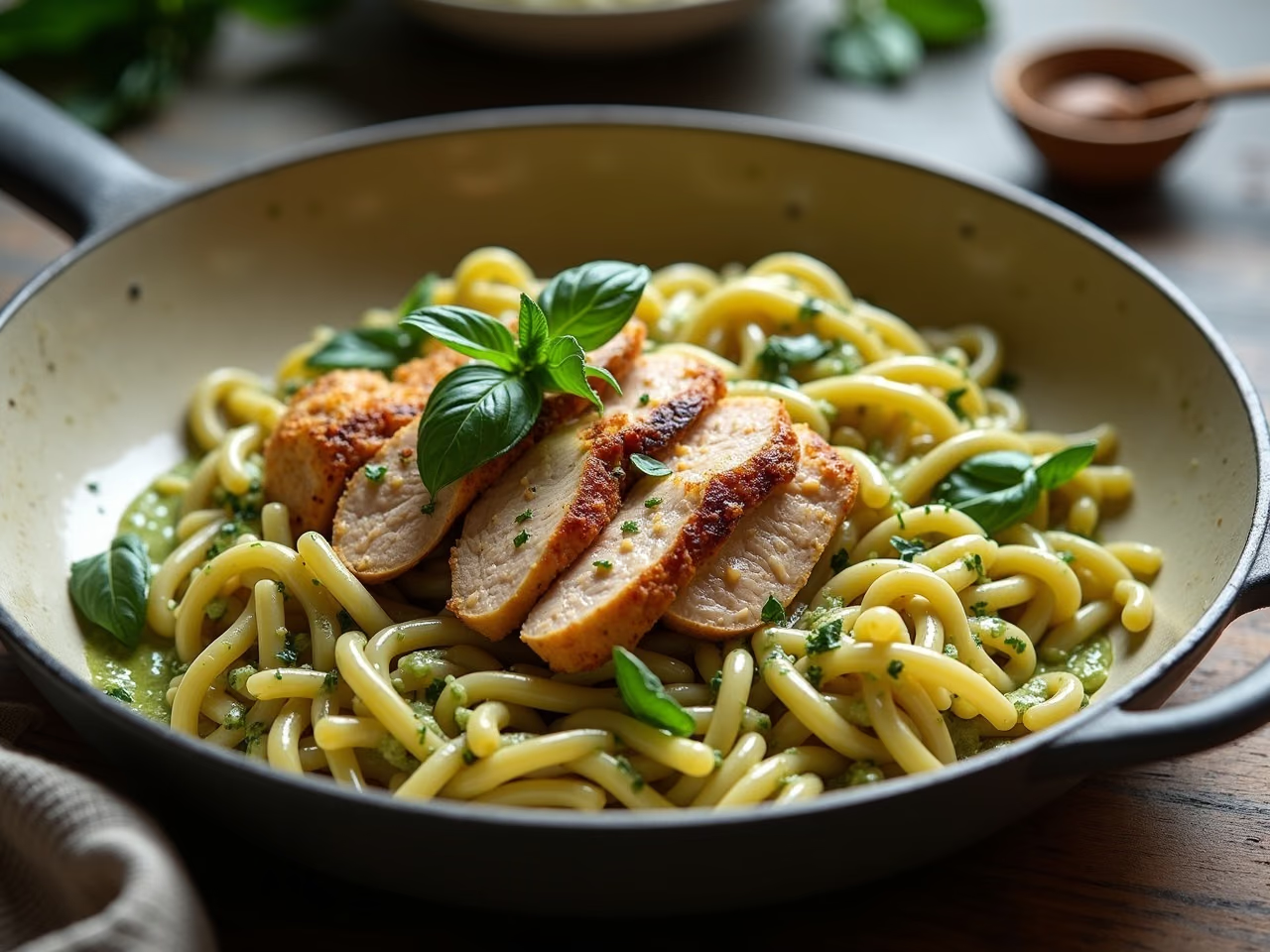
Creamy chicken pesto pasta fails in one photographable way: the sauce that was bright green in the jar arrives at the table khaki and slick. That is not a quality problem with the pesto — it is a temperature problem with the cook, and it has a hard number attached.
Pesto is a raw sauce with a ceiling
Around 180°F, two things happen to pesto at once: the enzymes and chlorophyll that keep basil vivid break down (green → olive → brown), and the oil emulsion splits (silky → greasy, with grainy flecks of cooked cheese). Both changes are one-way.
So the dish is sequenced around never crossing the line. The chicken gets the pan’s real heat; after that the burner is off, and the sauce is assembled on residual warmth — cream first (which drops the pan temperature), then pesto, then pasta water. The pasta arrives hot enough to serve. If the tossed dish genuinely needs a boost, it gets low heat, briefly, moving constantly, and comes off before a single bubble.
Cream is a stabiliser, not just a flavour
The reason “creamy” pesto pasta is easier to get right than plain pesto pasta: dairy proteins coat oil droplets and hold the emulsion together under conditions that would break pesto alone. A third of a cup is enough for the chemistry — the goal is pesto with backup, not basil-flavoured alfredo. The starchy pasta water is the other half of the binding, same as every emulsified pasta on this site.
The chicken plays by cutlet rules
Halved breasts, 3–4 minutes a side, pulled at 160°F, rested while the pasta finishes, sliced across the grain. Cutting across the grain shortens the muscle fibres so each strip eats tender — with the grain, the same perfectly-cooked chicken chews stringy. It is a knife decision, made after the cooking is already done right.
Creamy Chicken Pesto Pasta, Unsplit
- Prep
- 10 min
- Cook
- 15 min
- Total
- 25 min
- Serves
- 4
Ingredients
- 12 oz (340 g) fusilli, gemelli or penne
- 1.25 lb (570 g) boneless skinless chicken breasts, halved into cutlets
- 3/4 teaspoon fine sea salt, plus more for the pasta water
- 1/2 teaspoon black pepper
- 1 tablespoon olive oil
- 1/2 cup (120 g) basil pesto — good jarred or homemade
- 1/3 cup (80 ml) heavy cream
- 1 oz (30 g) Parmesan, grated, plus more to serve
- 1 cup cherry tomatoes, halved (optional but earning its place)
- Small basil leaves, to finish
Method
- Bring a large pot of well-salted water to the boil. Season the cutlets with the salt and pepper. (5 min)
- Heat the oil in a 12-inch skillet over medium-high and sear the cutlets 3–4 minutes a side to 160°F (71°C) — carryover finishes them at the safe 165°F while they rest. Move to a board; do not wipe the pan. (8 min)
- Start the pasta, cooking 1 minute short of the package time. Reserve 1 cup of pasta water before draining. (9 min)
- While it cooks, slice the rested chicken across the grain into strips. If using tomatoes, tip them into the empty chicken pan over medium for 2 minutes until just blistered, then kill the heat. (3 min)
- With the pan OFF the heat: stir in the cream, scraping up the chicken fond — the pan's residual heat is plenty. Then stir in the pesto and 1/2 cup of pasta water until the sauce is smooth and pale green. (1 min)
- Add the drained pasta, the chicken and the Parmesan, and toss until coated, loosening with more pasta water to a glossy, pourable cling. If it needs reheating, warm over LOW for under a minute, stirring — never let it bubble. Finish with basil leaves. (2 min)
Notes
- The 180°F rule is the whole recipe: heat denatures the basil's green (it goes olive-brown) and breaks the oil emulsion (it goes greasy and grainy). Everything after the chicken happens on stored pan heat, which lands the sauce in the right zone without a thermometer.
- The cream is doing protective work as well as flavour: casein proteins in dairy stabilise the pesto's oil emulsion, which is why creamy pesto sauces are more forgiving than pure ones. A third of a cup is enough for the effect — this is not an alfredo.
- Jarred pesto standard: buy ones whose ingredient list starts "basil, olive oil" (or at worst sunflower oil), and refrigerated tubs generally beat shelf jars. Doctor any jar with a squeeze of lemon and a handful of fresh grated Parmesan and it plays well above its price.
- Leftovers are the one weak spot — reheating pushes the sauce through the split point. Microwave at half power with a spoonful of water, stirring every 30 seconds, and stop while it is merely warm. Or eat it at room temperature, where it is honestly good.
- For a lighter version, swap the cream for 1/3 cup of the hot pasta water whisked with 2 tablespoons of mascarpone or full-fat Greek yogurt (yogurt off the heat only). Half-and-half works; milk splits.
Per serving (estimated by calculation from ingredient quantities, not laboratory tested): 634 kcal · 43 g protein · 60 g carbohydrate · 25 g fat.
Common questions
Why did my pesto turn brown and oily in the pan?
Heat. Basil's bright green compounds and the oil emulsion both break down above roughly 180°F, so pesto simmered in a sauce goes olive-drab and greasy within a minute. Pesto is a raw sauce — add it off the heat, let residual warmth do the work, and if the finished dish needs a temperature boost, use low heat briefly and never let it bubble.
How much pesto do I need for a pound of pasta?
About 2/3 cup of pesto per pound of dry pasta as a pure sauce; this recipe uses 1/2 cup for 12 oz because cream and Parmesan extend it. The universal fix for under-sauced pesto pasta is not more pesto but more starchy pasta water — a quarter cup at a time, tossed hard, stretches the coating dramatically without diluting flavour.
Can I use milk instead of heavy cream in pesto pasta?
Not directly — milk lacks the fat to stabilise against the pesto's acidity and heat, and it tends to split into curds. Working substitutes: half-and-half (borderline, keep it off direct heat), mascarpone or full-fat Greek yogurt whisked with hot pasta water, or simply more pasta water and Parmesan for a lighter, cream-free version that is closer to how pesto is used in Liguria anyway.
What temperature should the chicken reach?
Pull the cutlets at 160°F (71°C) at the thickest point; resting carries them to the USDA-safe 165°F (74°C). Thin cutlets overshoot fast — a whole breast seared to 165°F on the burner coasts to 170°F-plus and eats dry. Slicing across the grain after a 5-minute rest keeps the juices in the meat instead of on the board.
Is homemade pesto worth it for this dish?
When basil is cheap and good, absolutely — a food processor version (2 cups basil, 1/3 cup oil, 1/4 cup pine nuts or walnuts, 1 oz Parmesan, 1 small garlic clove, salt) takes five minutes and outclasses any jar. Off-season, a good refrigerated pesto doctored with lemon and fresh Parmesan is the honest choice; the cream and pasta-water technique matters more to the final dish than the pesto's pedigree.