Weeknight
Ground Beef and Pasta: 20-Minute Skillet
Ground beef and pasta cook in one 12-inch skillet in about 20 minutes: brown 1 lb of beef hard on one side for 3–4 minutes before breaking it up, and whether you drain the fat depends on the meat — 90/10 needs no draining, 80/20 releases about 1/4 cup of fat and wants most of it poured off. The pasta cooks directly in the sauce with 2.5 cups of liquid per 8 oz of dry pasta, which puts the starch in the dish instead of down the drain.
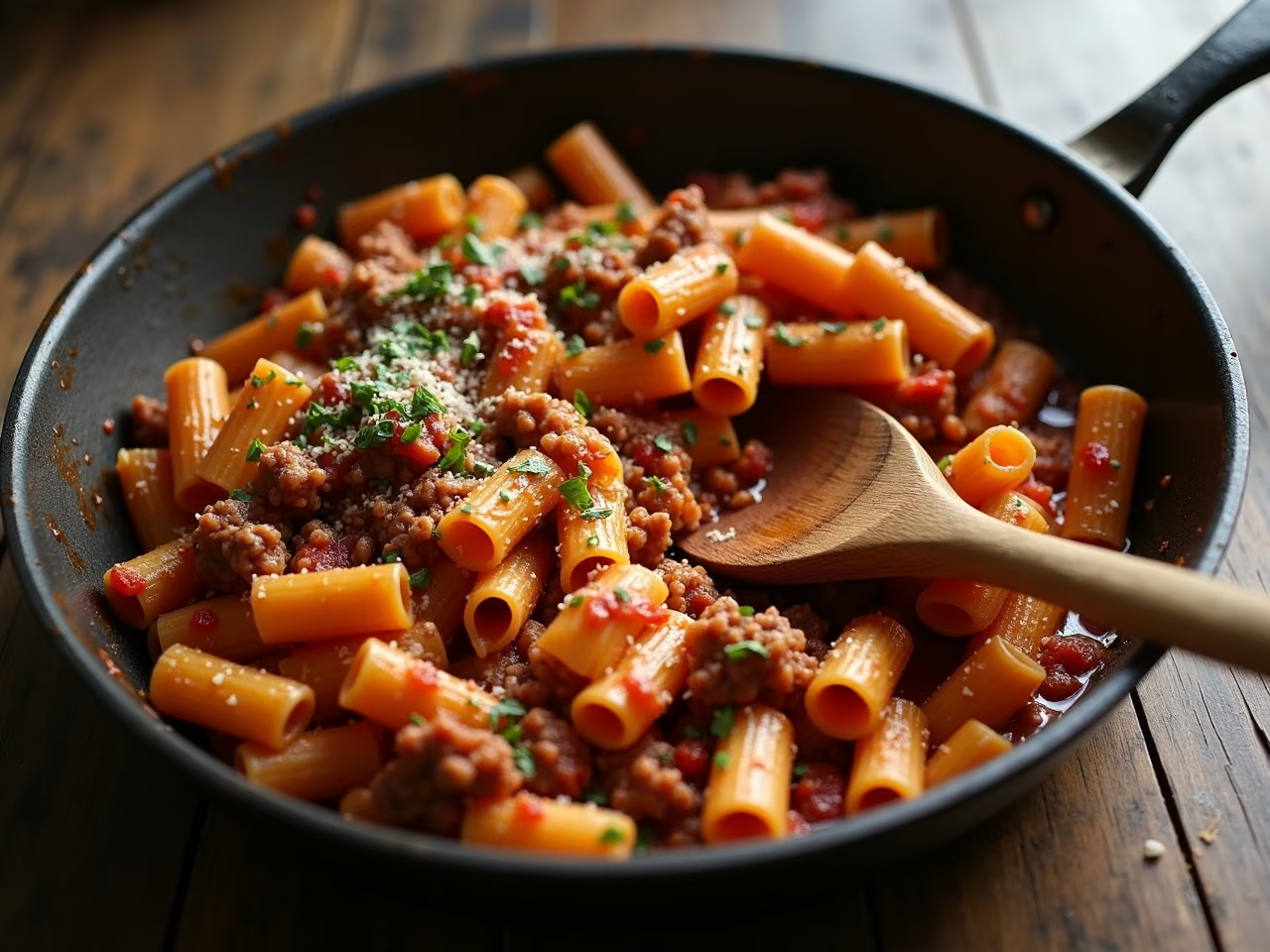
Ground beef and pasta is the weeknight default in half the world’s kitchens, and it is usually made worse by two reflexes: stirring the beef constantly, and boiling the pasta in a separate pot of water that then takes the starch — the natural thickener — down the drain. This version fixes both, and it is faster, not slower.
Brown one side hard, then stop
Browning is a surface reaction that needs the meat dry, hot and stationary. Pressed into a single layer and left alone for 3–4 minutes, the underside develops a deep brown crust that seasons the entire sauce. Stirred from the start, the same beef sheds water, the pan drops to a boil, and everything turns uniformly grey. One side browned well beats five sides browned not at all — break it up only after the crust exists.
The drain decision is arithmetic
| Beef | Fat rendered per lb | Action |
|---|---|---|
| 90/10 | ~1 tbsp | keep it all |
| 85/15 | ~2–3 tbsp | keep it all, or skim once |
| 80/20 | ~4–5 tbsp | spoon off down to ~2 tbsp |
The onions need about 2 tablespoons of fat to cook in, and that fat carries the browned flavour. Drain toward that number rather than toward zero.
Why the pasta cooks in the pan
Dry pasta simmered in the sauce does three jobs at once: it absorbs seasoned liquid instead of plain water, its starch thickens the sauce to clinging without cream or flour, and it deletes a pot. The working ratio is 2.5 cups of liquid per 8 oz of short pasta, lid on, 10–12 minutes with a stir every few. The three-minute rest at the end is real — the sauce visibly sets from soupy to coating while you get plates out.
Ground Beef and Pasta: 20-Minute Skillet
- Prep
- 5 min
- Cook
- 20 min
- Total
- 25 min
- Serves
- 4
Ingredients
- 1 lb (450 g) ground beef, 85/15 or 90/10
- 8 oz (225 g) short pasta — rigatoni, penne or shells
- 1 medium yellow onion, diced
- 3 cloves garlic, minced
- 2 tablespoons tomato paste
- 1 can (14 oz / 400 g) crushed tomatoes
- 2 cups (480 ml) low-sodium beef or chicken stock
- 1 teaspoon dried oregano
- 1 teaspoon fine sea salt, divided
- 1/2 teaspoon black pepper
- 2 oz (55 g) Parmesan, grated, plus more to serve
- 2 tablespoons chopped parsley (optional)
Method
- Heat a dry 12-inch skillet over medium-high until a drop of water sizzles off instantly. Add the beef in one flat layer, press it down, and leave it alone for 3–4 minutes until the underside is deeply browned. This one untouched interval is where most of the dish's flavour is made. (4 min)
- Break the beef up, season with 1/2 teaspoon of the salt, and cook 2 minutes more until no pink remains. Now the fat decision: tilt the pan — 90/10 leaves a tablespoon or so, keep it; 80/20 leaves a puddle, spoon off all but about 2 tablespoons. (3 min)
- Add the onion and cook 3 minutes in the remaining fat until translucent, then the garlic and tomato paste for 1 minute, stirring, until the paste darkens a shade — cooked paste tastes rich, raw paste tastes tinny. (4 min)
- Add the crushed tomatoes, stock, oregano, remaining salt and the dry pasta. Stir well, scraping the browned bits off the pan floor, and bring to a strong simmer. (2 min)
- Cover and simmer 10–12 minutes, stirring every 3–4 minutes so the pasta doesn't weld to the pan, until the pasta is just tender and the sauce has thickened around it. If it tightens before the pasta is done, add stock a splash at a time. (12 min)
- Off the heat, stir in the Parmesan until glossy. Rest 3 minutes — the sauce sets from loose to clinging in that time — then finish with parsley and more cheese. (3 min)
Notes
- The pasta-in-the-sauce method is not just one fewer pot: pasta sheds starch as it cooks, and here that starch thickens the sauce instead of leaving with the cooking water. It is why the sauce clings without any cream or flour.
- Liquid ratio to remember: 2.5 cups per 8 oz of short dry pasta, covered, at a simmer. Shapes matter a little — shells and rigatoni drink slightly more than penne; check at 10 minutes.
- The drain decision by the numbers: 1 lb of 80/20 renders roughly 4–5 tablespoons of fat, 85/15 about 2–3, 90/10 about 1. The dish wants around 2 tablespoons for the onion step. Drain down to that, not to zero — degreased-to-dry beef sauce tastes hollow.
- Do not rinse or "wash" the browned beef, and do not deglaze into the sink: the brown crust on the pan floor dissolves into the sauce in step 4 and is the point of step 1.
- Leftovers thicken hard overnight as the pasta keeps absorbing. Reheat with a splash of stock or water, covered, and it comes back — this is also one of the rare pasta dishes that reheats respectably in a microwave.
Per serving (estimated by calculation from ingredient quantities, not laboratory tested): 566 kcal · 37 g protein · 52 g carbohydrate · 22 g fat.
Common questions
Should you drain ground beef for pasta sauce?
It depends on the fat percentage, not on habit. 90/10 renders about a tablespoon — keep it all, it is the cooking fat for the onions. 80/20 renders 4–5 tablespoons, and a sauce carrying all of it goes greasy and separates at the edges; spoon off down to about 2 tablespoons. Draining to bone dry is the opposite mistake — fat carries the browned-meat flavour.
Can you cook pasta directly in the sauce?
Yes, with enough liquid and a lid: 2.5 cups of liquid per 8 oz of short dry pasta, simmered covered 10–12 minutes with occasional stirring. The pasta releases its starch into the sauce, which thickens it the way reserved pasta water thickens a tossed pasta — and the pasta absorbs seasoned liquid instead of plain water, so it tastes of the dish all the way through.
Why is my ground beef grey instead of browned?
Crowding and stirring. A pound of beef stirred from the moment it hits the pan steams in its own juices at around 212°F, well below browning temperature. Press it into one layer, leave it untouched 3–4 minutes until the underside is deep brown, then break it up. One properly browned side flavours the whole dish; constant stirring browns nothing.
What pasta shape works best cooked in sauce?
Sturdy short shapes: rigatoni, penne, shells, rotini. They cook evenly submerged, hold their structure through the stirring, and trap the meat sauce. Long strands can be cooked in-sauce but need breaking or careful submerging and stir more awkwardly around the meat; delicate shapes like farfalle go floppy at the folds before the thick middles cook.
Can I make this ahead or freeze it?
It holds 3 days in the fridge and reheats well with added liquid, but it freezes only adequately — pasta frozen in sauce softens noticeably on thawing. For a freezer version, make the meat sauce alone (through step 4, minus pasta, simmered 15 minutes), freeze that for up to 3 months, and cook fresh pasta in it after thawing with the same liquid ratio.