Weeknight
Filet Mignon Internal Temperature Chart (Pull vs Serve)
Filet mignon internal temperature by doneness: rare 120°F pull / ~127°F served, medium-rare 125°F (52°C) pull / ~133°F (56°C) served, medium 135°F / ~142°F, medium-well 145°F / ~152°F, well done 155°F / ~162°F. Pull the steak off the heat at the lower number and rest it 8 minutes — carryover cooking raises a 1.5–2 inch filet by 6–10°F after it leaves the pan, so the pull temperature is always below the temperature you want to eat at. The USDA-recommended safe minimum for whole cuts of beef is 145°F (63°C) followed by a 3-minute rest.
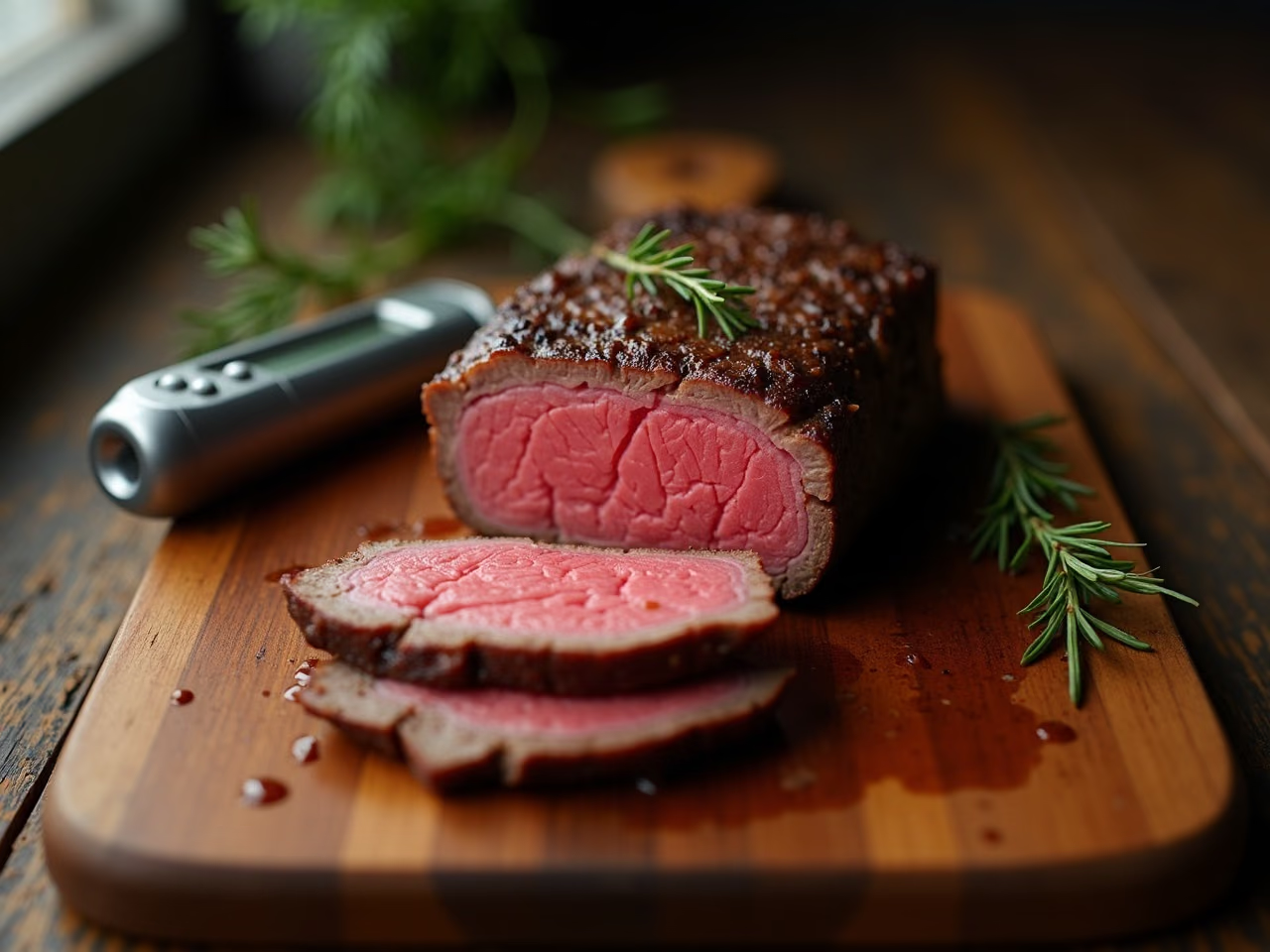
Filet mignon is the cut where guessing costs the most. It is expensive, it is very lean, and the window between medium-rare and overdone is narrower than on any fattier steak.
The number that matters is not the one you want to eat at. It is the one you pull at.
Pull temperature vs serving temperature
A steak keeps cooking after it comes off the heat. The outside is far hotter than the centre, and that heat keeps moving inward while it rests. On a filet cut 1.5–2 inches thick, the centre rises 6–10°F during an 8-minute rest.
| Doneness | Pull at | Rests to | What it looks like |
|---|---|---|---|
| Rare | 120°F / 49°C | ~127°F / 53°C | deep red, cool centre |
| Medium-rare | 125°F / 52°C | ~133°F / 56°C | evenly pink, warm, still soft |
| Medium | 135°F / 57°C | ~142°F / 61°C | rosy centre, firmer |
| Medium-well | 145°F / 63°C | ~152°F / 67°C | faint pink, noticeably firm |
| Well done | 155°F / 68°C | ~162°F / 72°C | no pink, dry on this cut |
The USDA-recommended minimum for whole cuts of beef is 145°F (63°C) with a 3-minute rest, which lands at the firm end of medium. Cooking below that is common practice for whole steaks and is a personal risk decision — the reasoning is in the questions below.
Filet mignon, fillet steak and tenderloin steak are the same cut under three names, and the chart applies to all of them. What changes the timing is thickness, not the label.
Carryover depends on thickness
The 6–10°F figure is for a proper 1.5–2 inch filet. It is not a constant:
| Thickness | Typical carryover |
|---|---|
| 1 inch (2.5 cm) | 4–6°F |
| 1.5 inches (4 cm) | 6–8°F |
| 2 inches (5 cm) | 8–10°F |
| 2.5 inches (6 cm) | 10–12°F |
Thicker steaks store more heat, so they push further after the pan. If your butcher cut them thin, pull closer to your target temperature.
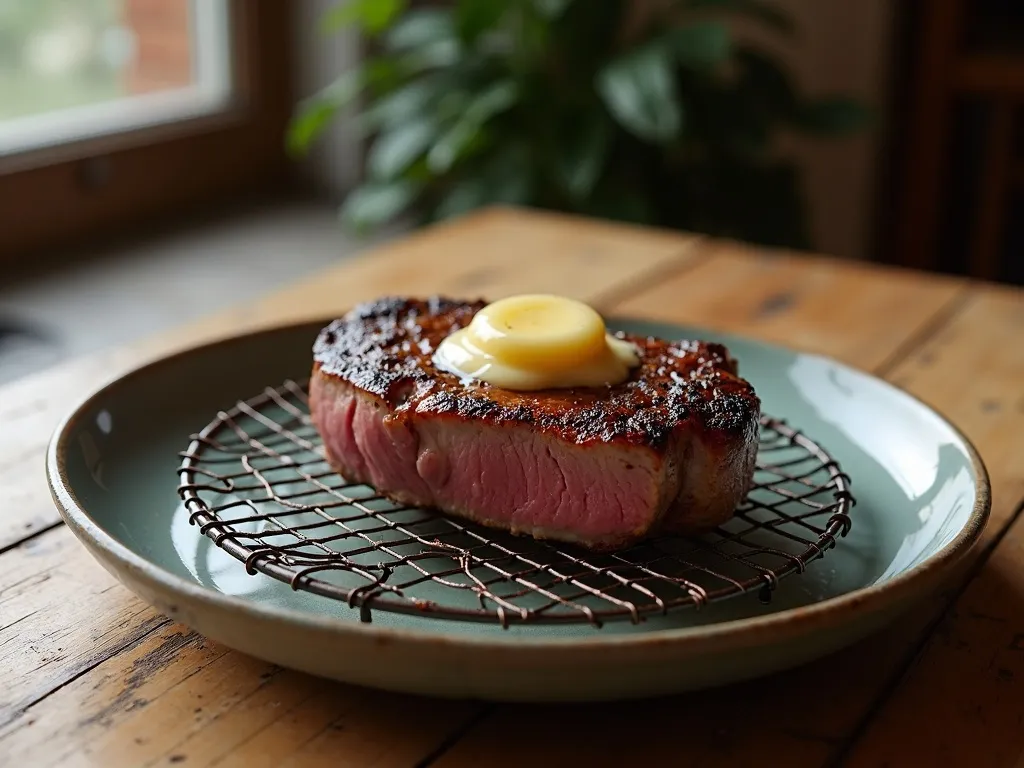
Measure from the side
This is the single most common mistake with this cut. A filet is tall and round rather than wide and flat. If you push the probe straight down from the top, the tip travels through the centre and out the bottom, where it reads the hot pan — several degrees too high — and you pull a steak that is still rare inside.
Insert the probe horizontally, into the side, so the tip stops in the middle. Take a second reading from the opposite side if you are unsure; the two should agree within a couple of degrees.
Time by method, for medium-rare
The chart is the target; these are the windows in which to start checking. All rows are for a steak that has been out of the fridge for 45 minutes and are aimed at a 125°F pull.
| Method | 1 inch | 1.5 inches | 2 inches |
|---|---|---|---|
| Pan-sear, medium-high, then butter baste | 2–3 min per side | 3 min per side + 1–2 min basting | 3 min per side, then 4–6 min in a 400°F oven |
| Reverse sear: 275°F (135°C) oven, then a hot pan | 15–20 min, then 45 sec per side | 25–30 min, then 1 min per side | 35–40 min, then 1 min per side |
| Grill, direct high heat | 3–4 min per side | 4–5 min per side | 5 min per side, then 3–5 min over indirect heat |
| Air fryer, 400°F (200°C), flipped halfway | 8–10 min | 10–12 min | 13–15 min |
| Sous vide at 130°F (54°C), then a 45-second sear per side | 1 hour | 1.5 hours | 2 hours |
Two of these break the pull-and-rest rule, and it is worth knowing which. In a reverse sear the oven stage should stop at 115–120°F, because the final sear adds heat on top of the usual carryover. In sous vide there is almost no carryover at all — the bath temperature is the serving temperature — so set the bath to the “rests to” column, not the “pull at” column, and keep the sear short.
Treat every number here as a starting point rather than a rule. A pan that was not quite hot, a grill lid left open, a steak straight from the fridge: change any one of those and the time moves, and the thermometer is what catches it.
The recipe below is the pan method the chart is written for.
Filet Mignon Internal Temperature Chart (Pull vs Serve)
- Prep
- 10 min
- Cook
- 12 min
- Total
- 22 min
- Serves
- 2 steaks
Ingredients
- 2 filet mignon steaks, 6–8 oz (170–225 g) each, cut 1.5–2 inches (4–5 cm) thick
- 1 teaspoon fine sea salt
- 1/2 teaspoon freshly ground black pepper
- 1 tablespoon neutral oil with a high smoke point, such as grapeseed or avocado
- 2 tablespoons unsalted butter
- 2 cloves garlic, lightly crushed
- 2 sprigs thyme
Method
- Take the steaks out of the fridge 45 minutes before cooking and salt them on all sides. A cold centre is the main reason a filet ends up grey around the edge and raw in the middle. (45 min)
- Pat the steaks completely dry just before cooking and season with the pepper. Surface moisture has to boil off before browning starts, and that time is time spent overcooking the interior.
- Heat a heavy skillet — cast iron or carbon steel — over medium-high until the oil shimmers and moves like water. Too cool and you will not get a crust; smoking hot and the butter will burn later. (5 min)
- Lay the steaks in away from you and do not move them for 3 minutes. Flip and sear the other side for 3 minutes. Sear the edges by holding the steaks on their sides with tongs for about 30 seconds each. (7 min)
- Reduce the heat to medium. Add the butter, garlic and thyme, tilt the pan, and spoon the foaming butter over the steaks for 1–2 minutes. (2 min)
- Start checking the temperature after the first flip. Insert an instant-read thermometer into the side of the steak, horizontally, so the tip sits in the centre. Pull at 125°F (52°C) for medium-rare — see the chart on this page for other doneness levels.
- Rest the steaks on a warm plate or a wire rack for 8 minutes, loosely tented. The centre will climb 6–10°F and the juices will redistribute. Cut into it early and the juice ends up on the board. (8 min)
Notes
- Measure from the side, not the top. A filet is tall and narrow, and a probe pushed down from above passes through the centre and out the other side, reading the pan rather than the steak.
- Carryover scales with thickness. A 1-inch filet gains about 5°F resting; a 2-inch one can gain 10°F. If your steaks are thin, pull closer to your target.
- A cold-centred steak carries over less, because there is less stored heat. This is another reason to let them sit out first — it makes the carryover predictable.
- Filet is very lean, which is why overshooting is unforgiving. There is little intramuscular fat to keep it moist past medium.
- If you are cooking four or more, sear them and finish in a 275°F (135°C) oven rather than crowding the pan. A crowded pan drops in temperature and the steaks steam.
Per serving (estimated by calculation from ingredient quantities, not laboratory tested): 520 kcal · 46 g protein · 1 g carbohydrate · 37 g fat.
Common questions
What temperature is medium-rare filet mignon?
Medium-rare filet mignon is 130–135°F (54–57°C) when you eat it. To land there, pull it off the heat at 125°F (52°C) and rest it 8 minutes — carryover cooking does the last 6–10°F. Pulling at 130°F and then resting overshoots into medium.
Is 145°F safe for filet mignon?
The USDA recommends 145°F (63°C) with a 3-minute rest for whole cuts of beef, which lands at the firm end of medium. Whole muscle cuts differ from ground beef because bacteria stay on the surface rather than being mixed through, and searing addresses the surface. Many people therefore cook whole steaks below 145°F; that is a personal risk decision, and anyone pregnant, immunocompromised, very young or elderly should use the full 145°F.
How long should filet mignon rest?
Eight minutes for a 1.5–2 inch steak, loosely tented rather than wrapped tightly — trapped steam softens the crust you just built. Resting does two things: it lets carryover finish the centre, and it lets the muscle fibres relax so the juices stay in the steak instead of running out when you cut it.
Why is my filet mignon grey inside instead of pink?
Usually the steak went into the pan cold, so the outside had to overcook while heat crawled to the centre. Occasionally the pan was not hot enough, so the steak effectively braised in its own moisture. Both are fixed by the same two habits: 45 minutes out of the fridge, and a pan hot enough that the steak sizzles hard the moment it lands.
Do I need a thermometer for filet mignon?
For this cut, genuinely yes. The touch test works reasonably on a flat sirloin but poorly on a filet, which is thick, round and much leaner, so the feel changes late and fast. A filet is also expensive enough that guessing is a bad trade against a £12 instant-read thermometer.