Weeknight
Oven Pork Chops Without Drying Them Out
Sear pork chops for 2 minutes a side, then finish in a 400°F (200°C) oven — about 6–8 minutes for a 1-inch boneless chop and 10–14 minutes for a 1.5-inch bone-in one. Pull them at 140°F (60°C) and rest 5 minutes; carryover takes them to the USDA-recommended 145°F (63°C), which leaves the centre faintly pink and still juicy. The old advice to cook pork to 160°F+ was withdrawn in 2011 and is the main reason home-cooked chops are dry.
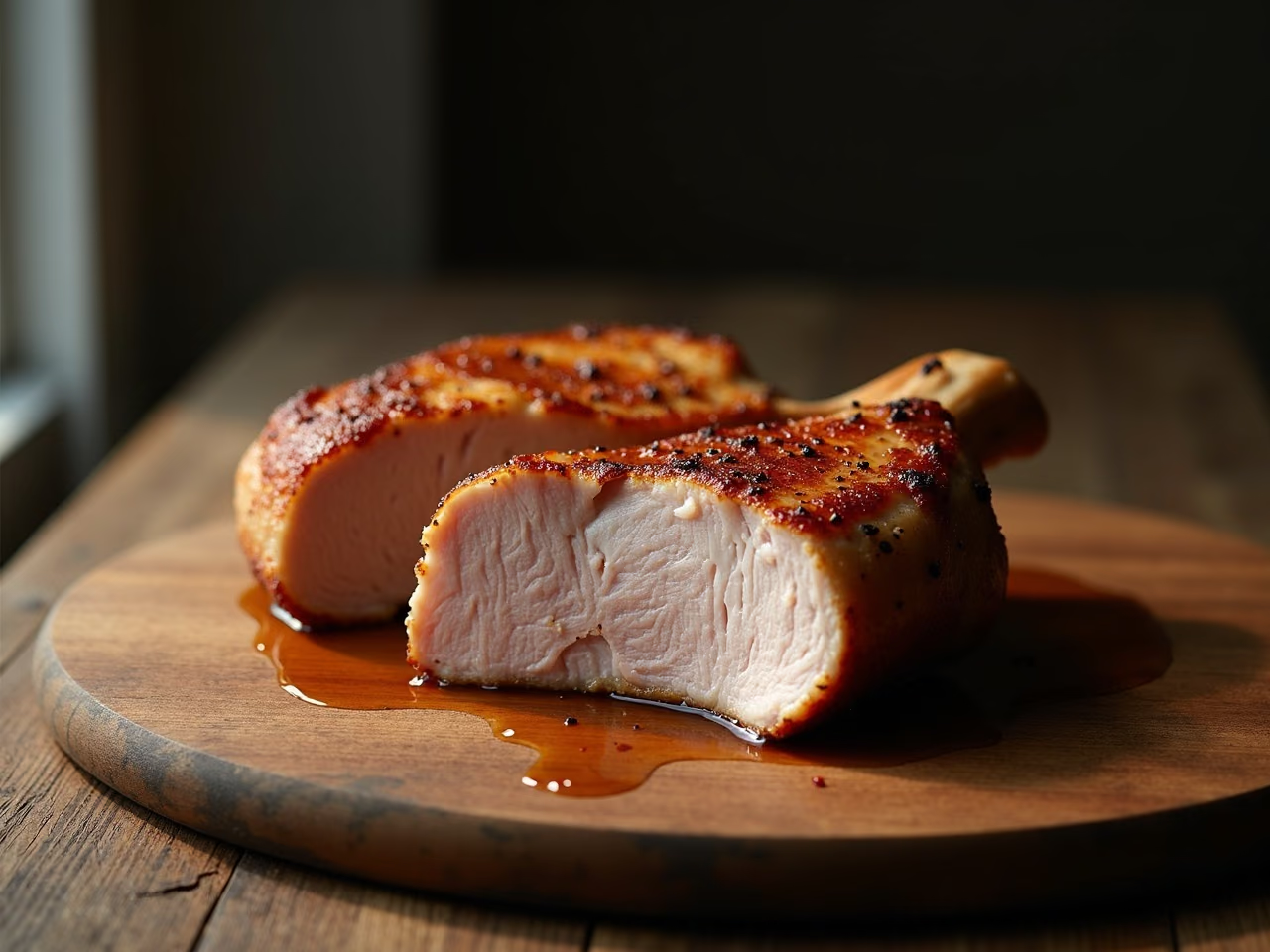
Pork chops have a reputation for being dry that they mostly do not deserve. The reputation comes from advice that was correct in 1975 and has been wrong since 2011.
The 145°F change
For decades, the guidance was to cook pork until no pink remained, which meant an internal temperature of 160°F or higher. That existed because of trichinosis, a parasitic infection associated with undercooked pork.
Commercial pork production changed, and the parasite was effectively eliminated from the farmed supply. In 2011 the USDA revised its recommendation for whole cuts of pork down to 145°F (63°C) with a 3-minute rest — the same as beef, lamb and veal.
Two things happened in the meantime. Pork was bred progressively leaner, so there is now far less intramuscular fat to keep an overcooked chop palatable. And a great many recipes, cookbooks and family habits never got the memo. The result is that the standard home method overshoots by 15°F on a cut that has no margin for it.
| Pull at | Rests to | Result |
|---|---|---|
| 135°F / 57°C | ~140°F / 60°C | rosy, very juicy, below USDA guidance |
| 140°F / 60°C | ~145°F / 63°C | faintly pink, juicy — the USDA recommendation |
| 145°F / 63°C | ~150°F / 66°C | just past pink, beginning to firm |
| 155°F / 68°C | ~160°F / 71°C | white throughout, dry on a lean chop |
Sear first, then oven
Baking a chop from raw is what produces the grey, tough result. The oven has to run long enough to cook the centre, and in that time the surface dries out without ever browning properly, because a domestic oven does not get hot enough to brown quickly.
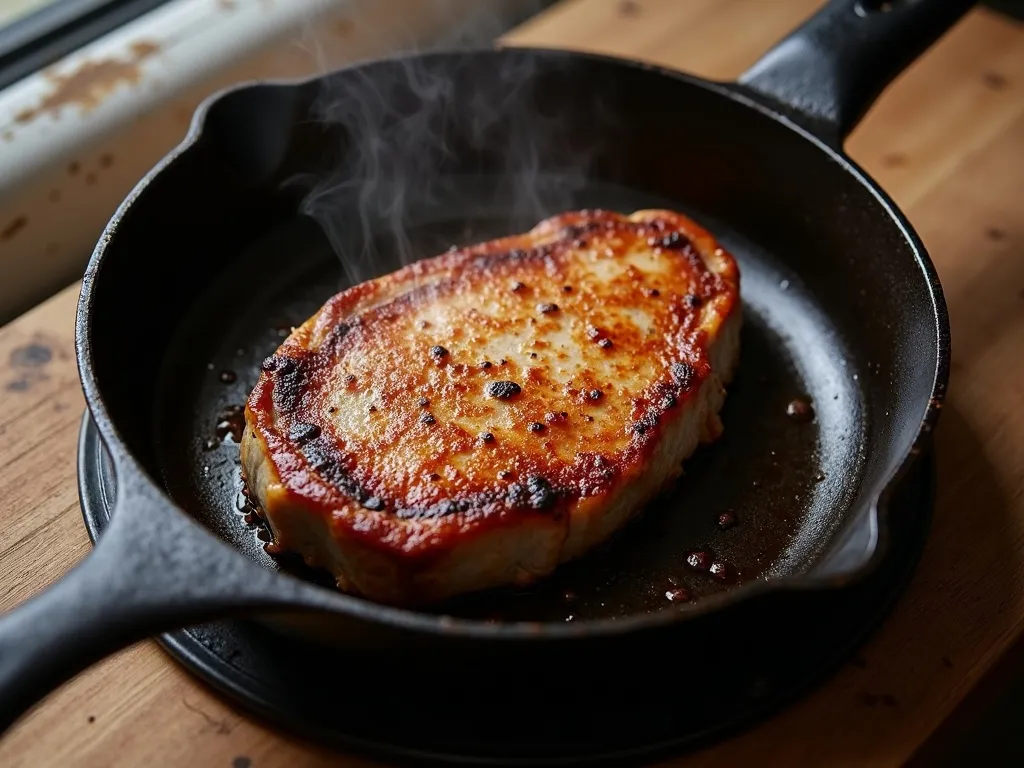
Searing separates the two jobs. Two minutes a side in a hot pan does all the browning while barely touching the interior. The oven then does nothing but bring the centre up gently and evenly.
Times by thickness and cut
After a 2-minute-per-side sear, at 400°F (200°C):
| Chop | Oven time | Total |
|---|---|---|
| 3/4 inch boneless | 4–6 min | ~9 min |
| 1 inch boneless | 6–8 min | ~11 min |
| 1 inch bone-in | 8–11 min | ~14 min |
| 1.5 inch bone-in | 10–14 min | ~17 min |
| 2 inch bone-in | 15–18 min | ~21 min |
Bone-in runs longer because bone insulates the meat immediately around it. It is also more forgiving, so if you are unsure of your oven, buy bone-in.
The 30-minute brine
Lean meat holds less water than it used to, and a short salt brine changes that. Dissolving two tablespoons of salt in a litre of water and soaking the chops for 30–45 minutes lets the salt penetrate the outer layer, where it alters the muscle proteins so they hold onto more moisture during cooking.
The effect is easy to notice and takes no active work. Two constraints: do not brine pork that is already “enhanced” or sold in a solution — check the label, because that pork has been brined at the plant and will end up far too salty — and do not brine longer than an hour, or the texture turns soft and faintly ham-like.
Oven Pork Chops Without Drying Them Out
- Prep
- 10 min
- Cook
- 16 min
- Total
- 26 min
- Serves
- 4 chops
Ingredients
- 4 bone-in pork loin chops, 1 to 1.5 inches (2.5–4 cm) thick, about 10 oz (285 g) each
- 2 tablespoons fine sea salt, for the brine
- 4 cups (1 litre) cold water, for the brine
- 1 tablespoon neutral oil
- 1/2 teaspoon freshly ground black pepper
- 2 tablespoons unsalted butter
- 2 cloves garlic, lightly crushed
- 2 sprigs thyme or sage
Method
- Dissolve the 2 tablespoons of salt in the cold water and submerge the chops for 30–45 minutes. Modern pork is very lean, and this short brine is the single biggest improvement you can make to it. Do not go past an hour or the texture turns spongy. (40 min)
- Heat the oven to 400°F (200°C). Lift the chops out of the brine and pat them completely dry — inside and out, including the fat cap. Do not add more salt; the brine has done that. (15 min)
- Season with the pepper. Heat the oil in an oven-safe heavy skillet over medium-high until it shimmers. (4 min)
- Sear the chops for 2 minutes without moving them, until a deep crust forms. Flip and sear the second side for 2 minutes. If the chops have a fat cap, hold them on that edge with tongs for 30 seconds to render it. (5 min)
- Add the butter, garlic and thyme to the pan, then transfer the whole skillet to the oven. Roast 6–8 minutes for a 1-inch boneless chop, 10–14 minutes for a 1.5-inch bone-in chop. (12 min)
- Start checking at the low end of the range. Insert an instant-read thermometer into the thickest part, avoiding the bone. Pull the pan out at 140°F (60°C).
- Rest the chops on a warm plate for 5 minutes. The centre climbs to about 145°F (63°C) and the juices redistribute. Spoon the pan butter over them to serve. (5 min)
Notes
- Bone-in chops run 3–5 minutes longer than boneless of the same thickness, because bone insulates the meat next to it. They are also harder to overcook, which makes them the better choice if you are cooking these for the first time.
- Thickness matters far more than weight. A wide, thin 10 oz chop and a narrow, thick 10 oz chop need very different times. Measure the thickest point.
- Skip the brine if the packaging says "enhanced", "seasoned" or "contains up to X% solution" — that pork has already been brined at the plant, and brining again makes it unpleasantly salty.
- No oven-safe skillet? Sear in any pan and transfer the chops to a preheated sheet pan. Add 1–2 minutes to the oven time to account for the cold pan.
- Rested chops should read 145°F. If yours consistently come out at 155°F, your oven runs hot — pull at 135°F instead and check with an oven thermometer.
Per serving (estimated by calculation from ingredient quantities, not laboratory tested): 398 kcal · 42 g protein · 0 g carbohydrate · 25 g fat.
Common questions
What temperature should pork chops be cooked to?
The USDA recommends 145°F (63°C) followed by a 3-minute rest for whole cuts of pork, which it revised down from 160°F in 2011. At 145°F the centre is faintly pink and still juicy — that pink is normal and safe, not undercooked. Pull the chops at 140°F and let carryover finish them, because a chop pulled at 145°F rests to about 150°F and starts drying.
Why are my oven pork chops always dry?
Almost always overcooking, and usually because of the pre-2011 advice to cook pork until no pink remains. Modern pork is bred far leaner than it was in the era that advice came from, so there is very little intramuscular fat to hide an extra ten degrees. The other common cause is baking a chop from raw at a low temperature for 25–30 minutes, which dries the outside long before the centre is ready.
How long do pork chops take in the oven at 400°F?
After a 2-minute-per-side sear: 6–8 minutes for a 1-inch boneless chop, 10–14 minutes for a 1.5-inch bone-in chop, and 15–18 minutes for a 2-inch chop. Without searing first, add roughly 5 minutes and accept a paler surface — the sear is browning, not cooking, but it is most of the flavour.
Is it safe for pork to be pink in the middle?
Yes, at 145°F with a 3-minute rest. Trichinosis, which drove the old well-done advice, has been effectively eliminated from commercial pork production in the US and EU; there are only a handful of cases a year and they are largely linked to wild game rather than farmed pork. Colour is not a reliable doneness indicator in any case — the thermometer is.
Should I brine pork chops before baking?
For lean loin chops, a 30–45 minute wet brine makes a clear difference: the salt helps the muscle proteins hold water, so the chop loses less moisture as it cooks. Skip it for pre-brined "enhanced" pork, and do not exceed an hour — beyond that the texture turns soft and ham-like.