Desserts
French Macarons: Judge the Batter, Not the Clock
Macaron batter is done when it flows off the spatula in a continuous ribbon and a figure-eight drawn with that ribbon sinks back into the batter within 20 seconds — typically 25–40 folds after the dry ingredients go in, but the count is a guide and the ribbon is the test. Pipe, then rest the shells until the surface is matte and no batter sticks to a fingertip (20–40 minutes in a dry kitchen), and bake at 300°F (150°C) for 13–15 minutes. Everything is weighed in grams; macarons are the recipe where volume measuring actually fails.
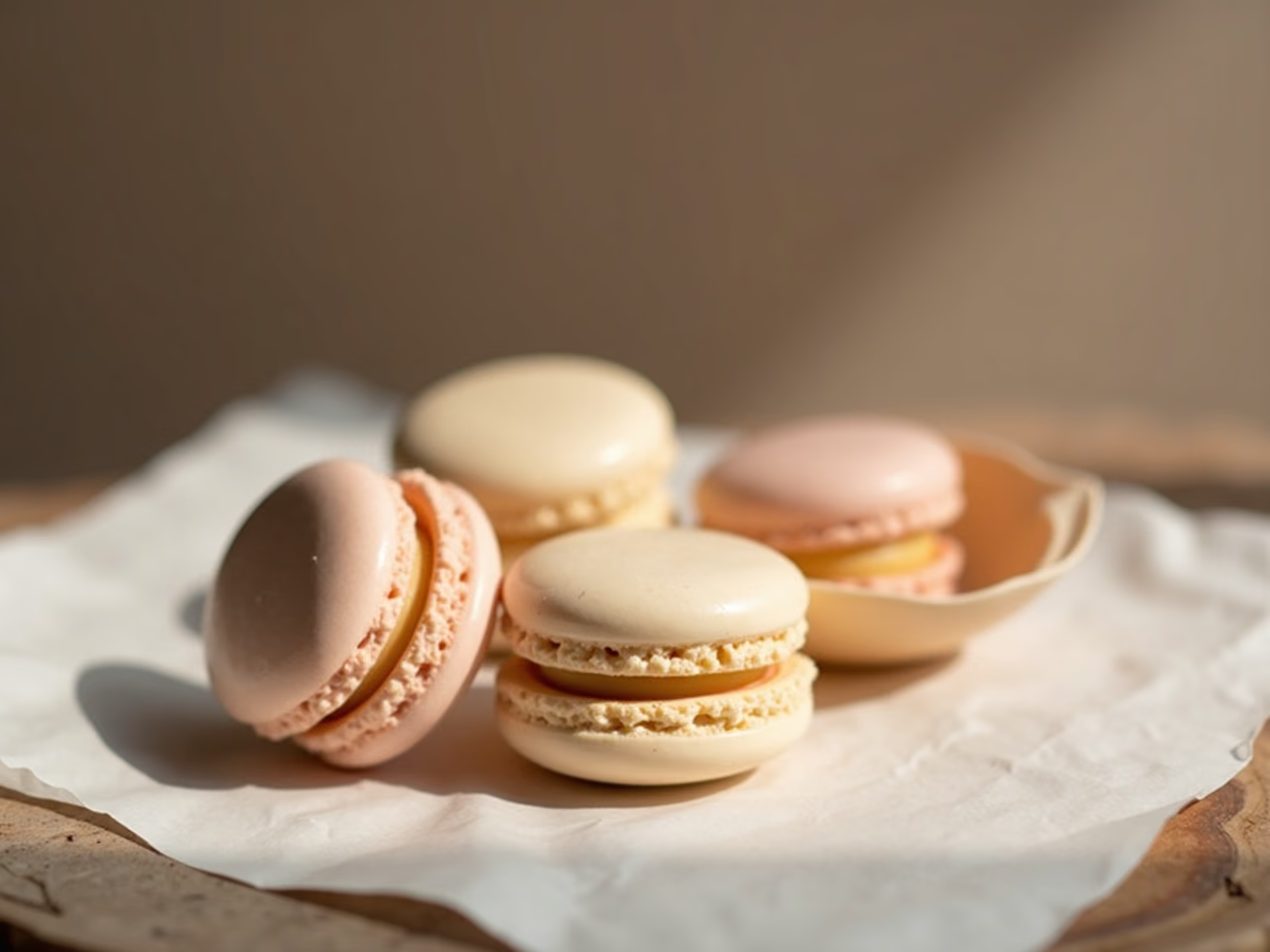
Macaron recipes fail people in a specific way: they give quantities and times but not tests, and macarons are all tests. The batter does not care that you folded it 30 times; it cares what state it is in. This recipe defines each state so you can judge it in front of you.
The three tests that matter
The meringue: stiff peaks, bowl inversion. The whipped whites must hold a point that bends only at the tip. The classic check is holding the bowl upside down — if nothing moves, the structure can survive the folding to come.
The batter: ribbon and figure-eight. Macaronage deliberately knocks air out of the meringue until the batter reaches lava consistency. Off the spatula it should fall in an unbroken ribbon, and a figure-eight drawn with that ribbon should settle back into the surface in about 20 seconds. Faster is over-folded; a ribbon that breaks and plops is under-folded. The fold count (25–40) tells you when to start testing, nothing more.
The skin: matte and touch-dry. After piping, the shells rest until the surface loses its wet shine and a light fingertip comes away clean. In the oven, that skin is a lid: the expanding shell can only push down and out at the base, which is what a macaron foot is.
Why grams
The working ratio here is 100 : 100 : 105 : 105 — whites, sugar, almond flour, powdered sugar. Almond flour packs unpredictably and egg whites vary by several grams per egg, so volume measurements can silently move the ratio by 15–20%. That margin is survivable in a muffin. In a macaron it is the difference between feet and puddles.
The oven is half the recipe
300°F on the middle rack, one sheet at a time, and an oven thermometer to prove it. Nearly every “my macarons were perfect last time and cracked today” story is an oven story or a humidity story. Control what can be controlled: verify the temperature, rotate at minute 10 if your oven has a hot side, and give the rest step the time the weather demands.
French Macarons: Judge the Batter, Not the Clock
- Prep
- 45 min
- Cook
- 15 min
- Total
- 1 hr
- Serves
- about 36 shells, 18 filled macarons
Ingredients
- 100 g egg whites (from about 3 eggs), at room temperature
- 100 g superfine (caster) sugar
- 105 g almond flour, the finest available
- 105 g powdered sugar
- 1/8 teaspoon fine sea salt
- 1/4 teaspoon cream of tartar (optional, insurance for the meringue)
- Gel food colouring, not liquid (optional)
- 150 g filling: ganache, buttercream or thick jam
Method
- Weigh everything first. Macarons run on ratios tight enough that "1 cup of almond flour" spans a 20% range depending on how it settled in the bag — this is the recipe where the scale is not optional. (5 min)
- Sift the almond flour and powdered sugar together twice, discarding any coarse almond pieces that will not pass. Those pieces become bumps on the shell surface. (5 min)
- Whip the egg whites with the salt (and cream of tartar if using) on medium until foamy, then add the superfine sugar a third at a time. Continue to stiff peaks: the meringue should hold a point that bends only at the very tip, and you should be able to hold the bowl upside down. (8 min)
- Add gel colouring at the stiff-peak stage if using, with a few final seconds of whipping. Liquid colouring adds water the ratio has no room for.
- Add all the dry mixture to the meringue at once. Fold with a spatula: scrape around the bowl, cut through the middle, press the batter against the side. This deflating is deliberate — it is called macaronage and it is the whole game. (5 min)
- Start testing at 25 folds. Lift the spatula: the batter should fall in a continuous ribbon, and a figure-eight drawn with the falling ribbon should melt back into the surface within about 20 seconds. Too thick: keep folding, testing every 3–4 folds. If it pours like cake batter, it is over and cannot be rescued — start the meringue again.
- Transfer to a piping bag with a 1/2-inch round tip. Pipe 1.25-inch rounds onto parchment-lined baking sheets, holding the bag vertical, tip just above the paper. Bang each finished sheet flat on the counter 3–4 times to knock out large air bubbles, and pop any survivors with a toothpick. (10 min)
- Rest the sheets uncovered until the surface is matte and a fingertip touched lightly to a shell comes away clean — 20 to 40 minutes in a dry kitchen, longer in a humid one. This skin is what forces the rise downward into feet. (30 min)
- Bake one sheet at a time at 300°F (150°C), middle rack, 13–15 minutes. Done shells have risen on distinct feet and do not wobble on those feet when nudged. Cool completely on the sheet before peeling. (15 min)
- Pair shells by size, pipe filling on one of each pair, and sandwich. Then — this is not optional — refrigerate them in a sealed container for 24 hours. Fresh-filled macarons are crisp and hollow-tasting; matured ones are the pastry you were aiming for.
Notes
- Humidity is the invisible variable. Above roughly 60% ambient humidity the skin will not form properly and feet come out stunted or absent. On a rainy day, run the oven with the door cracked for a few minutes and rest the trays near it, or accept that today is a bad macaron day — professionals do.
- The batter has two failure directions and only one is fixable. Under-folded batter (holds a stiff peak on the pile, nipples stay up after banging) just needs more folds. Over-folded batter (pours off the spatula, figure-eight vanishes instantly) is finished — the meringue structure is gone.
- An oven thermometer is worth more than any other tool here. Home ovens routinely run 25°F off their dial, and 25°F is the difference between feet and no feet, or browned shells at 300°F on the dial that was actually 325°F.
- Cracked shells and no feet is nearly always no skin (rest longer, or humidity) or oven too hot. Hollow shells is usually under-baked or under-whipped meringue. Lopsided feet is usually an oven with a strong hot side — rotate the sheet at 10 minutes.
- Aging the whites — separating the eggs a day ahead and refrigerating the whites uncovered — thins them slightly and is genuinely helpful in humid kitchens, though not required in dry ones. Room temperature at whipping time matters more.
Per serving (estimated by calculation from ingredient quantities, not laboratory tested): 128 kcal · 2 g protein · 18 g carbohydrate · 6 g fat.
Common questions
Why did my macarons not get feet?
Feet form when the skin on a rested shell forces the oven rise downward and outward. No feet means no skin (the rest was too short or the kitchen too humid), an oven running cool, or a meringue that had already lost its lift through over-folding. Check the rest first: the surface must be matte and touch-dry before the tray goes in.
Why did my macaron shells crack?
Cracking is steam escaping through the top because it could not push out at the base — the same skin problem as missing feet, or an oven running hot, which builds steam faster than the structure can vent it. Unpopped air bubbles also crack shells locally, which is what the counter-banging after piping is for.
Do macarons really need to rest before baking?
The piped shells need to rest until a skin forms, yes — with a conventional recipe like this one, skipping it reliably costs you the feet. The filled cookies also need a different rest: 24 hours in the fridge, during which shell and filling exchange moisture and the texture changes from crisp-and-hollow to the correct slight chew. Both rests exist for measurable reasons.
French, Italian or Swiss meringue for macarons?
French (raw sugar whipped into raw whites, as here) is the simplest and the standard home method. Italian meringue — hot sugar syrup whipped in — produces a sturdier batter that tolerates humidity and rough folding better, at the cost of a thermometer and a second pot. If your French-method shells keep failing in a humid kitchen, Italian is the sensible next move rather than more attempts.
How long do macarons keep?
Filled and sealed in the fridge: 4–5 days, and they are better on day two than day one. Unfilled shells keep a week in an airtight container at room temperature. Both freeze well for a month — freeze filled macarons in a single layer first, then boxed; thaw in the fridge, still sealed, so condensation forms on the box and not the shells.