Breakfast
Basic Muffins, One Bowl: Lumps Are Correct
Basic muffins are wet ingredients stirred into dry in 10–12 strokes and no more — the batter should still look lumpy, because those lumps hydrate in the oven while extra stirring builds the gluten that makes muffins tough and full of tunnels. Bake at 400°F (200°C) for 18–20 minutes; the higher heat sets the edges while the centre is still rising, which is where the dome comes from. One batch takes a standard 12-cup tin and accepts about 1.5 cups of any add-in.
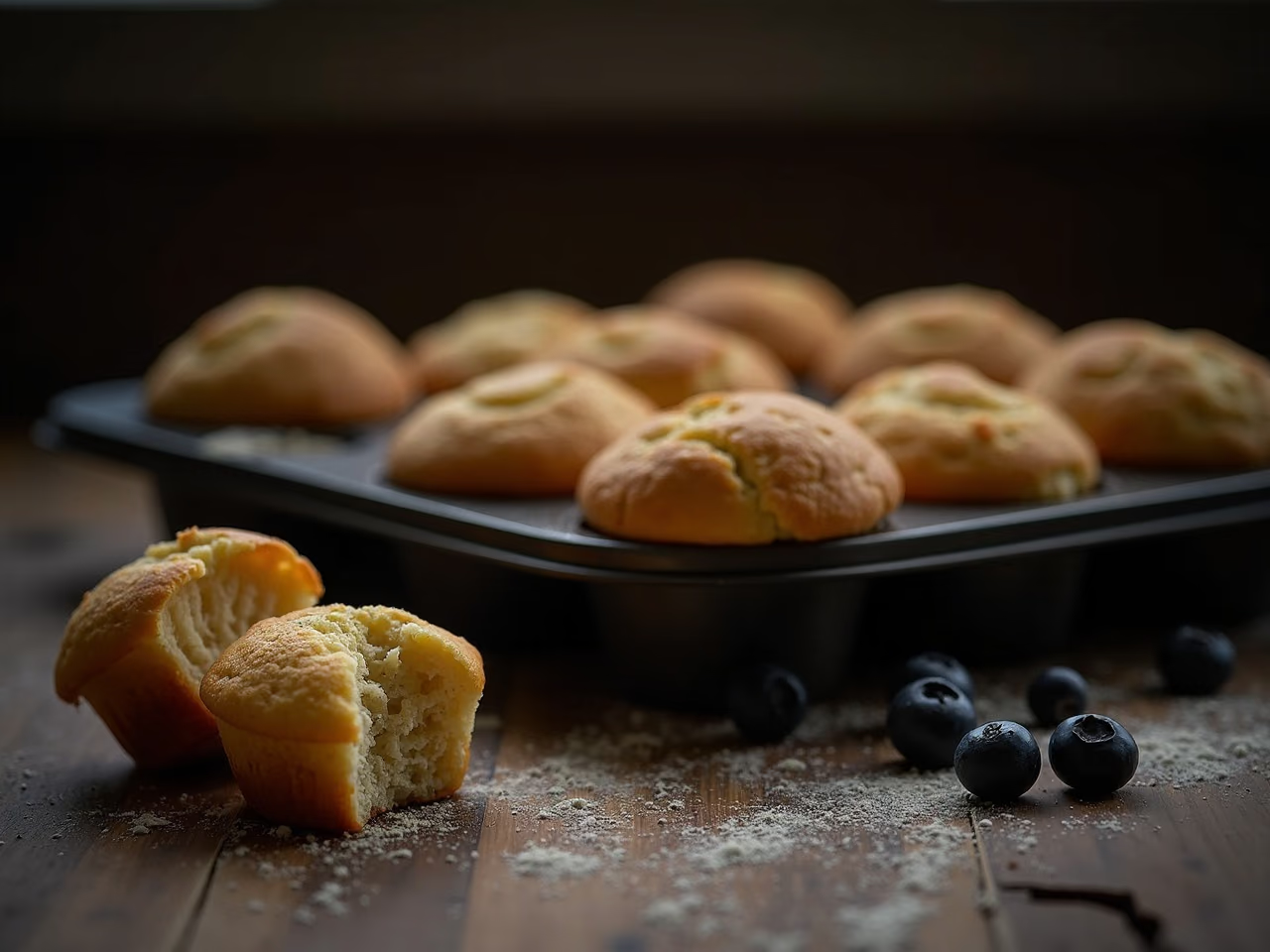
Muffins are the fastest real baking there is — one bowl, no mixer, twenty minutes in the oven — and also the most commonly ruined, always in the same way and always with good intentions. People stir the lumps out. The lumps were correct.
The muffin method is a stopping rule
Wet into dry, fold, stop at barely combined. That is the whole “muffin method” that appears in culinary textbooks, and the stopping is the technique. Flour develops gluten whenever it is wet and agitated. In bread that is the goal; in a muffin, gluten is toughness, and it also builds the vertical tunnels you sometimes see in a broken-open crumb — escape channels that gas carved through an elastic batter.
Ten to twelve strokes leaves visible lumps of dry-ish flour. They vanish in the oven: the batter’s water hydrates them during the first minutes of baking. No one has ever bitten into a correctly-made muffin and found a flour pocket — but nearly everyone has eaten a rubbery one that was stirred smooth.
Heat makes the dome
400°F is hotter than most cake bakes, on purpose. The outer ring of batter sets quickly against the hot tin while the centre is still generating gas and rising — with the edges fixed, the only direction left is up. At 350°F the whole muffin sets at roughly the same time, evenly and flat.
The bakery-muffin variant in the tips (a 425°F start, dropped to 375°F) is the same principle pushed harder. It costs nothing to try; the difference is visible.
One batter, every muffin
This base takes 1.5 cups of anything light: blueberries (frozen, straight from the bag), chocolate chips, raspberries, chopped stone fruit tossed in a teaspoon of flour. Fold the add-ins in during the final strokes — adding them after “combined” means more stirring, and the stroke budget is spent.
Basic Muffins, One Bowl: Lumps Are Correct
- Prep
- 10 min
- Cook
- 20 min
- Total
- 30 min
- Serves
- 12 standard muffins
Ingredients
- 2.5 cups (315 g) all-purpose flour
- 2.5 teaspoons baking powder
- 1/2 teaspoon baking soda
- 3/4 teaspoon fine sea salt
- 3/4 cup (150 g) granulated sugar
- 2 large eggs, at room temperature
- 1 cup (240 ml) buttermilk, or milk soured with 1 tablespoon lemon juice
- 1/2 cup (115 g) unsalted butter, melted and slightly cooled
- 2 teaspoons vanilla extract
- Optional: 1.5 cups add-ins (berries, chocolate chips, chopped nuts) or 1 cup smaller/heavier ones
- 2 tablespoons coarse sugar for the tops (optional)
Method
- Heat the oven to 400°F (200°C) and line a 12-cup muffin tin with papers, or butter it well. (3 min)
- Whisk the flour, baking powder, baking soda, salt and sugar together thoroughly in a large bowl — this is where even distribution happens, since the batter itself will barely be stirred. (2 min)
- In a second bowl, whisk the eggs, buttermilk, melted butter and vanilla until uniform. The butter may seize into small flecks against the cold buttermilk; that is fine. (2 min)
- Pour the wet into the dry all at once. Fold with a spatula, scraping from the bottom, counting strokes: at 10–12 the flour should be just barely incorporated with lumps throughout. Stop there. If adding add-ins, fold them in during the last 3 strokes, not after. (1 min)
- Divide the batter between the cups — they will be full, which is correct — using an ice-cream scoop if you have one for even sizing. Top with coarse sugar if using. (3 min)
- Bake 18–20 minutes, until the domes are golden and spring back from a fingertip, and a skewer in the centre of a middle muffin comes out with moist crumbs. Rotate the tin at 12 minutes only if your oven browns unevenly. (19 min)
- Cool in the tin for 5 minutes, then move to a rack. Left in the hot tin, the bottoms sweat and go damp. (5 min)
Notes
- The 10–12 stroke rule is the entire recipe. Muffin batter is deliberately under-mixed; the remaining lumps hydrate during the first minutes of baking. Every stroke past "barely combined" develops gluten, and gluten in a muffin means a tough crumb and interior tunnels.
- Room-temperature eggs and buttermilk are not fussiness here: cold liquids re-solidify the melted butter into large lumps, which then need extra stirring — and extra stirring is the one thing this batter cannot afford.
- Add-in mechanics: 1.5 cups of light add-ins (berries, chips) or 1 cup of heavy ones (chopped dates, nuts). Frozen berries go in frozen. Toss wet add-ins in a teaspoon of the flour first, exactly as for blueberry cake.
- For bakery-style tall muffins: rest the filled tin 15 minutes before baking (the flour hydrates and the batter thickens), and start at 425°F for 5 minutes before dropping to 375°F for the remainder. The initial blast sets the edges while the centre is still lifting.
- They keep 2 days in an airtight container with a paper towel under and over them (the towel catches the moisture that would make tops sticky), and freeze for 2 months. Refresh frozen muffins 10 minutes at 300°F.
Per serving (estimated by calculation from ingredient quantities, not laboratory tested): 245 kcal · 5 g protein · 36 g carbohydrate · 9 g fat.
Common questions
Why are my muffins tough and rubbery?
Overmixing, almost without exception. Stirring develops gluten, and muffin batter gets so little stirring precisely to prevent that — 10–12 strokes, lumps intact. The batter should look unfinished when it goes in the tin. Tunnels through the crumb are the same fault showing a different symptom: gas escaping through gluten channels the stirring built.
Why are my muffins flat instead of domed?
Usually oven temperature too low, baking powder past its date, or an over-stirred batter that lost its gas before baking. The dome forms when a hot oven (400°F) sets the muffin edges early, forcing the still-rising centre upward. Test old baking powder in hot water — no vigorous fizz, replace it.
Can I make muffin batter the night before?
Rest the filled tin, covered, in the fridge overnight rather than the bowl — scooping deflates a rested batter. Baking-powder batters lose a little lift by morning but stay acceptable because most modern powder is double-acting, releasing the bulk of its gas in the oven heat. Bake straight from the fridge with 1–2 extra minutes.
What can I substitute for buttermilk in muffins?
Stir 1 tablespoon of lemon juice or white vinegar into 1 cup of regular milk and wait 5 minutes — the acidity is what matters, because it activates the baking soda and tenderises the crumb. Thinned plain yogurt (3/4 cup yogurt + 1/4 cup milk) works the same way. Plain milk alone leaves the soda unactivated; if that is all you have, replace the soda with an extra 1/2 teaspoon of baking powder.
How full should I fill muffin cups?
For this recipe, essentially full — level with the top of the paper. Standard advice says two-thirds, but that produces a modest muffin with no overhang. A thick batter filled high rises into a dome and slightly over the cup edge without running. The rule only breaks with thin batters, which flood; this is not a thin batter.