Desserts
Blueberry Cake: Test Between the Berries
Bake this blueberry cake in an 8-inch square pan at 350°F (175°C) for 45–55 minutes, and test it with a skewer angled between the berries — a skewer through a berry comes out wet from fruit juice and reads as raw batter even when the cake is done. It is done when a between-berry test shows moist crumbs, the edges pull slightly from the pan, and the centre springs back from a fingertip. Tossing the berries in a tablespoon of the measured flour does help suspend them, but only in a batter thick enough to hold them anyway.
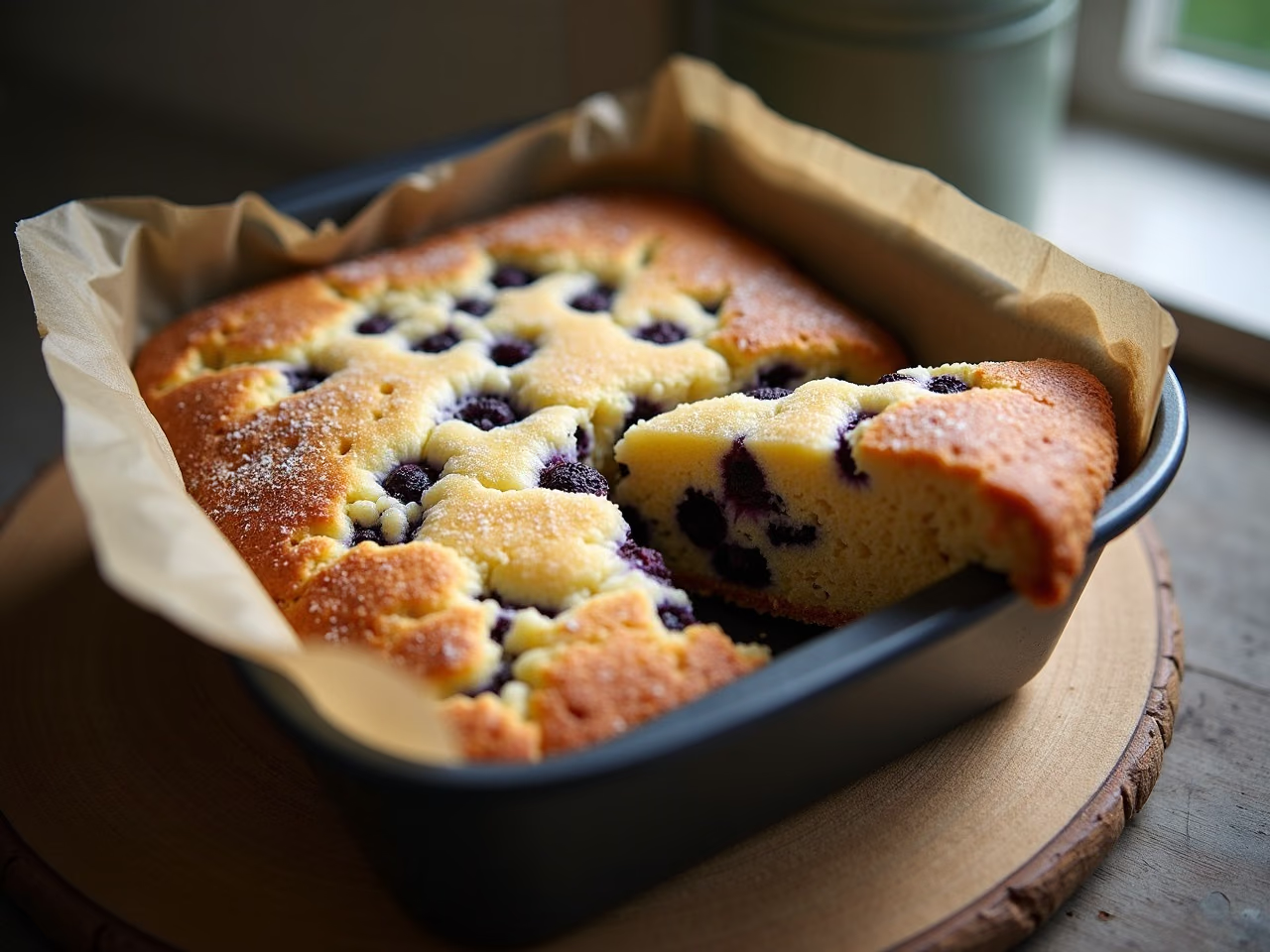
A blueberry cake asks one question a plain cake never does: how do you tell when it is done, when every test you poke into it hits fruit? Most recipes give a time and a generic “skewer comes out clean” — and a skewer that has passed through a berry never comes out clean. This cake is built around answering that properly.
The doneness problem, and the fix
Around each blueberry is a small zone of crumb kept wet by escaping juice. A skewer through that zone reads raw at 50 minutes, at 60, at 70 — by which point the rest of the cake is dry. The fix is procedural, not clever:
- Angle the skewer between berries, and test two spots. You are sampling crumb, not fruit.
- Corroborate with structure. Done: edges just pulling away from the pan sides; centre springs back from a fingertip instead of holding the dent.
- Distrust wetness that is purple. Berry juice on the skewer is fruit, not batter. Batter is pale and matte.
What actually keeps berries suspended
The flour toss is the most repeated berry advice in baking, and it is a minor player. The major player is batter viscosity: this batter is deliberately on the thick side of pourable, thick enough that a berry sat on its surface stays there. In a batter like that, floured berries stay where you fold them. In a thin batter, they sink in flour coats like everything else.
That is also why the mixing instruction says stop at no-dry-streaks. Overmixing does its usual gluten damage, but it also warms and loosens the batter — and looseness is the enemy of suspension.
The lemon is structural
One lemon’s zest, rubbed into the sugar until the sugar is fragrant and faintly yellow. Blueberries baked plain are sweet but flat; the zest oils distributed through the crumb are what make the fruit taste vivid. The tablespoon of juice sharpens the same edge. This is a seasoning decision the same way salt on a steak is.
Blueberry Cake: Test Between the Berries
- Prep
- 15 min
- Cook
- 50 min
- Total
- 1 hr 5 min
- Serves
- one 8-inch square cake, 9 squares
Ingredients
- 2 cups (250 g) all-purpose flour, 1 tablespoon of it reserved for the berries
- 2 teaspoons baking powder
- 1/2 teaspoon fine sea salt
- 3/4 cup (150 g) granulated sugar, plus 1 tablespoon for the top
- 1 tablespoon lemon zest (from 1 lemon)
- 2 large eggs, at room temperature
- 1/2 cup (115 g) unsalted butter, melted and slightly cooled
- 3/4 cup (180 ml) whole milk, at room temperature
- 1 tablespoon lemon juice
- 1.5 teaspoons vanilla extract
- 2 cups (300 g) blueberries, fresh, or frozen and still frozen
Method
- Heat the oven to 350°F (175°C). Line an 8-inch square pan with parchment leaving overhang on two sides — the sling is how a fruit-heavy cake leaves the pan intact. (5 min)
- Rub the lemon zest into the sugar with your fingertips until fragrant. Zest ground into sugar releases its oils through the whole crumb rather than sitting in streaks. (2 min)
- Whisk the flour (minus the reserved tablespoon), baking powder and salt in a large bowl.
- In a second bowl whisk the lemon sugar and eggs for a full minute until pale, then whisk in the melted butter, milk, lemon juice and vanilla. (3 min)
- Toss the blueberries with the reserved tablespoon of flour in the emptied flour bowl until dusted.
- Pour the wet mixture into the dry and fold until no dry streaks remain — and then stop. The batter should be thick enough that a berry placed on top sits rather than sinks. Fold in the floured berries in 3–4 strokes. (2 min)
- Scrape into the pan, level the top, and scatter over the remaining tablespoon of sugar for a crisp top.
- Bake 45–55 minutes (frozen berries push it toward 55). Test at 45: skewer angled between berries, moist crumbs but no wet batter; edges just pulling from the pan; centre springs back. If the top is browning ahead of the crumb, tent loosely with foil for the remainder. (50 min)
- Cool in the pan 20 minutes, then lift out by the parchment sling onto a rack. Cutting hot, the crumb around each berry is still setting and the squares smear; 20 minutes is the minimum, an hour is better. (20 min)
Notes
- The flour toss is real but oversold. Flour gives berry skins a rough surface the batter can grip, which slows sinking — but in a thin batter the berries sink anyway, flour and all. The batter thickness in step 6 is doing most of the work; the toss is the assist.
- Frozen berries: do not thaw them, and expect a purple-marbled crumb — thawed berries bleed far more. Add them frozen, straight from the bag, and give the bake the extra 5–10 minutes.
- Small wild blueberries (fresh or frozen) distribute better than large cultivated ones: more berries per bite, less weight per berry, less sinking. If using large berries, halving the biggest ones helps.
- This batter holds any berry that is not too wet: raspberries and blackberries straight swap; strawberries only if quartered and patted dry, and even then the crumb around them is softer.
- Keeps 3 days covered at room temperature — the berries keep the crumb moist longer than a plain cake. It also freezes well in squares, wrapped individually, for 2 months.
Per serving (estimated by calculation from ingredient quantities, not laboratory tested): 298 kcal · 5 g protein · 44 g carbohydrate · 12 g fat.
Common questions
Why did my blueberries all sink to the bottom of the cake?
The batter was too thin to hold them — usually from extra liquid, over-mixing (which loosens the batter as it warms), or a recipe with too little flour for the fruit load. A batter at the right thickness holds a berry on its surface without it sinking. The flour toss helps at the margin, but it cannot rescue a thin batter.
How do I know when blueberry cake is done?
Skewer between the berries, angled, from two spots: moist crumbs are done, wet batter is not. A skewer through a berry always comes out wet and will convince you a finished cake is raw — this is the single most common reason blueberry cakes get overbaked. Corroborate with the edges (just pulling from the pan) and the centre (springs back from a light press).
Can I use frozen blueberries in cake?
Yes, unthawed. Frozen berries added straight from the freezer hold their shape and bleed only moderately; thawed berries have burst cell walls and streak the whole batter purple. Expect some colour marbling regardless, and add 5–10 minutes to the bake because the frozen fruit cools the batter around it.
Why toss blueberries in flour before baking?
The flour coat gives the wet berry skin a dry, rough surface the surrounding batter can grip, which slows the berry falling through it during the first minutes of the bake, before the crumb sets. It measurably helps in a thick batter and does nearly nothing in a thin one — treat it as the assist and the batter consistency as the fix.
Can I bake this in a round or loaf pan instead?
A 9-inch round pan works with the bake dropping to about 40–45 minutes — same batter depth, more surface. A loaf pan is the risky swap: the batter sits twice as deep, the centre needs 65–75 minutes, and the berry load makes the middle slow to set; if you go that route, tent with foil at 45 minutes and trust the between-berry skewer over the clock.