Desserts
Flaky Pie Crust: Butter Temperature Decides
Flaky pie crust depends on butter that is cold enough to stay in discrete pieces but warm enough to flatten instead of shatter — roughly 55–60°F (13–16°C), which is 10–15 minutes out of the fridge. Those flat butter pieces melt in the oven and leave gaps, and the gaps are the flakes. Work the butter to the size of peas with some larger flakes, add 6–8 tablespoons of ice water for a double crust, and rest the dough twice: 30 minutes before rolling and 20 minutes in the freezer before baking, which is what stops shrinking.
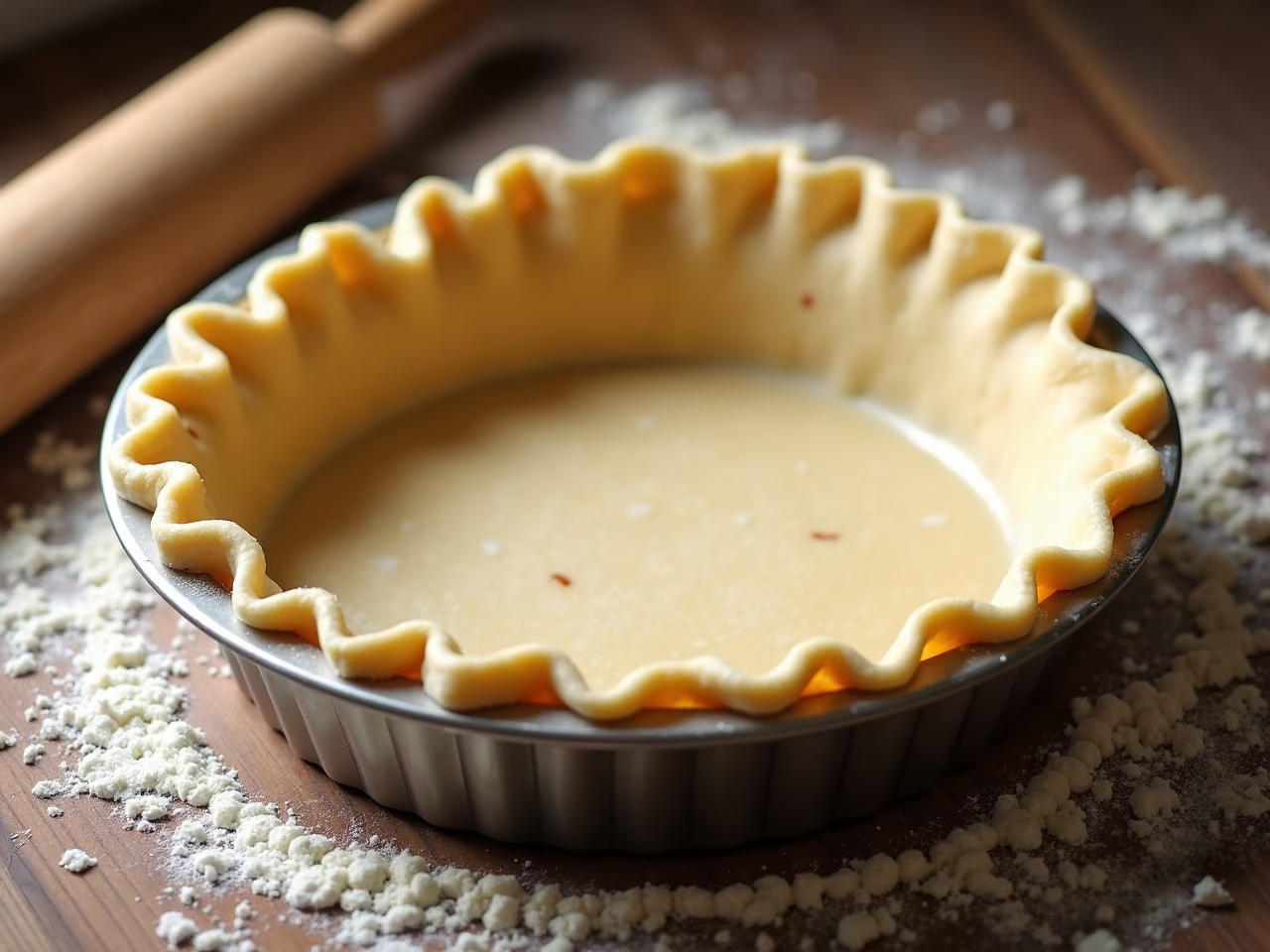
Every flaky pie crust recipe says “cold butter” and stops there, as if the fridge were the answer. It is not: butter straight from the fridge is so hard it shatters into gravel under the fingers, and gravel makes a mealy crust. The flake comes from a narrower window — butter cold enough to stay separate, warm enough to flatten.
What a flake physically is
A flake is a gap. During baking, a flat piece of butter trapped between layers of dough melts and its water content flashes to steam; the fat fries the dough on either side of where it sat, and the steam pushes those layers apart. What remains is a thin crisp gap — multiplied by every butter piece you preserved.
That gives the method its two rules:
- Flat pieces, not crumbs. Pressing cubes flat between fingers produces wide, thin butter sheets. Rubbing butter in until “breadcrumbs”, as older recipes say, produces no gaps at all — that is shortcrust, tender but not flaky.
- The 55–60°F window. A cube should dent under a firm thumb, not crack and not squash. Ten to fifteen minutes out of the fridge gets there. Past the window, butter smears into the flour and waterproofs it — the dough then needs more water, which means more gluten, which means tough.
The folds do the laminating
The cut-stack-press sequence — three times, no more — is a crude version of what croissant dough gets from a rolling pin. Each stack doubles the layering of butter sheets between dough, and because it is pressing rather than kneading, it builds almost no gluten. It is the highest-return thirty seconds in the recipe.
Both rests are load-bearing
The 30-minute fridge rest after mixing distributes the water evenly (the dough visibly changes from shaggy to supple) and relaxes the gluten so the dough rolls out instead of springing back. The 20-minute freezer rest after shaping firms the butter solid so the crimped edge sets in the oven before it can slump, and releases the last of the rolling tension. Recipes that skip the second rest are the ones whose photos show crimping and whose results do not.
Flaky Pie Crust: Butter Temperature Decides
- Prep
- 20 min
- Cook
- 0 min
- Total
- 20 min
- Serves
- one double crust or two single 9-inch crusts
Ingredients
- 2.5 cups (315 g) all-purpose flour
- 1 teaspoon fine sea salt
- 1 tablespoon granulated sugar (omit for savoury pies)
- 1 cup (225 g) unsalted butter — out of the fridge 10–15 minutes, cut into 1/2-inch cubes
- 6–8 tablespoons (90–120 ml) ice water, ice strained out
Method
- Cube the butter and leave it on the counter 10–15 minutes while you set up. Target 55–60°F: a cube should dent under firm thumb pressure without your thumb sinking in. Straight-from-fridge butter shatters into gravel; softer butter smears into the flour and takes the flakes with it. (12 min)
- Whisk the flour, salt and sugar in a large bowl. Fill a cup with ice and water so the water is genuinely cold when you need it. (2 min)
- Toss the butter cubes through the flour, then press each piece flat between floured fingers and thumbs — snapping and flattening, not rubbing. Stop when the mixture holds pieces from pea-size up to about a quarter, all flat. The big flat pieces are the future flakes; do not chase uniformity. (5 min)
- Sprinkle 6 tablespoons of ice water over the mixture and toss with a fork until shaggy. Squeeze a handful: if it holds together, stop; if it crumbles apart, add the remaining water a tablespoon at a time. Flour varies week to week — the squeeze test outranks the measurement. (2 min)
- Tip onto the counter and press — do not knead — the shaggy mass into a rough slab. Cut it in half, stack one half on the other, press flat. Do that twice more. This laminating fold builds cohesion and layers at the same time, with almost no gluten development. (2 min)
- Divide in two, press into 1-inch-thick discs, wrap, and refrigerate at least 30 minutes (up to 3 days). This rest lets the water distribute and the gluten relax — dough rolled straight away fights back and shrinks in the oven. (30 min)
- Roll from the centre outward on a floured surface, rotating the disc a quarter turn between strokes, to a 12-inch round for a 9-inch pan. If the butter starts smearing at any point, the dough goes back in the fridge for 10 minutes — no exceptions. (5 min)
- Fit into the pan without stretching: lift the edges and let the dough settle into the corners. Stretched dough remembers, and it shrinks back in the oven. Trim, crimp, then freeze the shaped crust 20 minutes before it meets the oven or the filling. (20 min)
Notes
- Blind-baking (for custard and cream pies): from the freezer, line with foil, fill to the brim with sugar or beans, and bake at 375°F (190°C) for 25 minutes; remove the weights and bake 10–12 minutes more until the base is golden. Filled to the brim matters — half-filled weights let the sides slump.
- The food processor works but it is a one-way tool: 8–10 one-second pulses to cut the butter, then transfer to a bowl and add the water by hand. Machines pass through "pea-sized with big flakes" in about a second, and running the water in with the motor going is how tough crusts happen.
- Genuinely cold water matters more than any special liquid: fill a cup with ice and water before you touch the flour and spoon from it as you go. Water at tap temperature softens the butter during mixing, and soft butter smears instead of staying in the discrete pieces that become flakes.
- Weigh the flour if at all possible. 2.5 cups of flour spans 290–350 g depending on scooping, and at the dry end the dough needs 2 extra tablespoons of water and still bakes harder. 315 g is the number.
- The discs freeze for 3 months, wrapped and bagged. Thaw overnight in the fridge, never on the counter — a disc thawed warm has already lost the butter temperature the whole method is built on.
Per serving (estimated by calculation from ingredient quantities, not laboratory tested): 340 kcal · 4 g protein · 31 g carbohydrate · 23 g fat.
Common questions
Why is my pie crust tough instead of flaky?
Tough means gluten: too much working of the wet dough, water added with a running machine, or kneading where pressing was needed. The fix is procedural — toss the water in with a fork, use the cut-and-stack folds instead of kneading, and give the dough its 30-minute rest so the gluten that did form relaxes before rolling.
Why did my crust shrink in the oven?
Two causes, usually together: gluten tension from rolling without a rest, and dough physically stretched to fit the pan. Both are rubber bands — the oven heat releases them. Rest the dough before rolling, settle it into the pan without pulling, and freeze the shaped crust 20 minutes before baking. Frozen-solid edges set in the oven before they can slump.
Butter or shortening for pie crust?
All-butter, for flavour and for the steam — butter is about 16% water, and that water flashing to steam inside the oven is part of what lifts the layers apart. Shortening is 100% fat, easier to handle because it stays pliable over a wider temperature range, and produces a tender but blander crust. This recipe is written for all butter, and the folds and rests are what make that manageable.
How thick should pie crust be rolled?
About 1/8 inch (3 mm) — a 12-inch round from one of these discs lands there naturally. Thinner tears on the transfer and bakes through before the filling is done; thicker eats like bread at the rim. Roll from the centre out and rotate the disc a quarter turn between strokes, which keeps the round even without re-rolling.
Can I make pie dough ahead?
The discs hold 3 days in the fridge and 3 months in the freezer — the 30-minute rest is a minimum, not a maximum, and day-old dough rolls noticeably better than fresh. A fully shaped raw crust can also wait in the freezer in its pan for a month, and bakes best straight from frozen with a few extra minutes.