Breakfast
Dutch Baby Pancake: Why It Puffs, Why It Won't
A Dutch baby puffs on two conditions: a pan that went into the 425°F (220°C) oven at least 10 minutes before the batter, and a batter at room temperature — cold-from-the-fridge eggs and milk are the most common reason one comes out flat. Blend 3 eggs, 2/3 cup milk, 2/3 cup flour and a pinch of salt, rest the batter 20 minutes, pour it into the hot buttered skillet and bake 18–20 minutes without opening the door. It is a popover in pancake form: steam does the lifting, and it collapses within minutes of coming out, by design.
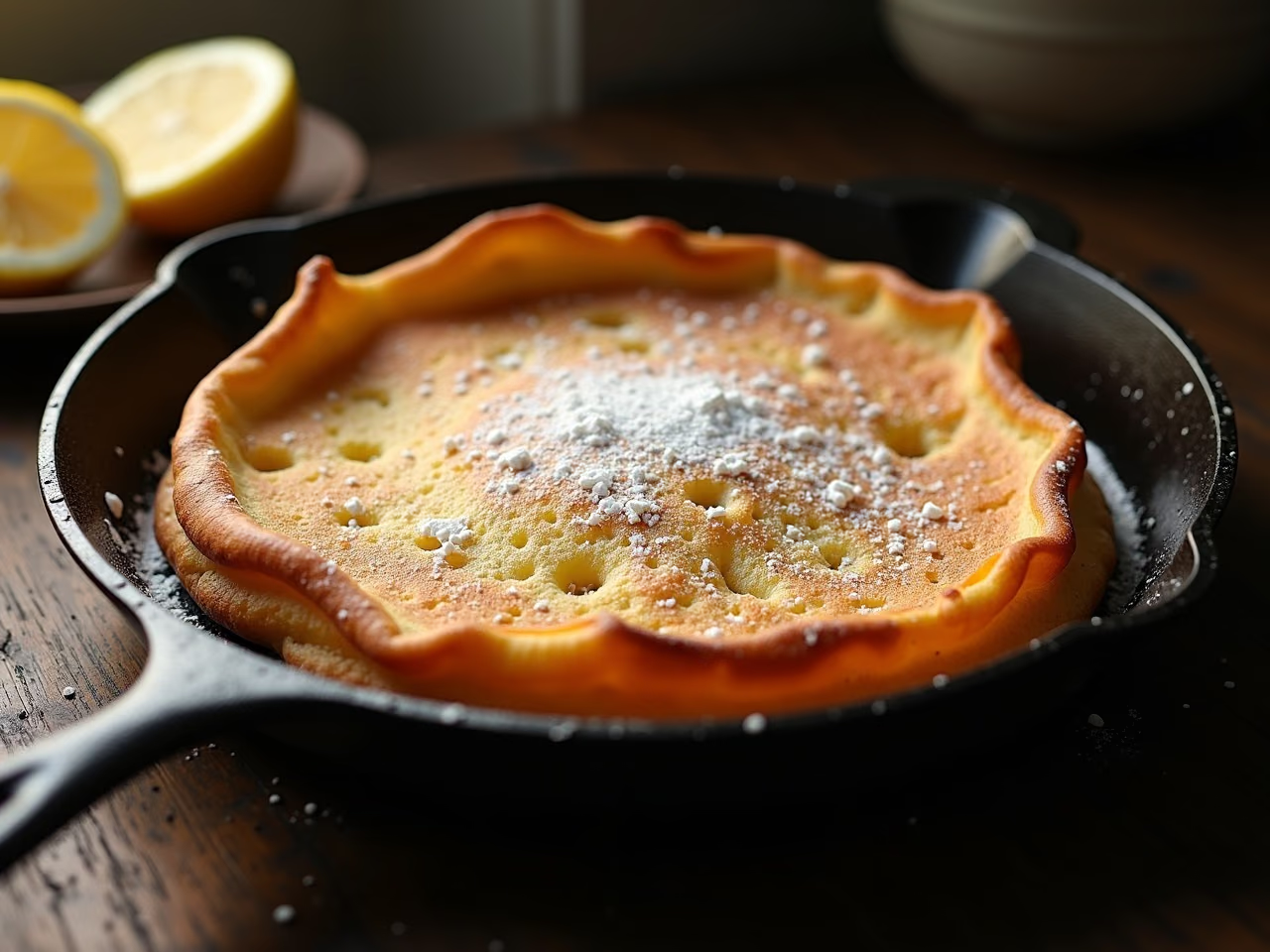
A Dutch baby looks like an achievement — a golden crater with walls three inches tall — and it is genuinely one of the easiest things this site publishes: five pantry ingredients, one blender, one pan. Every failure mode is the same two physics mistakes, and both are avoidable on the first attempt.
Steam is the only leavener
There is no baking powder in the batter. All the lift is water turning to steam inside a smooth, egg-rich batter, fast enough to inflate it before the eggs set. “Fast enough” is the entire game, and it is decided before the oven door closes:
- The pan must be genuinely hot. Ten minutes in the oven at full temperature, minimum. The batter needs to start steaming on contact — a water drop flicked at the pan should vanish instantly.
- The batter must be at room temperature. A cold batter spends its first minute in the oven warming up instead of steaming, and by then the eggs at the edges are setting. This is the most common failure and the least suspected, because “cold from the fridge” feels harmless.
Everything else — the blending until smooth, the 20-minute rest, the closed door — is in service of those two conditions or of not disturbing the rise once it starts.
The collapse is the design
Steam-risen structures deflate as they cool; the Dutch baby’s crater form is the collapsed state, with the tall edges holding because they baked crisp before the fall. Time the bake to the table, not the table to the bake — pull it when the plates are out, and let it do its three minutes of drama in front of the people eating it.
One batter, two directions
Sweet is the default: powdered sugar and lemon, or syrup and berries into the crater. But the batter is a popover, and popovers are neutral — drop the sugar and vanilla and it will hold cheese and eggs, or anything you would put on toast. Same pan, same temperatures, same rules.
Dutch Baby Pancake: Why It Puffs, Why It Won't
- Prep
- 25 min
- Cook
- 20 min
- Total
- 45 min
- Serves
- one 10-inch Dutch baby, serves 2
Ingredients
- 3 large eggs, at room temperature
- 2/3 cup (160 ml) whole milk, at room temperature
- 2/3 cup (85 g) all-purpose flour
- 1 tablespoon granulated sugar
- 1/4 teaspoon fine sea salt
- 1 teaspoon vanilla extract
- 3 tablespoons unsalted butter, for the pan
- To serve: powdered sugar and lemon wedges, or maple syrup and berries
Method
- Take the eggs and milk out of the fridge 30 minutes ahead, or stand the eggs in warm water for 5 minutes and microwave the milk 20 seconds. Cold batter meeting a hot pan kills the steam rise before it starts — this step is not optional. (5 min)
- Put a 10-inch cast-iron or other oven-safe skillet on the middle rack and heat the oven to 425°F (220°C). The pan preheats with the oven and stays in at least 10 minutes at full temperature. (15 min)
- Blend the eggs, milk, flour, sugar, salt and vanilla for 20–30 seconds until completely smooth, scraping once. (By hand: whisk the eggs thoroughly first, then the milk, then the flour — smoothness matters and the blender is genuinely better here.) (2 min)
- Rest the batter 20 minutes at room temperature while the pan heats. The flour hydrates and the blender's foam subsides; both help the rise and the custardy base. (20 min)
- Working fast: pull the skillet out, drop in the butter, and swirl until it foams — the pan should be hot enough that this takes seconds. Pour the batter into the centre in one steady stream and return the pan to the oven immediately. (1 min)
- Bake 18–20 minutes without opening the door — the structure is wet and steam-supported until the last minutes, and a cold draught mid-bake flattens it. Done: edges tall, deeply golden and crisp; centre set but tender. (19 min)
- Serve straight from the pan, immediately. The collapse begins within 2–3 minutes of leaving the oven; that is physics, not failure. The classic finish is powdered sugar and a hard squeeze of lemon.
Notes
- The pan test: a drop of water flicked onto it should skitter and vanish instantly. If it sizzles lazily, the pan needed longer. Cast iron holds the most heat and gives the tallest sides; any oven-safe skillet or even a metal cake pan works with slightly less drama.
- A 12-inch skillet spreads the same batter thinner: wider, crisper, less custard in the middle, 2–3 minutes shorter. A 9-inch pan gives a deeper, more custardy centre and may need 22 minutes. Both are legitimate — this is a preference dial.
- The savoury version drops the sugar and vanilla, and takes gruyère and black pepper scattered on with 5 minutes left, or is served under fried mushrooms and a fried egg. The batter is a popover; popovers do not care which direction you take them.
- Doubling: do not crowd one pan — a doubled batter in the same skillet bakes into a cake. Use two skillets, or accept one Dutch baby per 10-inch pan and bake in sequence; the batter holds for an hour.
- If yours never puffs in a fan (convection) oven, drop to 400°F — strong fan ovens can crust the top before the steam has finished lifting, and the crust caps the rise.
Per serving (estimated by calculation from ingredient quantities, not laboratory tested): 442 kcal · 15 g protein · 41 g carbohydrate · 24 g fat.
Common questions
Why didn't my Dutch baby puff?
In order of likelihood: the batter was cold, the pan was not properly preheated, or the oven door was opened mid-bake. The rise is steam converting in the wet batter the moment it hits hot metal — cold ingredients delay that conversion until the structure has already begun setting, and a lukewarm pan never triggers it properly. Room-temperature eggs and milk plus a 10-minute pan preheat fix nearly every flat Dutch baby.
Why does a Dutch baby collapse after baking?
Because steam was holding it up, and steam condenses as it cools — the same reason a soufflé falls. The tall dramatic form exists for the first two or three minutes out of the oven, then settles into crisp edges around a custardy base. Serve it in the pan, immediately; the collapse is built in and no technique prevents it.
What is the difference between a Dutch baby and a pancake?
A pancake is leavened chemically (baking powder) and cooked on the stove; a Dutch baby has no leavener at all — it is popover batter, eggs and milk and flour, lifted purely by steam in a hot oven. That is why the technique rules are opposite: pancake batter is mixed minimally and cooked moderately, Dutch baby batter is blended smooth and needs maximum initial heat.
Can I make Dutch baby batter ahead?
Yes — up to a day ahead, refrigerated, and some cooks find rested batter rises taller. The non-negotiable is bringing it fully back to room temperature before it meets the pan: stand the container in warm water for 10–15 minutes and stir before pouring. Cold batter is the number-one cause of a flat result.
Do I need a cast-iron skillet for a Dutch baby?
No, but you need its properties: oven-safe to 425°F and enough thermal mass to stay hot when the batter lands. Stainless skillets, enamelled cast iron and metal cake pans all work. Avoid glass and ceramic dishes — they heat slowly, hold less heat at the surface, and some are not rated for empty preheating at this temperature.