Weeknight
Chicken in White Wine Sauce (30 Minutes)
Chicken in white wine sauce takes 30 minutes when the breasts are halved into cutlets: sear 3 minutes a side, then build the sauce in the same pan and reduce 3/4 cup of wine by half — judge it by volume against the pan, not by minutes, because reduction speed depends on your pan width and burner. Finish with stock and cold butter, return the chicken to warm through, and pull it at 160°F (71°C); carryover takes it to the safe 165°F (74°C) while the sauce comes together.
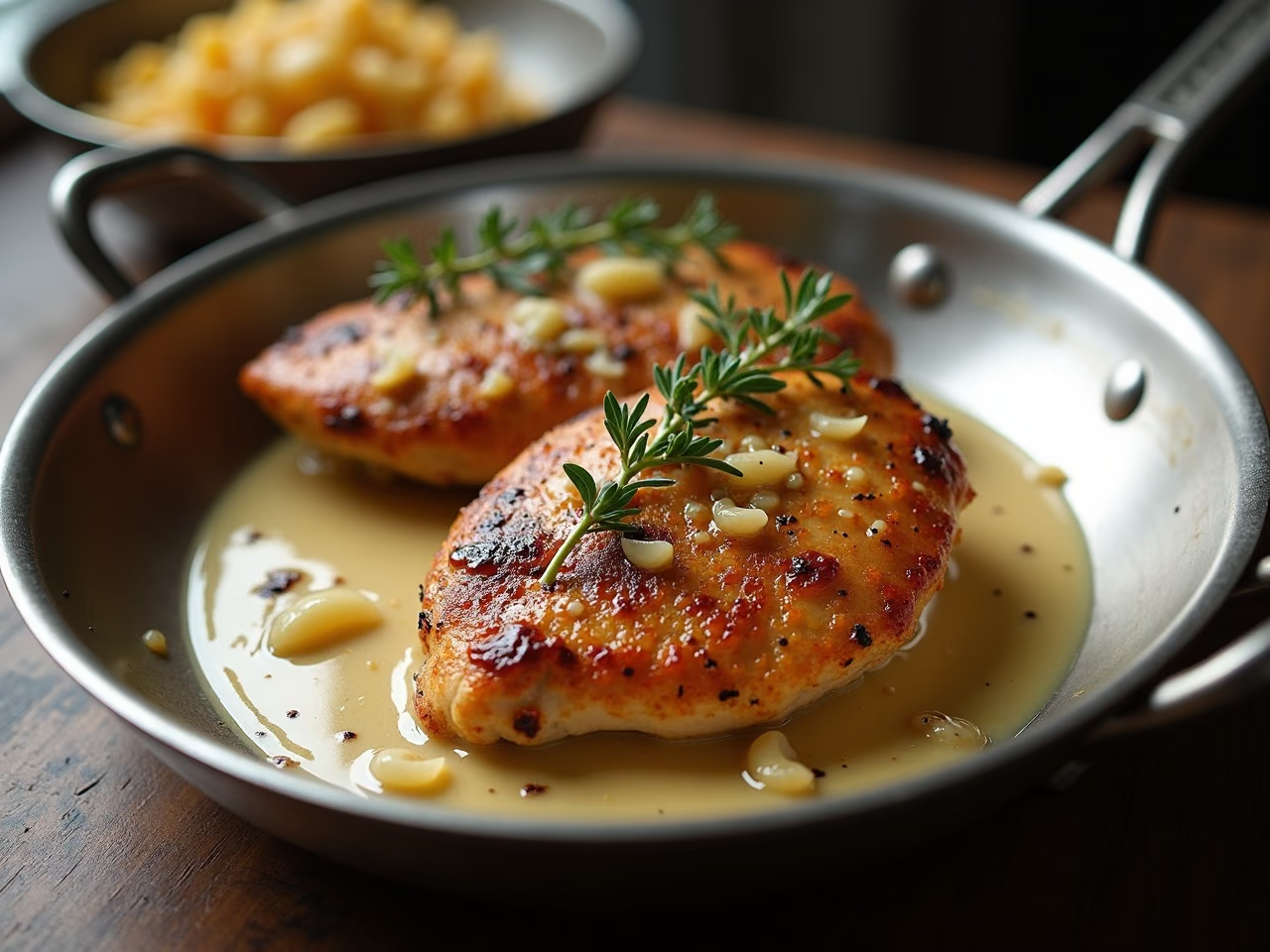
Chicken in white wine sauce is bistro food with a home-kitchen skeleton: sear, deglaze, reduce, mount with butter. The two decisions that separate a 30-minute success from a disappointing pale stew are cutting the chicken thin and knowing when the wine is actually reduced — and the second one cannot be measured in minutes.
Cutlets, not breasts
A modern chicken breast is a wedge: 1.5 inches thick at one end, half an inch at the other. Cooked whole, the thin end is chalk before the thick end is safe. Halved horizontally into two even cutlets, each piece cooks in 6 minutes flat, browns over its whole surface, and — because the sauce finishes the job — never spends a second in the pan beyond what it needs.
Pull at 160°F and let carryover deliver the safe 165°F in the sauce. That last 5°F is the difference between juicy and Tuesday-cafeteria.
Reduction is a volume, not a time
“Reduce for 4 minutes” fails between kitchens because evaporation scales with surface area and burner output: the same 3/4 cup halves in under 4 minutes in a wide skillet and takes nearly 10 in a small saucepan. The fix is to judge the endpoint, not the clock — look at the depth of liquid when the wine goes in, and stop at half. Two corroborating cues: the spoon starts leaving a brief trail, and the sharp alcohol smell drops out of the steam.
Under-reduced sauce tastes of raw wine and stays thin; over-reduced just means adding the stock a minute early and simmering on. The error bars are asymmetric — when in doubt, reduce a little longer.
The finish is an emulsion
Everything glossy about this sauce happens in the last ninety seconds: heat off, two tablespoons of cold butter swirled in, the light flour residue from the dredge binding it all. It is the same off-heat, cold-fat emulsion this site uses in pasta sauces, and it fails the same way — butter melted into a boiling sauce separates. Heat off first, then butter, always in that order.
Chicken in White Wine Sauce (30 Minutes)
- Prep
- 10 min
- Cook
- 20 min
- Total
- 30 min
- Serves
- 4
Ingredients
- 2 large boneless skinless chicken breasts (about 1.5 lb / 680 g), halved horizontally into 4 cutlets
- 1 teaspoon fine sea salt
- 1/2 teaspoon black pepper
- 1/3 cup (40 g) all-purpose flour, for dredging
- 2 tablespoons olive oil
- 3 tablespoons cold unsalted butter, divided
- 1 large shallot, finely diced
- 2 cloves garlic, minced
- 3/4 cup (180 ml) dry white wine — sauvignon blanc or pinot grigio
- 3/4 cup (180 ml) low-sodium chicken stock
- 2 teaspoons Dijon mustard
- 4 sprigs thyme
- 1 tablespoon lemon juice
Method
- Halve each breast horizontally into two thin cutlets and pat them very dry. Season with the salt and pepper, then dredge lightly in the flour, shaking off the excess — the thin flour coat browns fast and later helps the sauce cling. (6 min)
- Heat the oil in a 12-inch skillet (stainless, not nonstick, if you have it) over medium-high. Sear the cutlets 3 minutes a side until golden, in two batches rather than crowding. They should reach about 155°F; they finish in the sauce. Set them on a plate. (8 min)
- Drop the heat to medium. Add 1 tablespoon of the butter and the shallot to the same pan and cook 2 minutes; add the garlic for 30 seconds more. (3 min)
- Pour in the wine and scrape up every browned bit. Now reduce — and judge it by looking, not timing: note where the liquid sits in the pan and simmer until it is at half that depth, about 3–4 minutes in a 12-inch pan but longer in a narrower one. The raw-alcohol smell fades right around the same point. (4 min)
- Add the stock, mustard and thyme and simmer 3 minutes to marry. Kill the heat, then swirl in the remaining 2 tablespoons of cold butter until the sauce turns glossy and slightly thick. (4 min)
- Return the chicken and any plate juices, spoon sauce over, and warm 1–2 minutes until the thickest cutlet reads 160°F (71°C). Off the heat it carries to 165°F. Finish with the lemon juice, discard the thyme stems, and serve. (2 min)
Notes
- Halving the breasts is the difference between a 30-minute dish and a gamble. A whole breast needs 10–12 minutes and overcooks its thin end while the thick end finishes; a 1/2-inch cutlet cooks evenly in 6 and gives you twice the seared surface per pound.
- The wine rule: cook with something dry that you would drink, but nothing expensive — the reduction concentrates acidity and fruit, not subtlety. Avoid anything oaky (chardonnay turns bitter reduced) and anything labelled "cooking wine", which is salted.
- Reduction-by-volume beats reduction-by-minutes because the variables are yours: a 10-inch pan reduces at barely half the rate of a 12-inch, and burners vary hugely. "Reduced by half" is the same endpoint in every kitchen; "4 minutes" is not.
- No wine at all? Use all stock plus 2 tablespoons of white wine vinegar added with it, and skip the long reduction — simmer 3 minutes total. Different dish, same skeleton, still good.
- The cold-butter finish (monter au beurre) is the same emulsion trick as a pasta sauce: cold butter whisked in off the heat disperses into a stable gloss. Butter added over a boil just melts into an oil slick on top.
Per serving (estimated by calculation from ingredient quantities, not laboratory tested): 398 kcal · 40 g protein · 12 g carbohydrate · 19 g fat.
Common questions
What is the best white wine for cooking chicken?
A dry, unoaked white you would drink: sauvignon blanc and pinot grigio are the standard answers. Reduction concentrates what is in the glass — crisp acidity concentrates well, oak and heavy fruit turn bitter or jammy. Skip "cooking wine" entirely; it is salted and sour by design. Price matters almost nothing above the drinkable floor.
How long should you reduce wine for a pan sauce?
Until the volume has halved — in a 12-inch pan over medium heat, 3–4 minutes for 3/4 cup, but the honest answer is that time is the wrong unit. Pan width and burner power change the rate several-fold, which is why this recipe says to note the liquid's depth and simmer to half of it. The sharp raw-alcohol smell fading is the corroborating cue.
What temperature should chicken breast be cooked to?
Safe is 165°F (74°C) — but pull it at 160°F (71°C), because a cutlet's temperature keeps climbing 5°F or more off the heat, and breast meat dries noticeably with every degree past done. Pulled at 160 and rested in the sauce, it arrives at 165 juicy. Cooked to 165 on the burner, it lands at 170 and eats like it.
Does the alcohol cook out of white wine sauce?
Most but not all of it. A few minutes of open simmering removes the majority — reduced by half plus a further simmer with stock, the finished sauce retains only a small fraction of the original alcohol, and the per-serving amount is minor. But it is not zero; for strict no-alcohol cooking, use the stock-and-vinegar substitution instead of assuming it vanishes.
Why did my pan sauce turn out thin and greasy instead of glossy?
The butter went in too early or over direct heat, so it melted rather than emulsified. The sauce needs to be off the boil, the butter cold and added in pieces while you swirl — the dredging flour left in the pan helps stabilise it too. If it breaks, pull the pan off the heat, add a spoonful of cold stock or water, and whisk hard; it usually comes back.