Lunch
Tuna Salad That Holds Up Until Lunch
Tuna salad goes watery because of two things: tuna that was never properly drained, and salt pulling water out of the celery and onion while it sits. Press each can against its lid for a full 30 seconds — a 5 oz can gives up about 2 tablespoons of water this way — and salt the vegetables separately for 10 minutes, then squeeze them, before they go anywhere near the mayonnaise. Made like this it holds in a lunch bag with an ice pack for 4–5 hours.
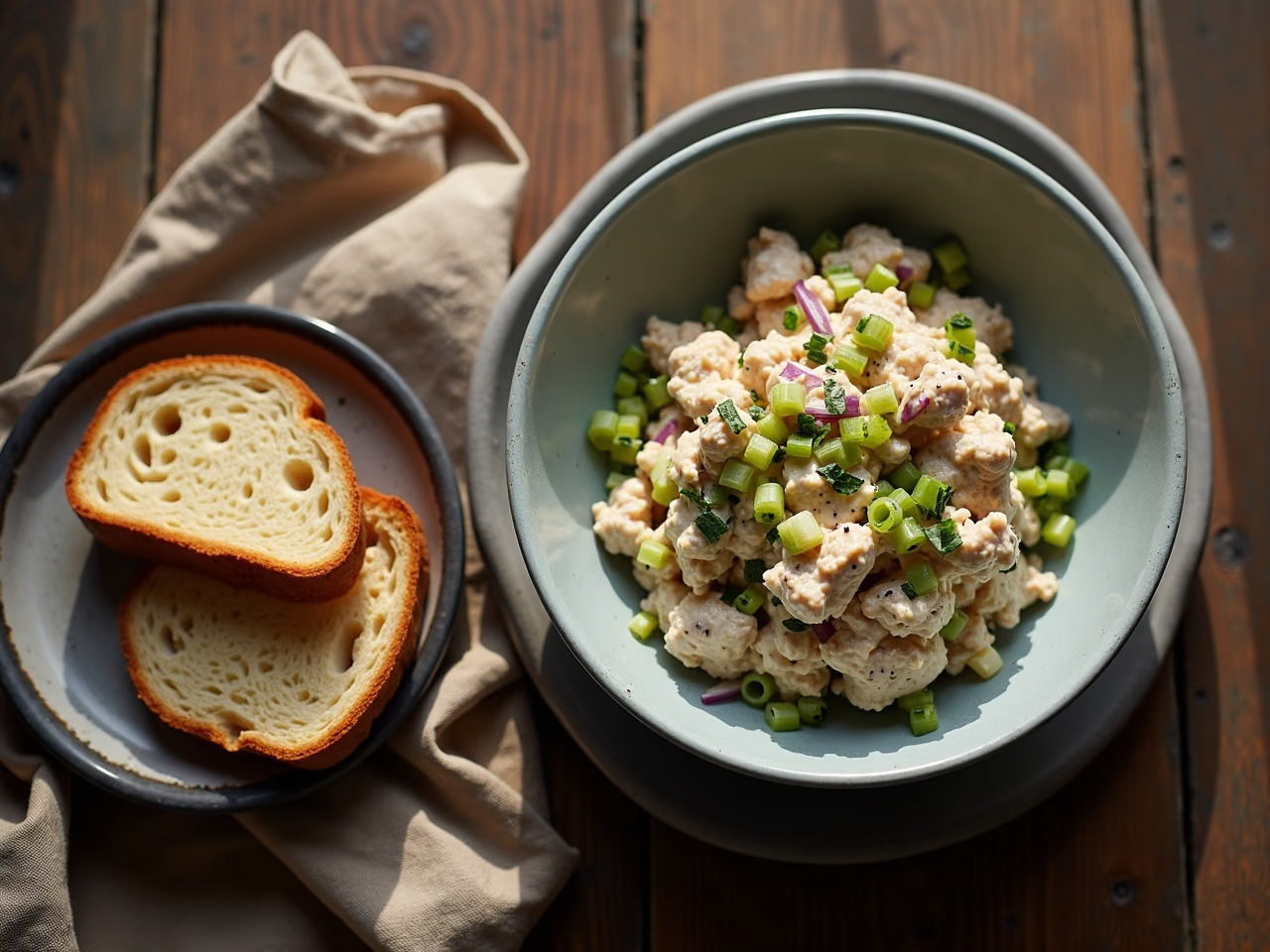
Most tuna salad recipes are ingredient lists — mayo, celery, onion, done. The reason the result is so often disappointing by lunchtime has nothing to do with the ingredients. It is water management, and it takes two small steps that almost no recipe includes.
Where the water comes from
A 5 oz can of water-packed tuna, opened and tipped upside down for a moment, still holds roughly 2 tablespoons of packing water in the flakes. Two cans means a quarter cup of water hiding in the salad before you start.
The second source is slower. Celery is about 95% water and onion about 89%, and the salt in your dressing keeps drawing that water out for hours — which is why a salad that was perfect when you made it is sitting in liquid by noon. The salting-and-squeezing step moves that extraction to the first ten minutes, where you can pour it away.
| Step | Water removed |
|---|---|
| Pressing each can 30 seconds | ~2 tbsp per can |
| Salting + squeezing the vegetables | ~1.5 tbsp per cup of dice |
| Skipping both | all of it, into your sandwich |
Dress to the can, not the recipe
Cans vary. The 1/2 cup of mayonnaise here is a ceiling, not a target: fold in three-quarters of the dressing, look, and only add the rest if the salad is genuinely dry. Overdressed tuna salad cannot be fixed; underdressed takes five seconds to adjust.
The texture is in the fork
Breaking the tuna into uneven flakes — rather than mashing it smooth or leaving can-shaped chunks — is what makes the finished salad spreadable and still recognisably fish. Mash it and you have paste; leave chunks and the sandwich falls apart at the first bite.
Tuna Salad That Holds Up Until Lunch
- Prep
- 15 min
- Cook
- 0 min
- Total
- 15 min
- Serves
- about 3 cups, 4 sandwiches
Ingredients
- 2 cans (5 oz / 142 g each) solid tuna in water, drained hard
- 2 ribs celery, cut into 1/4-inch dice (about 2/3 cup)
- 1/4 medium red onion, finely diced (about 1/3 cup)
- 1/2 teaspoon fine sea salt, for the vegetables
- 1/2 cup (115 g) mayonnaise
- 2 teaspoons Dijon mustard
- 1 tablespoon lemon juice
- 1 tablespoon capers, roughly chopped (optional)
- Freshly ground black pepper
Method
- Dice the celery and onion, toss them with the 1/2 teaspoon of salt in a small bowl, and set them aside for 10 minutes. The salt pulls their water out now, in the bowl, instead of later, in the salad. (10 min)
- Open each can and press the lid down hard over the sink for a full 30 seconds, rotating the can. Stop when pressing produces no more liquid. Each can should feel noticeably lighter. (2 min)
- Tip the tuna into a mixing bowl and break it up with a fork into flakes — smaller than chunks, bigger than paste. Uneven pieces are what make a sandwich filling hold together.
- Squeeze the salted vegetables firmly in your fist over the sink, a handful at a time, and add them to the tuna. Do not rinse them; the salt that remains is the seasoning.
- Stir the mayonnaise, mustard and lemon juice together, then fold into the tuna. Start with three-quarters of the dressing and add the rest only if it looks dry — cans vary in how much water they were packed with. (2 min)
- Add the capers if using, season with black pepper, and taste before adding any more salt — between the salted vegetables and the capers it rarely needs any.
Notes
- Solid (not chunk) tuna in water is the right can here. Chunk light is pre-broken and carries more water into the salad; oil-packed tastes good but makes a heavier dressing that loosens as it sits.
- The 10-minute vegetable salting matters more than any ingredient choice. Skip it and the same salad that was thick at 8 a.m. is sitting in a puddle at noon — the salt in the dressing keeps extracting water from raw celery for hours.
- For a lighter version, swap up to half the mayonnaise for thick Greek yogurt. Go past half and the salad weeps faster, because yogurt is mostly water and the emulsion is weaker.
- Made ahead, it keeps 3 days in the fridge in a sealed container. Give it one stir before using — a little surface moisture after a night in the fridge is normal and stirs straight back in.
- For sandwiches packed hours ahead, toast the bread and let it cool fully first, and put a leaf of lettuce between bread and salad on both sides. The lettuce is a moisture barrier, not decoration.
Per serving (estimated by calculation from ingredient quantities, not laboratory tested): 302 kcal · 20 g protein · 3 g carbohydrate · 23 g fat.
Common questions
Why does my tuna salad get watery?
Two sources: water left in the can and water pulled out of the raw vegetables by salt as the salad sits. Pressing each can against its lid for 30 seconds removes about 2 tablespoons of water per 5 oz can, and salting the diced celery and onion for 10 minutes before squeezing them removes the water that would otherwise leach into the dressing over the morning.
How long does tuna salad last in the fridge?
Three days in a sealed container at fridge temperature, and it is at its best on days one and two. The limiting factor is the raw onion, which gets stronger and the celery, which slowly softens. It does not freeze — mayonnaise splits when thawed and the texture is unrecoverable.
How long can tuna salad sit out of the fridge?
Two hours at room temperature by the standard food-safety rule, and only one hour above 90°F (32°C). In a lunch bag with an ice pack it is fine for 4–5 hours. Mayonnaise itself is acidic and not the risk; the cooked tuna is what needs to stay cold.
Water-packed or oil-packed tuna for tuna salad?
Water-packed, drained hard. The mayonnaise supplies all the fat the salad needs, so oil-packed tuna mostly adds oil that thins the dressing and loosens as it sits. Save oil-packed tuna for dishes where it is used undressed — over beans, or on a salad with vinaigrette.
What can I use instead of mayonnaise?
Thick Greek yogurt works for up to half the quantity before the salad turns watery and sharp. Mashed avocado works fully but browns within a few hours, so it is a make-and-eat option, not a make-ahead one. Softened butter on the bread with the salad bound only in mustard and lemon is the old-school no-mayo route and keeps surprisingly well.