Lunch
Roasted Potatoes and Carrots, Same Tray
Potatoes and carrots do not finish together if they go into the oven together — a 1-inch potato chunk needs 40–45 minutes at 425°F (220°C) while carrots the same size need only 25–30. Either stagger them (potatoes get a 15-minute head start) or cut for the difference: potatoes in 1-inch chunks, carrots in 1.5-inch lengths, on the same tray from the start. Both routes work; the stagger gives slightly better carrots, the cut-size route needs no timer juggling.
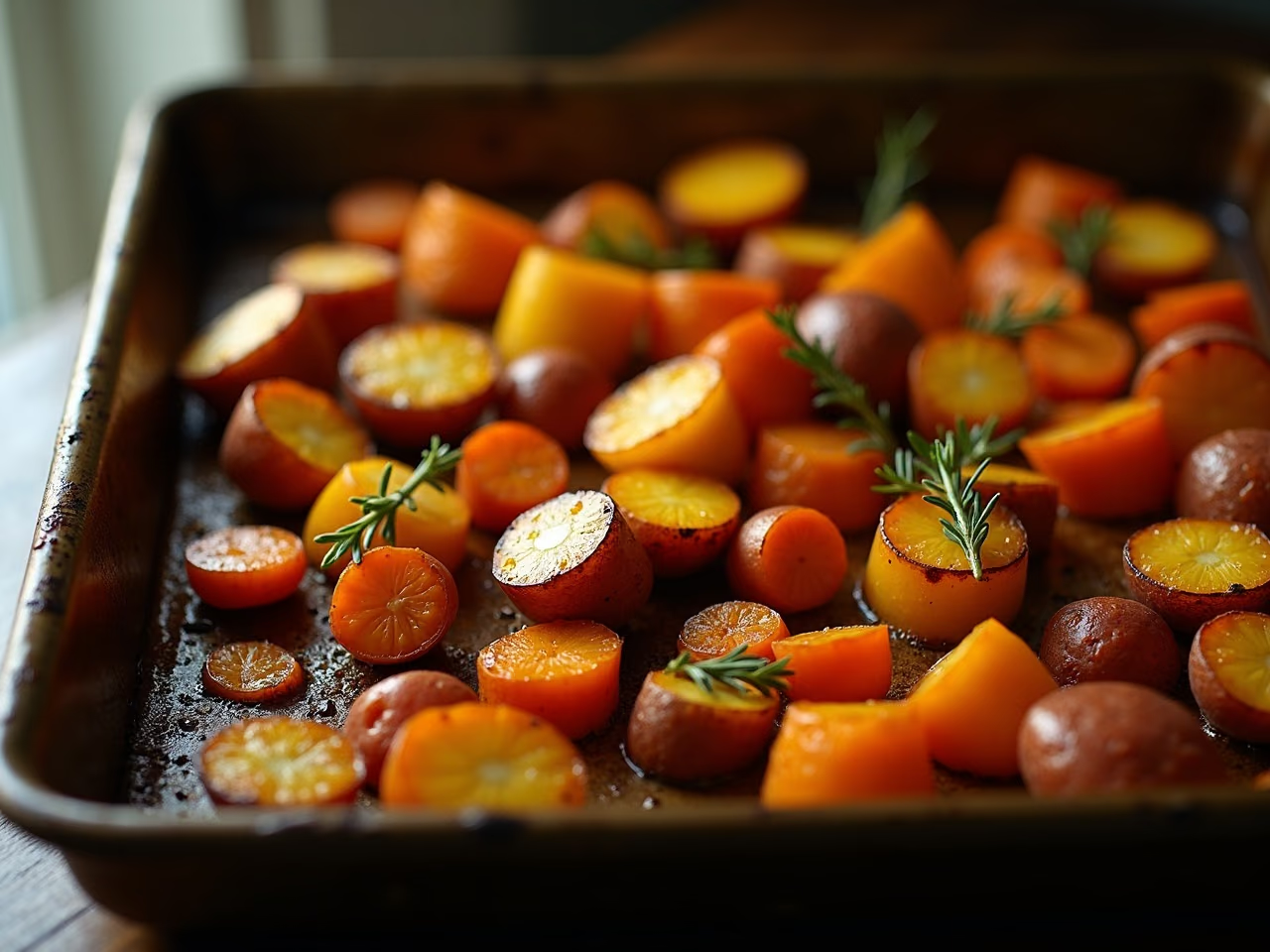
Every “roasted potatoes and carrots” recipe that tosses both onto the tray at the same time, in similar-sized pieces, produces the same result: potatoes just done, carrots collapsing. They are different vegetables with different cook times, and one tray can accommodate that — you just have to give the difference to either the clock or the knife.
The timing gap, measured
| Vegetable, 1-inch pieces, 425°F | Tender and browned |
|---|---|
| Yukon Gold potato | 40–45 min |
| Carrot | 25–30 min |
| Gap to account for | ~15 min |
Two ways to spend that gap:
Give it to the clock (the stagger). Potatoes roast alone for 15 minutes, then the carrots join. Both vegetables are cut the size you would naturally cut them, and both finish together. This is the method in the steps above and it produces the best version of both.
Give it to the knife (the cut-size route). Carrots go in at 1.5-inch lengths — half again the potato size — and everything roasts together for the full 40–45 minutes. The extra mass slows the carrots down by almost exactly the gap. Use this when you will not be near the kitchen at the 15-minute mark.
The preheated pan
Putting the empty sheet pan in the oven while it heats is a free upgrade. Cold pan, the potato spends its first ten minutes warming the metal; hot pan, the cut face starts searing on contact. It is the difference between browned-on-two-sides and browned-all-over, for no ingredient and no time.
Salt fully, brown fully
The most common quiet failure with roasted vegetables is under-salting — oil spread over a full tray dilutes seasoning more than people expect. Three-quarters of a teaspoon on the potatoes alone is correct, not generous. And browning is flavour chemistry, not decoration: the Maillard products on a deep-golden potato face are most of what makes the tray worth eating, which is why every step here defends them.
Roasted Potatoes and Carrots, Same Tray
- Prep
- 15 min
- Cook
- 45 min
- Total
- 1 hr
- Serves
- 4
Ingredients
- 1.5 lb (680 g) Yukon Gold or other waxy-ish potatoes, cut into 1-inch chunks
- 1 lb (450 g) carrots, peeled, cut into 1.5-inch lengths (halve thick ends lengthwise)
- 3 tablespoons olive oil, divided
- 1 teaspoon fine sea salt, divided
- 1/2 teaspoon freshly ground black pepper
- 4 sprigs thyme or 1 teaspoon dried
- 2 cloves garlic, unpeeled and lightly crushed (optional)
- 1 tablespoon chopped parsley, to finish
Method
- Heat the oven to 425°F (220°C) with a rack in the lower third and the empty sheet pan already on it. A preheated pan starts browning the cut faces on contact instead of ten minutes in. (12 min)
- Cut the potatoes into 1-inch chunks and dry them thoroughly with a towel — surface water is the main reason roasted potatoes steam instead of brown. Toss with 2 tablespoons of the oil and 3/4 teaspoon of the salt. (5 min)
- Tip the potatoes onto the hot pan, cut sides down where you can manage it, and roast 15 minutes without opening the oven. (15 min)
- Meanwhile cut the carrots into 1.5-inch lengths, halving any piece thicker than an inch, and toss with the remaining oil and salt. (4 min)
- Add the carrots, thyme and garlic to the pan, turning the potatoes as you make room. Keep everything in a single layer — crowding is the end of browning for both vegetables. (2 min)
- Roast 25–30 minutes more, turning everything once at the halfway point, until the potatoes are deep golden and a knife slides through a carrot with no resistance. (28 min)
- Season with the pepper, scatter over the parsley, and serve from the pan. The garlic cloves squeeze out of their skins for anyone who wants them.
Notes
- The single-tray-from-the-start alternative: cut carrots into 1.5-inch pieces and potatoes into 1-inch pieces, everything on at once for 40–45 minutes. The larger carrot pieces buy them the time the potatoes need. Slightly less carrot caramelisation than the stagger, zero timer management.
- Yukon Golds hold their shape and still brown well. Russets brown harder but the corners crumble when turned; red potatoes hold shape best but brown least. All three work — this is preference, not correctness.
- One layer with visible pan between pieces. Two overlapping vegetables steam each other; the water they release has nowhere to go. If the pan is tight, use two pans on two racks and swap them halfway rather than crowding one.
- Do not add dried herbs at the start — at 425°F they are ash by minute 20. Woody sprigs (thyme, rosemary) survive; anything crumbled goes on with 10 minutes left.
- Leftovers reheat properly in a dry skillet over medium heat for 5 minutes, or at 400°F in the oven for 10. The microwave returns them to boiled — it re-steams the crust you built.
Per serving (estimated by calculation from ingredient quantities, not laboratory tested): 248 kcal · 4 g protein · 38 g carbohydrate · 10 g fat.
Common questions
Why do my roasted vegetables come out soggy instead of browned?
Almost always crowding, a wet surface, or too low a temperature — often all three. Vegetables release steam as they roast, and steam trapped by neighbouring pieces re-wets every surface it touches. Dry the potatoes with a towel, leave visible pan between pieces, and hold the oven at 425°F; below 400°F, water evaporates slower than the vegetables release it.
Do potatoes or carrots take longer to roast?
Potatoes, by 10–15 minutes at the same size and temperature. A 1-inch potato chunk needs 40–45 minutes at 425°F; a 1-inch carrot piece needs 25–30. Dense root starch takes longer to soften than carrot cell structure. That gap is the entire reason this recipe staggers them or cuts the carrots larger.
Should I parboil potatoes before roasting?
For this weeknight tray, no — 1-inch chunks cook through in the roasting time. Parboiling earns its extra pot when you want maximum crust on large pieces: 8 minutes in salted water, drained and shaken rough, then roasted. It is the right technique for Sunday roast potatoes and overkill for a tray that shares the oven with dinner.
What temperature is best for roasting vegetables?
425°F (220°C) is the reliable middle: hot enough to brown faster than the vegetables release water, not so hot that edges scorch before centres soften. 450°F works with close watching and buys about 5 minutes. 400°F is the floor — useful when something else shares the oven — and adds about 10 minutes with paler results.
Can I prep roasted potatoes and carrots ahead?
Carrots can be cut two days ahead and kept in the fridge in a sealed container. Cut potatoes brown at the edges in air and go waterlogged if stored submerged, so cut them within an hour of cooking — or fully roast the whole tray ahead and re-crisp it in a 400°F oven for 10 minutes, which is the better make-ahead route.