Weeknight
Lemon Orzo Soup with Chicken, Unclouded
Orzo added early is why this soup usually turns to porridge overnight: pasta keeps absorbing broth for hours after cooking. Add the orzo for only the last 8 minutes of simmering, use 3/4 cup for 8 cups of broth, and if you expect leftovers, cook the orzo separately and add it per bowl. The lemon goes in off the heat — a full 1/4 cup of juice plus the zest — and shredded rotisserie or poached chicken makes it a 35-minute dinner.
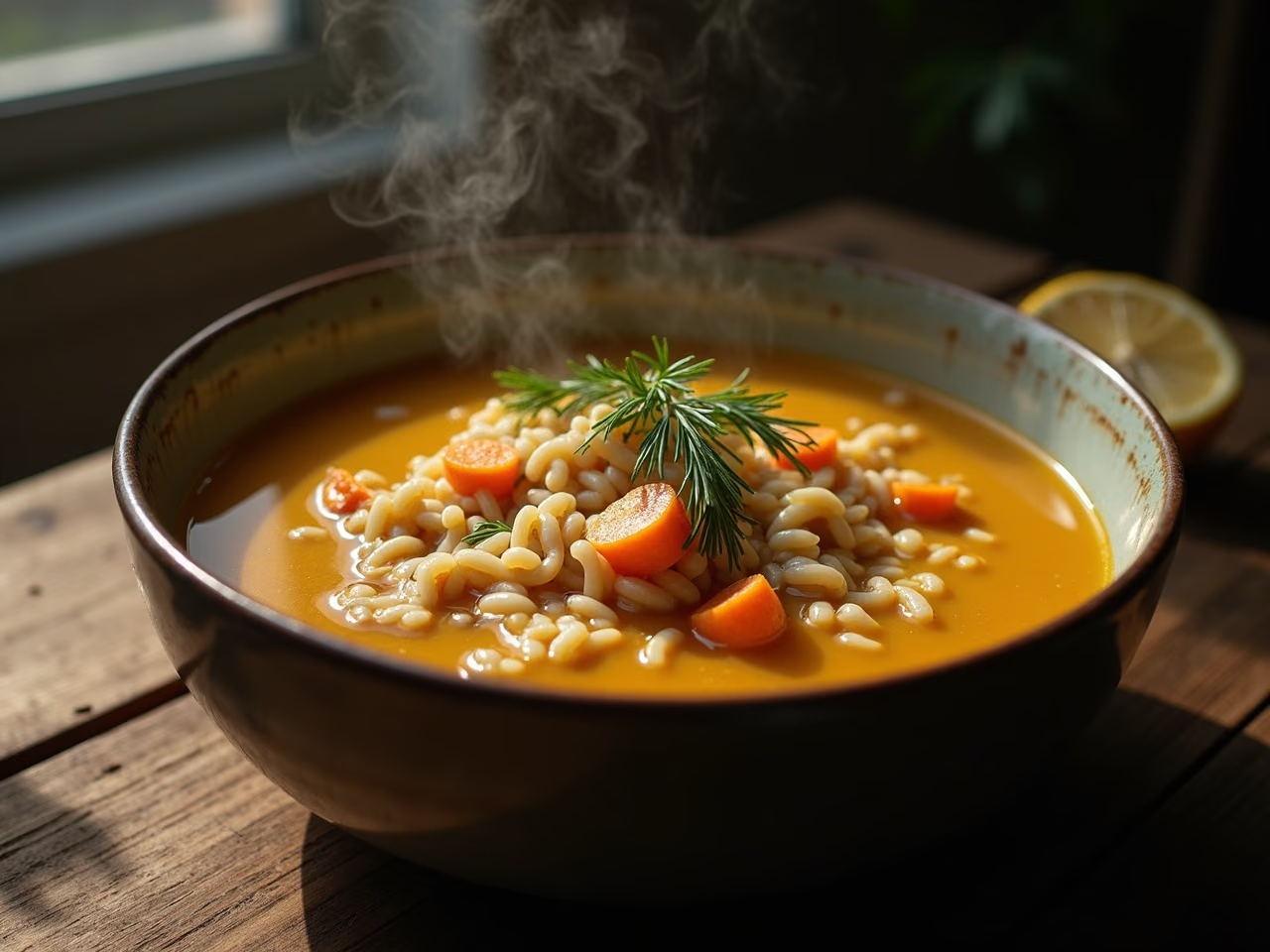
Every orzo soup recipe produces two different dishes: the bright, brothy one at dinner, and the lemon-scented porridge in tomorrow’s container. The difference is entirely about when the orzo went in and where it spent the night — which makes this mostly a scheduling problem, and scheduling problems are solvable.
Orzo is a sponge on a timer
Pasta absorbs liquid whenever it is surrounded by it — during cooking and for hours after. In a tossed pasta that is the plan; in a stored soup it is the failure. Two rules manage it:
- In the pot: last 8 minutes only. 3/4 cup of dry orzo for 8 cups of broth, simmered just to tender-with-bite. It will keep softening in the residual heat, so err early.
- In the fridge: separate containers. If leftovers are the point — and with a 10-cup pot they usually are — cook the orzo in salted water on the side and assemble per bowl. The broth then holds for four days without changing character.
The broth deserves the tasting step
Step 3 — taste before the orzo — is where this soup is won. Stock brands vary from nearly unsalted to aggressively seasoned, so “1.25 teaspoons of salt” is a starting bid, not a truth. The test: the plain broth should already be soup you would happily eat. Orzo, chicken and lemon dilute and rebalance; they cannot rescue a broth that tasted like warm water going in.
Lemon and dill are finishing moves
The soup’s identity arrives in the last ninety seconds, off the heat: all the zest of a lemon, a genuine quarter-cup of juice, and a fistful of dill. Heat flattens all three — boiled lemon dulls, boiled dill goes grassy — which is why they are nowhere near the pot until the burner is off. And because acid resets how salt reads, the final taste-and-adjust happens after the lemon, not before.
Lemon Orzo Soup with Chicken, Unclouded
- Prep
- 10 min
- Cook
- 25 min
- Total
- 35 min
- Serves
- about 10 cups
Ingredients
- 2 tablespoons olive oil
- 1 large yellow onion, diced
- 3 carrots, sliced into thin half-moons
- 2 ribs celery, diced
- 4 cloves garlic, minced
- 8 cups (2 litres) low-sodium chicken stock
- 3/4 cup (150 g) dry orzo
- 3 cups (about 14 oz / 400 g) shredded cooked chicken — rotisserie, or 1 lb breasts poached in the soup
- 1.25 teaspoons fine sea salt, to taste against your stock
- 1/2 teaspoon black pepper
- 1 lemon: all its zest, 1/4 cup juice (about 1.5 lemons if yours run dry)
- 1/4 cup chopped fresh dill, or 2 tablespoons dill + 2 parsley
Method
- Warm the oil in a large pot over medium. Cook the onion, carrots and celery with a pinch of the salt for 6–7 minutes until the onion is translucent; add the garlic for the last minute. (8 min)
- Add the stock and bring to a boil. If poaching raw chicken: drop the breasts in now, reduce to a bare simmer, and cook 12–14 minutes to 160°F; remove, rest, and shred while the soup continues. (8 min)
- Taste the broth and season — the right salt level depends entirely on your stock, and the range across brands is enormous. It should taste like soup you would eat plain, before the orzo goes in. (1 min)
- Add the orzo and simmer 8 minutes, stirring once or twice so it does not settle and stick. It should be just tender with a slight bite — it keeps softening in the hot broth. (8 min)
- Stir in the shredded chicken to heat through, 1–2 minutes. (2 min)
- Off the heat: add the lemon zest, lemon juice, pepper and dill. Taste once more — the lemon changes the salt balance — and serve. The soup is at its best in the first hour and thickens steadily after; see the tips for the leftover strategy.
Notes
- The porridge problem, quantified: cooked orzo left in broth keeps absorbing for hours, and 3/4 cup of dry orzo can take a third of the pot's liquid overnight. For planned leftovers, cook the orzo separately in salted water, store it separately, and assemble per bowl — the broth then keeps 4 days unchanged.
- Lemon is a finishing ingredient here, exactly like the pasta sauces: boiled lemon juice goes dull and faintly bitter. Off the heat it stays bright. The zest carries more lemon character than the juice — do not skip it.
- For the classic Greek avgolemono texture: whisk 2 eggs with the lemon juice, temper with two ladles of hot broth added slowly while whisking, then stir back into the (off-heat) pot. Silky, and it must never boil afterward. This recipe defaults to the simpler unthickened version.
- Rotisserie chicken makes this a 35-minute dish; a pound of breasts poached directly in the simmering broth adds 5 minutes and improves the broth. Thighs work poached 5 minutes longer, to 175°F, and stay juicier in leftovers.
- Dill is the herb that makes it taste deliberate rather than default — parsley is fine, but the dill-lemon-chicken triangle is the point. Add it off the heat with the lemon; boiled dill tastes like grass.
Per serving (estimated by calculation from ingredient quantities, not laboratory tested): 318 kcal · 30 g protein · 28 g carbohydrate · 9 g fat.
Common questions
Why did my orzo soup turn thick and mushy overnight?
Pasta absorbs liquid whenever it sits in it, cooked or not — orzo in stored soup drinks broth for hours, swelling soft and leaving the pot thick. Prevention: add orzo only for the last 8 minutes, and for leftovers, cook and store it separately, assembling per bowl. Rescue for an already-thick pot: thin with fresh stock and re-season; the texture of the orzo itself cannot be brought back.
How much orzo should go in soup?
3/4 cup dry per 8 cups of broth if serving the same day — it looks sparse dry and is right cooked, roughly tripling in volume. A full cup makes it a stew by the second bowl. If storing, any amount works because it is kept separate; per bowl, a heaped 1/3 cup of cooked orzo is the standard serving.
When should I add lemon juice to soup?
Off the heat, at the end — a 1/4 cup for this pot, plus the zest. Simmered citrus juice loses its fresh top notes and can turn slightly bitter, which is why "lemon soup" recipes that boil the juice taste flat. Adding it last also means tasting for salt afterward, because acidity resets the seasoning balance.
Can I make this soup avgolemono-style?
Yes — avgolemono is this soup plus an egg-lemon liaison. Whisk 2 eggs with the lemon juice, then temper: add hot broth a ladle at a time while whisking before stirring the mixture into the off-heat pot. It turns the broth silky and pale. Two rules: never add eggs untempered (they scramble), and never boil it afterward (same result, slower).
What chicken works best for chicken orzo soup?
Three good routes: rotisserie (fastest, adds roasted depth), breasts poached in the simmering broth (12–14 minutes to 160°F — juiciest, and the poach improves the broth), or thighs poached to 175°F (most forgiving in leftovers). Add already-cooked chicken only at the end to heat through; simmering cooked chicken for long just tightens it.