
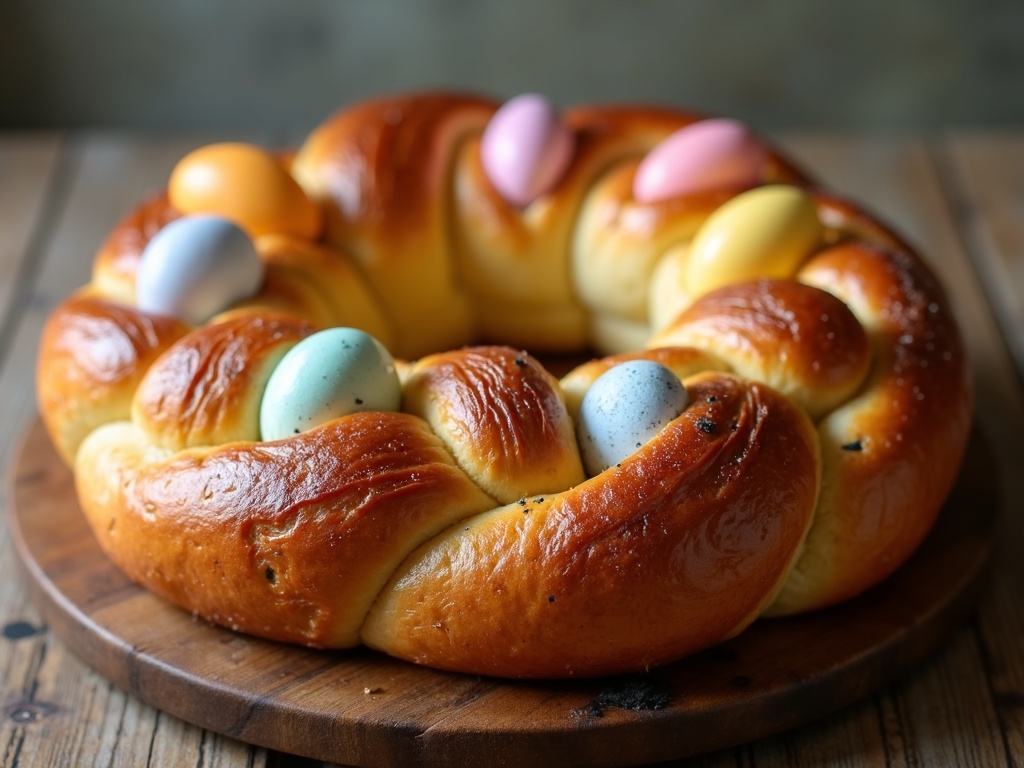
The sweet, citrus-scented aroma of freshly baked Italian Easter Bread is a hallmark of the holiday season in many homes. This beautiful, braided loaf, often adorned with colorful eggs, is a celebratory treat that’s easier to make than you might think. It’s a wonderful project for a spring baking day, filling your kitchen with tradition and flavor. This recipe will guide you through creating your own stunning centerpiece.
The Tradition Behind the Bread
This sweet bread, known as Pane di Pasqua or Cuzzupa, is steeped in symbolism. The braided shape represents the crown of thorns, while the whole eggs baked into the dough symbolize rebirth and new life. It’s a recipe passed down through generations, often made on Good Friday to be enjoyed on Easter Sunday. The result is a soft, rich, and slightly sweet bread that’s perfect for breakfast or as a dessert.
How to Make Italian Easter Bread
Prep Time: 30 minutes | Cook Time: 25 minutes | Total Time: 3 hours 30 minutes (includes rising) | Servings: 1 large loaf
Ingredients
- 4 ½ cups (540g) all-purpose flour, plus more for dusting
- ½ cup (100g) granulated sugar
- 1 packet (2 ¼ tsp) active dry yeast
- 1 tsp salt
- ¾ cup (180ml) whole milk, warmed to about 110°F
- ½ cup (113g) unsalted butter, softened
- 3 large eggs, at room temperature
- 1 tsp vanilla extract
- 1 tbsp orange zest (from about 1 orange)
- 1 tbsp lemon zest (from about 1 lemon)
- 5-6 raw, uncooked eggs in their shells (for decoration)
- Food coloring (optional, for dyeing eggs)
- 1 egg yolk beaten with 1 tbsp water (for egg wash)
- Pearl sugar or sprinkles for garnish (optional)
Instructions
- In the bowl of a stand mixer fitted with a dough hook, combine 1 ½ cups of the flour, sugar, yeast, and salt. Add the warm milk and mix on low until a wet batter forms, about 1 minute.
- Add the softened butter, 3 eggs, vanilla extract, orange zest, and lemon zest. Mix on medium speed until well combined, about 2 minutes.
- Gradually add the remaining 3 cups of flour, mixing on low speed until a soft dough forms. Increase speed to medium and knead for 5-7 minutes, until the dough is smooth and elastic. It will be slightly sticky.
- Place the dough in a lightly greased bowl, turning to coat. Cover with plastic wrap or a damp kitchen towel and let rise in a warm place until doubled in size, about 1 ½ to 2 hours.
- While the dough rises, dye your raw, uncooked eggs with food coloring if desired. Let them dry completely on a paper towel.
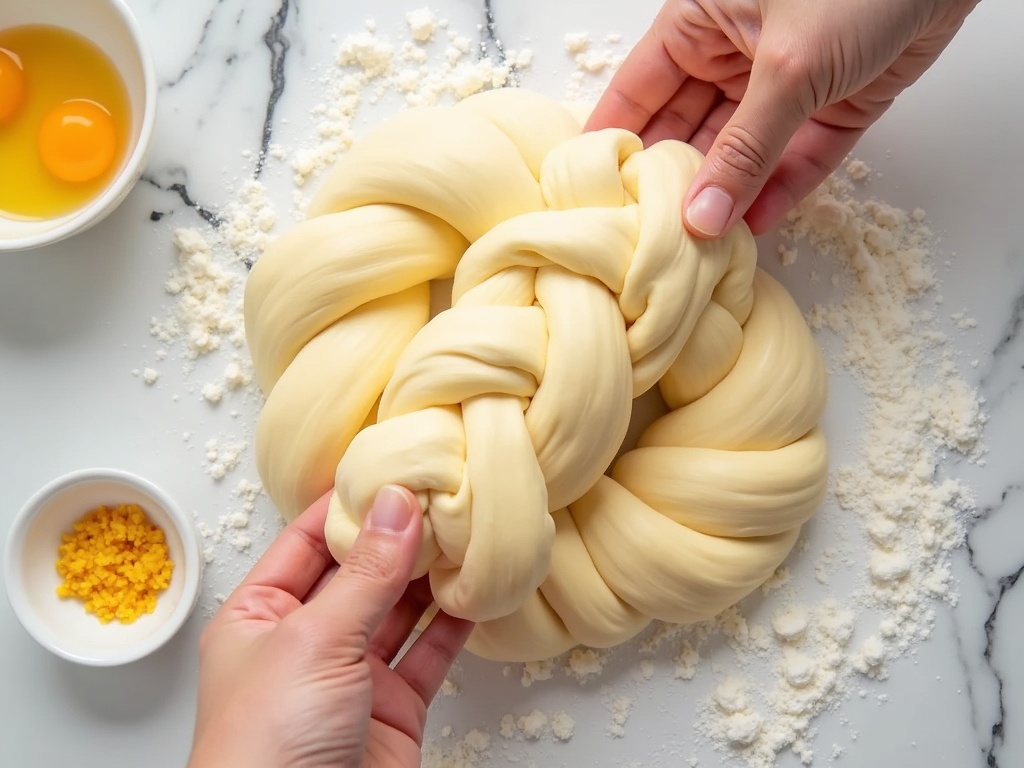
- Punch down the risen dough. Turn it out onto a lightly floured surface and divide it into three equal pieces. Roll each piece into a long rope, about 20 inches long.
- Pinch the three ropes together at one end and braid them loosely. Bring the ends together to form a ring, pinching to seal. Transfer the braided ring to a parchment-lined baking sheet.
- Gently tuck the dyed eggs into the braids, spacing them evenly. Cover loosely with plastic wrap and let rise again for 45-60 minutes, until puffy.
- Preheat your oven to 350°F (175°C). Brush the risen loaf gently with the egg wash, avoiding the colored eggs. Sprinkle with pearl sugar if using.
- Bake for 25-30 minutes, or until the bread is a deep golden brown and sounds hollow when tapped. The eggs will be hard-cooked. Let cool on the baking sheet for 10 minutes before transferring to a wire rack.
Tips
- For the best flavor, use fresh citrus zest. The oils in the zest provide a beautiful, bright aroma that defines this Italian Easter Bread.
- Ensure your milk is warm, not hot, to activate the yeast without killing it. If you don’t have a stand mixer, you can knead the dough by hand for 10-12 minutes.
- The eggs baked inside are edible! They will be fully cooked. For a fun twist, try using different natural dyes for your eggs, like turmeric for yellow or beet juice for pink.
Why You’ll Love This Recipe
This Italian Easter Bread recipe yields a tender, fragrant loaf that is as delightful to look at as it is to eat. The process of braiding and decorating is a joyful activity to share with family. The bread itself is wonderfully versatile, perfect for toasting the next day or serving with a dollop of jam. It’s a baking project that creates lasting memories and delicious results.
For more on the cultural significance of bread in Italian holidays, you can explore this resource from Wikipedia. If you’re looking for more seasonal baking inspiration, check out our guide for a classic Springtime Lemon Bundt Cake.
Wrapping Up
Making this traditional Italian Easter Bread is a rewarding way to celebrate the season. The combination of citrus, sweet dough, and festive eggs is truly special. Don’t be intimidated by the braiding; even a simple twist looks beautiful. Gather your ingredients this weekend and fill your home with the wonderful scent of holiday baking.
Your homemade loaf will be the star of any Easter table.
Explore a guide on our sister blog
Related reading: Explore more on this topic