Drinks
Horchata Recipe, Not Chalky
Horchata turns chalky when the rice never soaked: give 1 cup (200 g) of long-grain rice and a cinnamon stick at least 4 hours in 4 cups of hot tap water — overnight is better — before blending 60–90 seconds. Then strain twice: once through a fine-mesh sieve, once through a nut-milk bag or doubled cheesecloth. Sweeten with 1/2 cup (100 g) sugar and a teaspoon of vanilla; a cup of whole milk is optional, and the drink is complete without it.
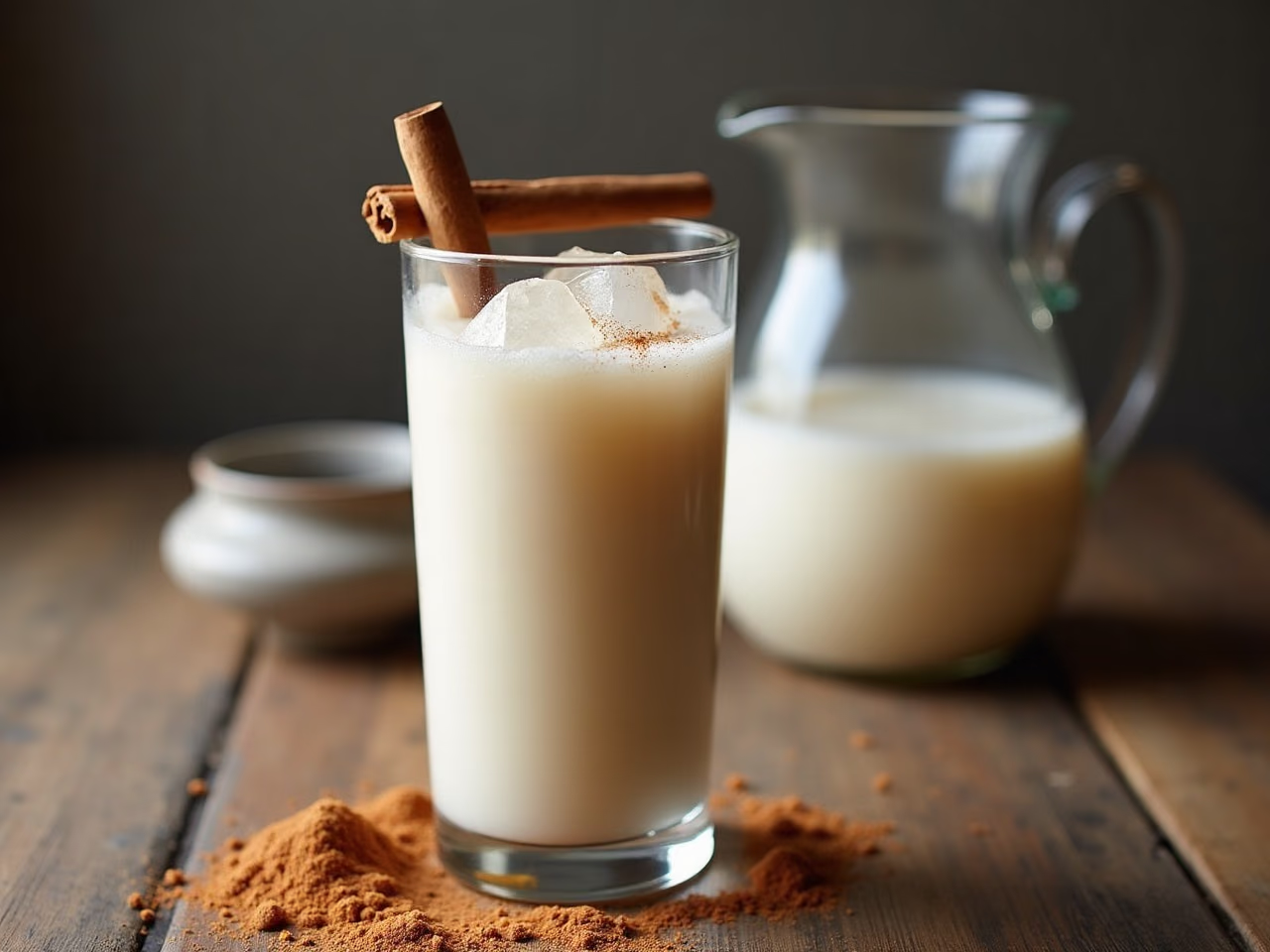
Horchata has exactly one failure mode and everyone has met it: the glass that drinks like watered plaster. The fix is not a better blender, more sugar, or any amount of milk. It is time and cloth — a real soak before the blade, and a second strain after it.
The soak is the recipe
Rice does not blend; hydrated rice does. Dry grains hit the blade and fracture into sharp, chalk-fine fragments that stay suspended forever and never soften — that is the texture people mean when they say homemade horchata is gritty. Soaked grains grind instead into a smooth starch suspension that reads as body.
So the actual work of this recipe is pouring 4 cups of hot tap water over a cup of rinsed rice and a cinnamon stick, and leaving. Four hours is the floor. Overnight in the fridge is better, changes nothing else, and moves the whole recipe to a ten-minute job the next day. The rinse before the soak matters too — thirty seconds under the tap carries off the loose surface starch that makes the finished drink pasty instead of silky.
Blend hard, strain twice
Everything goes into the blender together: rice, soaking water, and the stick, which after a proper soak is soft enough to disappear into the blend. Sixty to ninety seconds on high, until nearly smooth.
Then the step that separates the taquería glass from the regretted one: strain twice, because the two passes do different jobs. The fine-mesh sieve catches grit — particles you would actually chew. The nut-milk bag or doubled cheesecloth catches silt — particles you would only feel, as a faint coating on the tongue. Do not wring the cloth hard; pressing forces the silt through and undoes the point of the pass. The second strain costs two minutes and is the entire difference between silky and chalky.
Sweeten, thin, decide on milk
Half a cup of sugar and a teaspoon of vanilla, stirred in while the base is at room temperature so they dissolve clean. Then thin with two cups of cold water — the blend straight from the cloth is concentrate, not drink.
The milk question is style, not correctness. Water-based horchata is the lighter, older form, and it lets the cinnamon sit right at the front. A cup of whole milk — or evaporated milk, which is the richer taquería move — rounds it into something closer to a dessert. Taste the base first; it is complete as it is.
If your target is horchatería-sweet, go to three-quarters of a cup of sugar. Written as-is, this lands just under that, where the cinnamon still has the last word.
It settles. That is the starch.
Within a few hours in the fridge, a white layer forms at the bottom of the pitcher. Nothing is wrong. That is the rice starch — the body of the drink — dropping out of suspension, and a ten-second stir puts it back to work. Serve over more ice than seems reasonable, stir before every pour, and drink the batch inside 3–4 days. Settling is normal; a sour smell is the actual end.
Horchata Recipe, Not Chalky
- Prep
- 15 min
- Cook
- 4 hr
- Total
- 4 hr 15 min
- Serves
- 6
Ingredients
- 1 cup (200 g) long-grain white rice
- 1 cinnamon stick — Ceylon (canela) if you can find it
- 4 cups (950 ml) hot tap water, for the soak
- 1/2 cup (100 g) granulated sugar
- 1 teaspoon vanilla extract
- 2 cups (480 ml) cold water, to finish
- 1 cup (240 ml) whole milk or evaporated milk, optional
- Ice, to serve
Method
- Rinse the rice in a sieve under the tap for about 30 seconds, until the water runs mostly clear. This carries off the loose surface starch that would otherwise turn the finished drink pasty rather than silky. (2 min)
- Put the rice and the cinnamon stick in a bowl or large jar, pour over the 4 cups of hot tap water, cover, and walk away — 4 hours minimum, overnight better. The soak is the recipe: hydrated rice blends into a smooth suspension, dry rice shatters into chalk dust that no blender can fix. (4 hr)
- Tip the whole bowl — rice, soaking water, softened cinnamon stick — into a blender and run it 60–90 seconds, until the mixture is nearly smooth and the stick has disappeared. If your cinnamon stick is still rock-hard after the soak, fish it out first and add 1/2 teaspoon of ground cinnamon instead. (2 min)
- Strain twice. First pass through a fine-mesh sieve into a pitcher, which catches the coarse grit. Second pass through a nut-milk bag or two layers of cheesecloth, without squeezing hard — this catches the fine silt that coats the tongue, and it is the pass that separates silky horchata from gritty. (5 min)
- Stir in the sugar and vanilla until dissolved, then thin with the 2 cups of cold water — or 1 cup of water plus the cup of milk for the creamy version. Taste; horchatería-sweet is closer to 3/4 cup of sugar, so adjust up if that is the target. (2 min)
- Chill, or pour straight over plenty of ice. Stir before every pour — the starch settles, and that is the drink working, not spoiling. (1 min)
Notes
- Ceylon cinnamon (sold as canela in Mexican groceries) is the traditional stick: papery, brittle, and soft enough to blend right in after the soak. Cassia — the hard, thick supermarket stick — flavours the soak fine but will not blend; steep it, remove it, and grate in ground cinnamon to compensate.
- There is no blending your way out of a skipped soak. Dry rice fractures into sharp microscopic chalk that stays suspended and never softens; soaked rice grinds into starch that reads as body. Four hours in hot tap water is the floor, overnight in the fridge is better and changes nothing else.
- The two strains do different jobs: the sieve removes grit you would chew, the cloth removes silt you would only feel. Skip the second pass and the horchata is drinkable but leaves the faint drywall texture that gives homemade horchata its bad reputation.
- A settled glass is a healthy glass. The white layer at the bottom is rice starch dropping out of suspension — stir it back through before pouring. In the fridge, covered, it holds 3–4 days; if it ever smells sour, that is fermentation and the batch is done.
- The milk decision is a style decision, not a correction. Water-based horchata is lighter and lets the cinnamon sit forward; whole milk or evaporated milk adds body and reads closer to what many taquerías pour. Try the base before you commit the milk.
Per serving (estimated by calculation from ingredient quantities, not laboratory tested): 138 kcal · 1 g protein · 32 g carbohydrate · 0 g fat.
Common questions
Why is my horchata gritty or chalky?
One of two shortcuts, usually both: the rice went into the blender dry, or the blend was strained once instead of twice. Unsoaked rice shatters into chalk-fine particles that never soften, and a single pass through a sieve leaves the silt that coats your tongue. Soak 4 hours minimum, blend 60–90 seconds, then sieve first and cloth second.
Can I skip the soak?
No — the soak is where the texture is made. Blending dry rice with water produces something technically horchata-flavoured with the mouthfeel of thin plaster. Four hours in hot tap water is the minimum that works; overnight in the fridge is better and costs nothing but planning. There is no high-speed-blender exception.
Does horchata have dairy in it?
Not necessarily. Mexican rice horchata is often water-based — rice, cinnamon, sugar, vanilla — and this recipe is complete without milk. The optional cup of whole or evaporated milk adds richness and a rounder body. Made without it, the drink is dairy-free and vegan as written.
Why does horchata separate in the fridge?
The suspended rice starch settles into a white layer at the bottom of the pitcher within a few hours. That is physics, not spoilage — stir it back through before pouring and the drink is exactly what it was. Refrigerated and covered it keeps 3–4 days; a sour smell, not settling, is the sign it has turned.
Can I use jasmine or brown rice?
Jasmine works and adds its own floral note over the cinnamon — a legitimate variation. Brown rice fights you: the bran keeps water out, so it needs 8+ hours of soaking and still grinds coarser, and the nutty flavour muddies the vanilla. Long-grain white is standard because it disappears into texture and lets the cinnamon lead.