Drinks
Frozen Lemonade That Stays Slushy
Frozen lemonade stays slushy when the sugar concentration is high enough to lower the freezing point: 1 cup (240 ml) of fresh lemon juice, 3/4 cup (150 g) of sugar dissolved into a syrup, 2 cups (480 ml) of water and 4 cups of ice, blended liquid-first. Skimp on the sugar and the mixture freezes solid; hold the ratio and it blends to a slush that stays spoonable for 20 minutes. Five to six lemons produce the cup of juice.
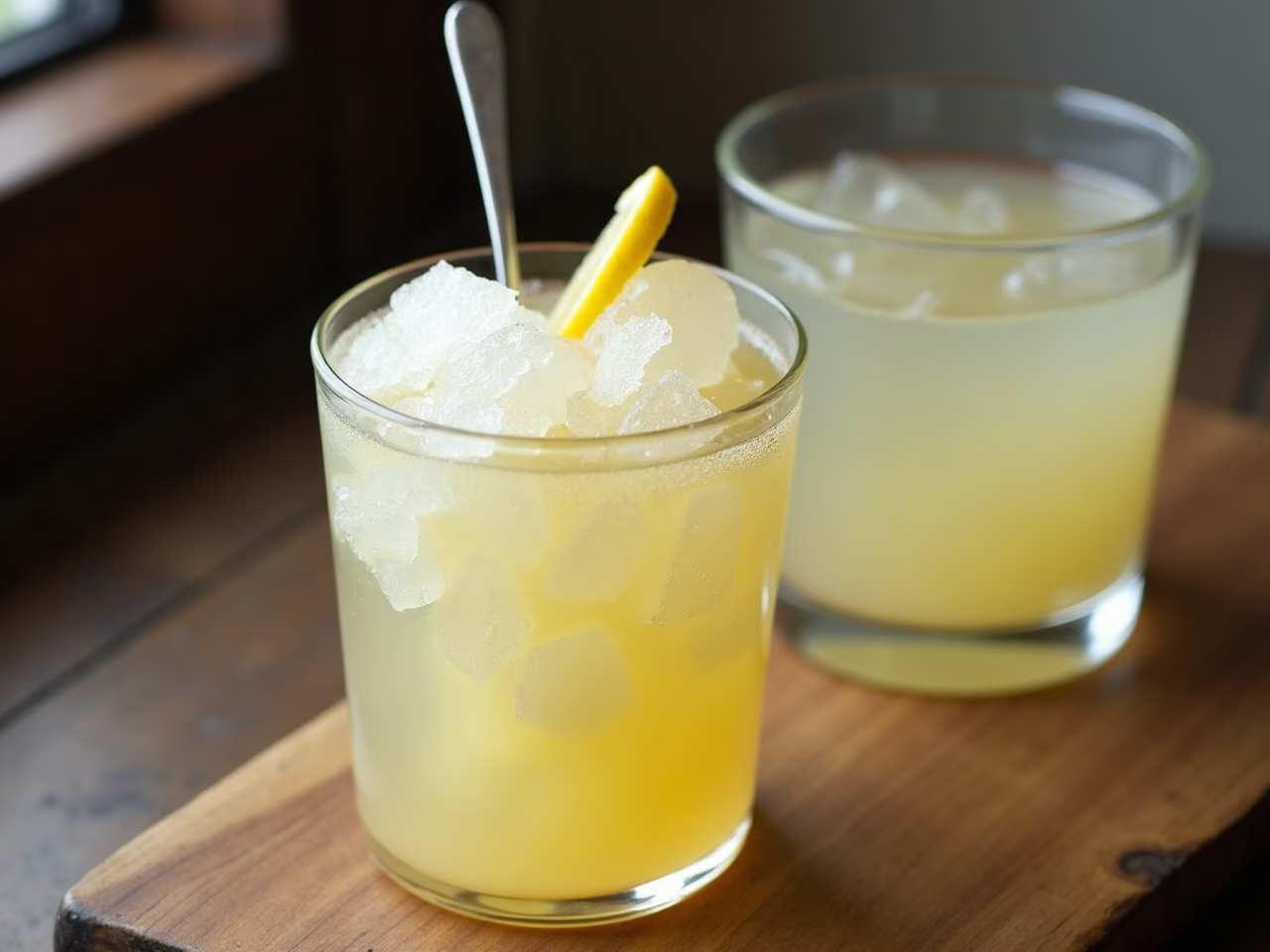
Frozen lemonade has one failure mode and it is structural: the pitcher-perfect slush that turns into a solid yellow brick, or the brick’s opposite, a thin cold soup. Both are the same mistake — treating the sugar as a matter of taste. In a frozen drink, sugar is load-bearing.
Sugar is the antifreeze
Water freezes at 32°F (0°C). Water with sugar dissolved in it freezes lower, and the more sugar, the lower the temperature at which crystals can lock together. A slush is exactly that in-between state: fine ice crystals suspended in liquid that cannot quite freeze. Hold the ratio — 3/4 cup of sugar to 1 cup of lemon juice and about 3 cups of combined water and ice — and the physics does the texture for you.
This is why “less sweet” requests should be answered with more lemon juice, not less sugar. Extra acid balances the sweetness on your tongue; removing sugar removes the antifreeze, and the drink sets like a pond in January.
The sugar has to be dissolved to do this work, which is what the three-minute syrup is for. Granulated sugar stirred into cold juice mostly sinks, and a slush that is gritty at the bottom and sour at the top is a drink assembled, not made.
The blender wants liquid first
Load order is the second half of the method. Juice, syrup, water and salt go in first; ice goes on top. Liquid at the blades lets the blender pull a vortex that feeds ice downward continuously. Reverse the order and the blades carve a pocket under the cubes, the motor whines, and nothing above the pocket moves.
Blend in short bursts — five seconds, check, again — and stop the moment the mixture folds over on itself like wet snow. Slush is a state you pass through, not a destination the blender finds on its own; keep going and the friction simply melts what you built.
The cube method, for people who plan
For parties, freeze the finished base — juice, cooled syrup, water, salt, no ice — in ice cube trays. The cubes keep a week. Blend a trayful with half a cup of cold water or fresh base and you have a pitcher of slush in ninety seconds, as many times as the evening requires. Because the ice is lemonade rather than water, this version runs slightly stronger than the fresh-ice one, which nobody has ever complained about.
If leftovers make it to the freezer overnight, they will be solid by morning — the blend destroyed the crystal structure and refreezing rebuilt it coarse. Ten minutes on the counter, break it up, re-blend with a splash of water. It comes all the way back.
Frozen Lemonade That Stays Slushy
- Prep
- 15 min
- Cook
- 5 min
- Total
- 20 min
- Serves
- 4
Ingredients
- 1 cup (240 ml) fresh lemon juice, from 5–6 lemons
- 3/4 cup (150 g) sugar
- 3/4 cup (180 ml) water, for the syrup
- 1 1/4 cups (300 ml) cold water
- 4 cups (about 500 g) ice cubes
- Pinch of fine sea salt
Method
- Make the syrup: heat the sugar with 3/4 cup water in a small pan over medium, stirring until fully dissolved, about 3 minutes. Take it off the heat and cool it — warm syrup melts the ice it is about to meet and thins the slush. Ten minutes in the freezer gets it there. (5 min)
- Juice the lemons to a full cup. Roll each lemon hard under your palm first; a rolled lemon gives up noticeably more juice, and this recipe wants all of it. (6 min)
- Load the blender in order: lemon juice, cooled syrup, cold water and the salt first, then all the ice on top. Liquid at the blades is what lets a home blender pull the ice down instead of spinning a hole under it. (1 min)
- Blend in 5-second bursts until the mixture turns over on itself like soft snow — usually 4–5 bursts. Stop at slush; continued blending is just melting with extra steps. (2 min)
- Spoon into glasses and serve with a spoon and a straw. If it slackens while you pour the second round, one more burst brings it back. (1 min)
Notes
- Sugar is the antifreeze. Dissolved sugar lowers the freezing point of the mixture, which is what keeps part of the liquid unfrozen and the texture spoonable. Cut the sugar and you have not made a lighter slush — you have made an ice cube with opinions.
- The syrup step is not skippable: granulated sugar will not dissolve in cold juice, and undissolved sugar sinks, leaving the top tart and the bottom gritty. Three minutes on the stove buys an even glass.
- Make-ahead version: freeze the mixed base (juice, syrup, water, salt — no ice) in an ice cube tray, 4 hours or overnight. To serve, blend the frozen cubes with 1/2 cup of fresh base or cold water to loosen. Because the cubes are already lemonade, this version is more concentrated than the fresh-ice one.
- Bottled lemon juice technically works and reliably disappoints — it is pasteurized, and the cooked flavor stands out in a drink this simple. Five minutes of juicing is the whole flavor budget; spend it.
- The pinch of salt is below the taste threshold but keeps the sweet-tart edge bright — the same seasoning logic as salting caramel, at a fraction of the dose.
Per serving (estimated by calculation from ingredient quantities, not laboratory tested): 152 kcal · 0 g protein · 40 g carbohydrate · 0 g fat.
Common questions
Why does my frozen lemonade freeze solid?
Not enough sugar for the amount of water, almost every time. Dissolved sugar depresses the freezing point, so a properly sweetened base stays partly liquid and scoopable while a lean one locks up. The ratio that holds: 3/4 cup sugar per 1 cup lemon juice plus roughly 3 cups of total water and ice. If you want it less sweet, add more lemon juice rather than cutting sugar — acid balances sweetness without touching the physics.
Can I refreeze leftover frozen lemonade?
You can store it in the freezer, but expect it to set hard: blending destroyed the fine crystal structure, and refreezing rebuilds it as one coarse block. Do not fight it with a fork — let it sit at room temperature for 10 minutes, break it into chunks, and re-blend with a splash of cold water. It comes back to proper slush in about 30 seconds.
Why does the order of ingredients in the blender matter?
Because home blenders move liquid, and liquid moves ice. With juice and syrup at the blades, the blender pulls a vortex that drags the ice down into the cutting zone. Ice-first, the blades carve an air pocket under the cubes and spin uselessly while the motor heats. Liquid first, ice on top — 4 to 5 short bursts and it is done.
Can I use a countertop ice-crusher or food processor instead?
A food processor works with a caveat: it throws liquid at the lid seam, so process the ice with only 1 cup of the liquid, then stir the rest in. The texture lands slightly coarser than a blender's — closer to granita than slush — which some people prefer. A bar-style ice crusher alone cannot integrate the syrup evenly.
How far ahead can I make frozen lemonade for a party?
The fresh-blended version holds about 20 minutes in glasses and up to an hour in a pitcher in the freezer, stirred once or twice. For anything longer, use the cube method: freeze the base in trays up to a week ahead, then blend cubes with 1/2 cup of liquid per batch on demand. Ninety seconds per pitcher, and every round is fresh.